


Author : Manjushree Banerjee
As climate risks in agriculture mount, India’s crop insurance schemes must be redesigned to reach the women who do most of the farming but hold the fewest land titles
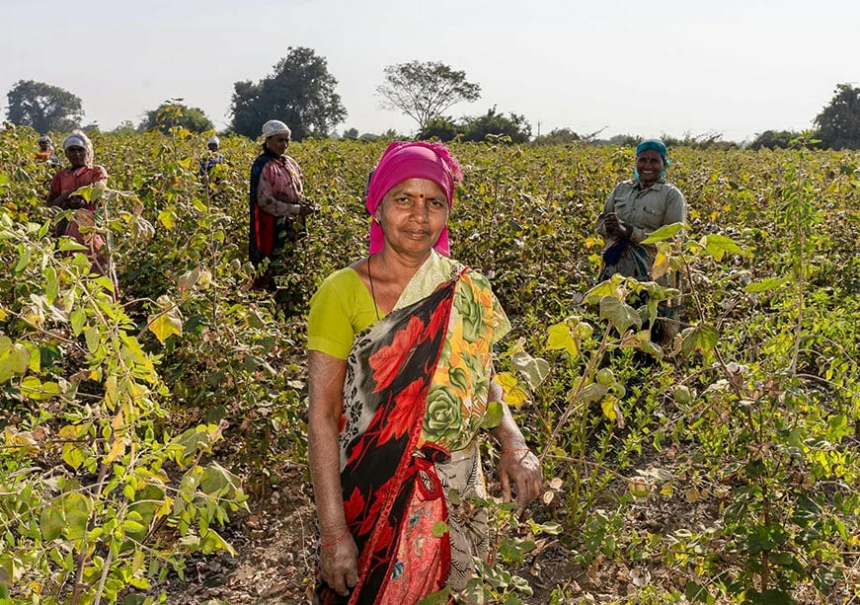
Image Source: Getty Images
The risks in agriculture are enormous. The most common form of risk is damage to or loss of farm produce before harvest. Every year, 40 percent of global crop production is lost due to plant pests and diseases. The frequency and intensity of extreme weather events — such as droughts, floods, cyclones, and heatwaves — are increasing worldwide. The FAO 2025 report reveals agricultural losses of approximately US$3.26 trillion over the period from 1991 to 2023, with a severe escalation of losses from 2010 onwards. Climate-related disasters — including floods, storms, earthquakes, droughts, extreme temperatures, and wildfires — accounted for US$2.9 trillion of these losses. Cereals are the most affected agricultural commodity worldwide. Approximately 47 percent of global losses occur in Asia.
In India, 117 lakh hectares of cropped area (as of November 2025 estimates) were affected by hydro-meteorological disasters in 2025-26. From January to September 2025, India recorded extreme weather events on 331 of 334 days. The damage to cropped area in 2025 increased ninefold compared to 2022. The report ‘State of Marginal Farmers in India – 2024‘ is based on a survey of 6,615 marginal farmers — those cultivating up to one hectare of land — across 21 Indian states. Around 81 percent of marginal farmers reported crop damage due to extreme weather and climate-related events. Drought or below-normal rainfall, along with excessive or unseasonal rains, were the primary causes of climate-related crop damage.
Climate-related disasters — including floods, storms, earthquakes, droughts, extreme temperatures, and wildfires — accounted for US$2.9 trillion of these losses.
Addressing risks in agriculture is critical. One approach is risk transfer, commonly referred to as agricultural or crop insurance. Crop insurance is widely regarded as one of the most effective risk-coping mechanisms. India’s first crop insurance scheme was introduced in 1972. The National Agricultural Insurance Scheme, launched in 1999, covered all farmers through both area-based and individual assessments. The Pradhan Mantri Fasal Bima Yojana (PMFBY) and the Restructured Weather-Based Crop Insurance Scheme (RWBCIS) were rolled out across all states in 2016.
PMFBY and RWBCIS coverage included 15 percent female beneficiaries for kharif crops and 14 percent for rabi crops in 2025. According to IFAD, most women in agriculture worldwide lack access to agricultural risk management options. Sustainable Development Goal (SDG) 5 — which aims to achieve gender equality — recognises that secure land rights are vital for empowering rural women and strengthening agrifood systems, and are critical to climate change mitigation and resilience. According to the latest agricultural census, published in 2016, female operational holders accounted for 14 percent of the total in India. Of these, 72 percent fell under the marginal category (less than 1 hectare), and 17 percent were small farmers (1-2 hectares).
Climate change affects agriculture through soil degradation, water scarcity, crop damage, and yield reduction. The shrinking of arable land intensifies contestation over productive land, making it increasingly difficult for women to access their land rights. Desertification, land degradation, and drought have disproportionate and differentiated impacts on women and girls. Agricultural risks stemming from climate and weather-related events are on the rise.
In a context of growing feminisation of agriculture and escalating climate risks, it is essential that risk mitigation measures be made gender-inclusive.
In India, women’s employment is heavily concentrated in agriculture. The sector employs about 80 percent of rural women. Around 60 percent of total female employment in India is in agriculture, compared to only 34 percent of employed males. Women perform nearly 80 percent of all agricultural tasks. Yet, despite the feminisation of agriculture in India, only 14 percent of women are operational holders. The absence of land titles renders them ineligible for crop insurance. Climate change and weather-related events affect agriculture and, by extension, women working within it. In a context of growing feminisation of agriculture and escalating climate risks, it is essential that risk mitigation measures be made gender-inclusive.
A 2023 paper analysing sex-disaggregated data from 16,000 digital land records across 12 Indian states notes that, despite women-friendly policy amendments, patriarchal mindsets and cultural and social norms continue to restrict women’s land ownership. The feminist economist Dr. Bina Agarwal, in a paper published in 1988, writes: “Customary practices governing marriage, residence and female seclusion; intimidation and violence by male kin; biases in the functioning of official agencies, etc., variously obstruct women in claiming their legal share or functioning as independent farmers, although the nature and incidence of these factors differs cross‐regionally.” India’s complex social framework continues to obstruct women from accessing their land rights and, consequently, from reducing agricultural risks through crop insurance.
It is imperative to find ways to formally extend crop insurance coverage — an effective risk-coping mechanism — to women in agriculture.
The PMFBY operational guidelines call for special efforts to ensure maximum coverage of women farmers. At the same time, the guidelines require the submission of documentary evidence of land records, such as a Land Possession Certificate (LPC), applicable contract or agreement details, or other notified documents. Addressing the deep-rooted social complexities surrounding land titles for women requires multiple approaches, and it may not be pragmatic to set a timeframe for expected outcomes. However, the increasing climate risks in agriculture and the feminisation of agriculture are a present-day reality. In this context, the following alternatives may be considered:
The importance of women in agriculture is recognised worldwide. In India, women constitute the major workforce in agriculture, yet the complex social structure makes it difficult for them to access land titles. Climate change and rising extreme weather events are compounding the risks in agriculture. Women in agriculture who lack land titles remain unable to benefit from crop insurance. It is imperative to find ways to formally extend crop insurance coverage — an effective risk-coping mechanism — to women in agriculture.
Manjushree Banerjee has been a practitioner and researcher in the domain of energy transition, agricultural economics, and sustainability since 2002.
TWEETS: Women make up 60% of #India’s agricultural workforce and perform nearly 80% of farming tasks — yet only 14% are recognised as operational holders. Without land titles, they’re locked out of crop insurance. Policy must correct this disparity. #Agriculture #CropInsurance
#India recorded extreme weather events on 331 of 334 days in 2025. Farmers are bearing the brunt — and women farmers, most without land titles, have no access to crop insurance to fall back on. Climate risk is gendered and policy must recognise that. #ClimateChange #Agriculture
The UN has declared 2026 the International Year of the Woman Farmer. India must mark it with action — starting with opening crop insurance to the millions of women who farm without land titles. #Agriculture #CropInsurance
Manjushree Banerjee was associated with the Social Transformation Division of The Energy and Resources Institute (TERI) for ten years. In total she possesses about fifteen …
ORF © 2026
Website Design and Development by Sterco Digitex