


WhatsApp Nutrition Curriculum Roots and Greens Validated for Nigerian Youth
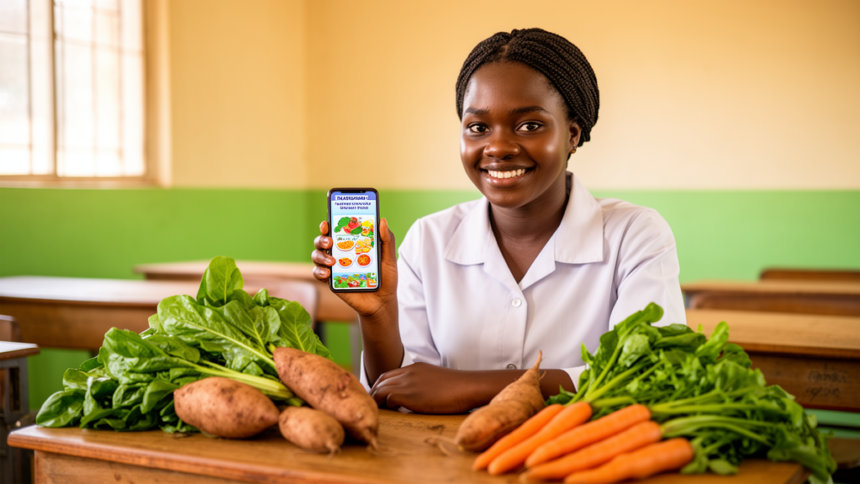
A WhatsApp-based nutrition education curriculum built around indigenous vegetables and fruits has been developed and validated for young people in southwest Nigeria, with researchers reporting strong expert agreement during content validation and high acceptability among the teenagers who piloted it. The program, called Roots and Greens: A Youth Guide to Indigenous Foods and Nutrition, was described in a study published in BMC Digital Health by Abiodun T. Atoloye and colleagues. The work addresses a persistent gap in digital health interventions: many nutrition education curricula delivered through messaging platforms are never systematically developed, theory-driven, or culturally validated, which the authors argue is a key reason such programs often fail to produce their intended results.
The curriculum emerged through three sequential phases. In the first, the research team built the program on three established learning theories: Cognitive Theory of Multimedia Learning, which holds that learning improves when information arrives through coordinated verbal and visual channels; Social Cognitive Theory, which frames behavior as the product of personal factors, environmental influences, and actions; and Empowerment Theory, which emphasizes giving people knowledge, skills, and decision-making control over their own health. In practice, this meant combining text, images, short videos, and infographics to prevent information overload, while weaving in peer interaction, feedback, and opportunities for participants to shape their own learning. The content itself drew on a comprehensive literature review, dietary guidelines from the Food and Agriculture Organization, the World Health Organization, and the Nigerian Food Guide, plus formative consultations with nutrition educators and cultural experts.
An interesting detail from the development phase is that the original intervention design contained ten modules combining school-based gardening with WhatsApp nutrition education. After iterative refinement involving the literature review, theory-based design, and stakeholder input, the team consolidated the material into seven thematic lessons delivered over four weeks. Each module integrated infographics, short videos, discussion of the cultural significance of foods, interactive quizzes and polls, and family engagement, all calibrated to be linguistically and developmentally appropriate for the target audience. The curriculum retained its focus on indigenous vegetables and fruits commonly consumed in southwest Nigeria, foods the researchers selected because they link nutrition, culture, and sustainability in ways that generic dietary content does not.
The second phase subjected the curriculum to formal validation. Five experts, three public health nutritionists and two health communication specialists or educators, independently reviewed each module on a 5-point Likert scale across five dimensions: content quality, cultural and contextual relevance, communication style and engagement, pedagogical value, and overall effectiveness. Agreement among the experts, measured with Kendall’s coefficient of concordance, ranged from 0.36 to 0.83 across modules, averaging 0.66, which falls in the substantial agreement range on the scale the authors used, and a statistically significant chi-square test supported the overall agreement. Descriptively, the validation was emphatically positive: across all modules, 100 percent of experts agreed or strongly agreed that the nutrition information was scientifically accurate, concise, aligned with public health guidelines, and relevant to the target audience, and 100 percent agreed the modules respected local dietary practices with realistic examples.
Following revision, two trained inter-raters assessed a purposively selected 70 percent of the curriculum, specifically modules 1, 2, 4, 6, and 7, chosen to represent the full range of text, quizzes, gamified exercises, infographics, and video. They rated 55 items covering message clarity, relevance, actionability, engagement design, fidelity to the delivery protocol, audio and video quality, text legibility, and link functionality. Percent agreement between the two raters ranged from 83.3 percent to 100 percent, with mean absolute differences of 0.17 or lower, indicating high consistency between independent evaluators.
The third phase tested the curriculum in real conditions. Forty potential participants were recruited from a larger study combining school-based gardening with digital nutrition education; twenty-two, aged 14 to 19, confirmed participation via WhatsApp and had their engagement tracked, and sixteen completed the post-intervention survey, forming the final analytic sample. The gender split was exactly even, half male and half female, most participants were between 14 and 16 years old, and most were in their final year of secondary school. Modules were delivered on Wednesdays and Saturdays over four weeks at a 7 p.m. time the participants themselves chose through a WhatsApp poll, with each session averaging 40 minutes. A registered dietitian familiar with the local cultural context facilitated delivery using a standardized protocol, moderating discussions, answering questions, and prompting interaction.
Acceptability was measured with the Theoretical Framework of Acceptability, covering affective attitude, burden, ethicality, intervention coherence, opportunity costs, perceived effectiveness, and self-efficacy. Perceived effectiveness was deliberately excluded from the student evaluation on the reasoning that students, as intervention participants rather than detached observers, are poorly positioned to judge effectiveness, a judgment the authors support with prior evidence that student assessments of effectiveness often reflect satisfaction rather than objective learning outcomes. Internal consistency of the framework’s domains, measured by Cronbach’s alpha, ranged from 0.60 to 0.89. Participants’ domain means ranged from 4.00 to 4.72 on the 5-point scale, with an overall acceptability mean of 4.50. Every participant reported feeling positive about receiving nutrition education through WhatsApp, all understood the purpose and structure of the messages, and all expressed confidence in applying the nutrition advice in daily life.
The teachers who observed the program rated it even more favorably, with domain means from 4.00 to 5.00 and an overall mean of 4.71. The three teachers unanimously reported that the curriculum was delivered as planned, that multimedia elements were clear and usable, that messages were logically sequenced, and that content was culturally and contextually relevant. Self-reported engagement was also strong: 87.5 percent of participants reported opening WhatsApp messages daily, half spent 10 to 30 minutes engaging with content, and 81.3 percent frequently shared lessons with family members. However, tracked behavior revealed a familiar digital-health gap. While 68.2 percent attended all modules, only nine participants completed three or more module exercises, and just two completed more than one homework assignment. The authors interpret this divergence between passive engagement, opening messages, and active engagement, completing tasks, as consistent with broader mobile health intervention findings, and suggest future programs consider more frequent reminders, smaller tasks, peer support, or stronger gamification.
Not every signal was uniformly positive. Roughly one-fifth of participant responses in the opportunity cost domain, 21.9 percent, indicated disagreement, suggesting some participants felt the program interfered with other important activities. The authors note this aligns with prior mobile health research on young people and argue it underscores the need for flexible engagement options and shorter program durations when designing mobile interventions. Incentives, including badges for the three most active participants and weekly data packages for all active participants, were already incorporated, but the attrition pattern, with non-completers showing lower module attendance, means the acceptability findings may partly reflect the views of the most engaged participants.
The authors are explicit about the study’s limits. The sample of 22 tracked participants came from two schools in southwest Nigeria, only three teachers served as observers, and the experts shared the participants’ culture, which may have introduced bias. The short four-week duration prevents any assessment of longer-term learning outcomes, smartphone dependence excludes digitally marginalized youth, and no power calculation was performed because the study was exploratory, focused on feasibility and acceptability rather than efficacy. The pilot design cannot establish whether the curriculum changes dietary behavior over time, and the authors state the findings should be interpreted as preliminary. What the study does deliver is a replicable validation blueprint: a documented process combining theory-driven design, expert content validation, inter-rater reliability testing, and pilot acceptability assessment that other researchers in resource-limited settings can adapt. Future trials with objective measures of dietary behavior and nutritional status will be needed to determine whether the enthusiasm recorded in this pilot translates into lasting changes in what young people eat.
Subject of Research: Development and validation of a WhatsApp-based nutrition education curriculum promoting indigenous produce among youth in southwest Nigeria
Article Title: Development and validation of Roots and Greens: a Whatsapp-based nutrition education program promoting indigenous produce among youth
Article References: Atoloye, A. T., Olasoji, S., Atoloye, I. A., Tanimonure, V. A., Awoleye, M. O., Atere, C. T., Oshosanya, O. H., & Oladejo, A. S. (2026). Development and validation of Roots and Greens: a Whatsapp-based nutrition education program promoting indigenous produce among youth. BMC Digital Health, 4(1), Article 67. https://doi.org/10.1186/s44247-026-00301-9
Image Credits: AI Generated
DOI: 10.1186/s44247-026-00301-9
Keywords: WhatsApp, nutrition education, indigenous foods, Nigeria, curriculum validation, digital health, youth, pilot study, acceptability, mobile health, low-resource settings, dietary behavior
News Source: Daisy Hatcher. (October 29, 2026). WhatsApp Nutrition Curriculum Roots and Greens Validated for Nigerian Youth. Scienmag.
We bring you the latest biotechnology news from best research centers and universities around the world. Check our website.
Enter your email address to subscribe to this blog and receive notifications of new posts by email.
Bioengineer.org © Copyright 2023 All Rights Reserved.
Login to your account below
Please enter your username or email address to reset your password.
Bioengineer.org © Copyright 2023 All Rights Reserved.
WhatsApp Nutrition Curriculum Roots and Greens Validated for Nigerian Youth – Bioengineer.org



Leave a Comment