




You have reached your maximum number of saved items.
Remove items from your saved list to add more.
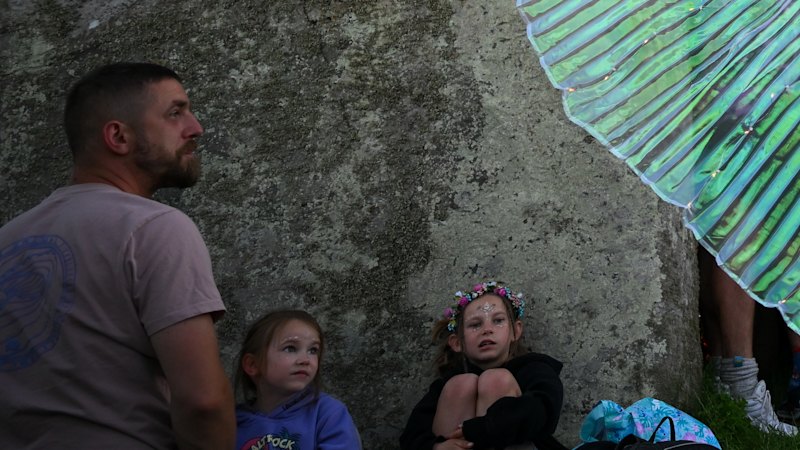
London: Thousands of people, many dressed as druids and pagans, have gathered at Stonehenge in southern England to see the sun rise for the northern hemisphere’s summer solstice.
“What few will realise is that 5000 years ago, on a nearby hillside overlooking modern day Bulford, people were doing the exact same thing – revering and celebrating the sunrise on Midsummer’s Day,” said archaeologist Phil Harding.
His team, from British firm Wessex Archaeology, discovered a structure near the prehistoric stone circle that may have served as a “prototype” for the Neolithic monument.
The structure, which the researchers said predated Stonehenge by about 500 years, would have consisted of two wooden poles 120 metres apart and aligned to point directly at the rising sun during the summer solstice and at the setting sun at the winter solstice.
Team leader Harding, 76, is well known in Britain through his many years of excavations for Channel 4 TV series Time Team. The site, which also turned up a treasure trove of finds including pottery, animal bones and a rare, disc-shaped knife, was likely to have been a focus for major religious gatherings, he said.
“Opportunities like this probably only come once in a career, in a lifetime,” Harding said. “I’m probably towards the end of my career now but thank God I’m still in archaeology long enough to be part of this discovery because it’s certainly the highlight of my career.”
The findings were released ahead of the summer solstice on Sunday, when thousands head to Stonehenge each year to celebrate the longest day of the year in the northern hemisphere. In Australia it is the winter solstice, or shortest day of the year.
Stonehenge is a symbol of British culture and history and remains one of the country’s biggest tourist draws. The World Heritage site was built on the flat lands of Salisbury Plain in stages, starting 5000 years ago. The stone circle was erected in the late Neolithic period, about 2500 BC.
The site’s meaning has been the subject of vigorous debate. The most generally accepted interpretation is that it was a temple aligned with movements of the sun –lining up perfectly with the summer and winter solstices.
Researchers who found the structure near Stonehenge carried out the dig at Bulford, five kilometres from the main stone circle, as part of archaeological work to support the British defence ministry’s program to accommodate troops who have been withdrawn in recent years from Germany, where the army had a big footprint for decades. The area around Stonehenge is one of the largest military training grounds in Britain, and Bulford is home to a barracks.
The original excavation took place between 2015 and 2017. Its findings required many years of analyses and tests. The findings will be published in the newsletter of the Prehistoric Society.
Get a note directly from our foreign correspondents on what’s making headlines around the world. Sign up for our weekly What in the World newsletter.
You have reached your maximum number of saved items.
Remove items from your saved list to add more.
More:
As Stonehenge hosts midsummer revels, dig unearths mystery nearby – SMH.com.au



Leave a Comment

