


Please Support Our Mission:
Please Support Our Mission:
InSight Crime
INVESTIGATION AND ANALYSIS OF ORGANIZED CRIME
On April 29, US prosecutors in the Southern District of New York announced an explosive set of charges against Rubén Rocha Moya, the current governor of Mexico’s Sinaloa state, for alleged ties to the Chapitos faction of the Sinaloa Cartel. Rocha Moya and nine other current and former government officials allegedly facilitate the Chapitos’ criminal activity in exchange for political support and bribes.
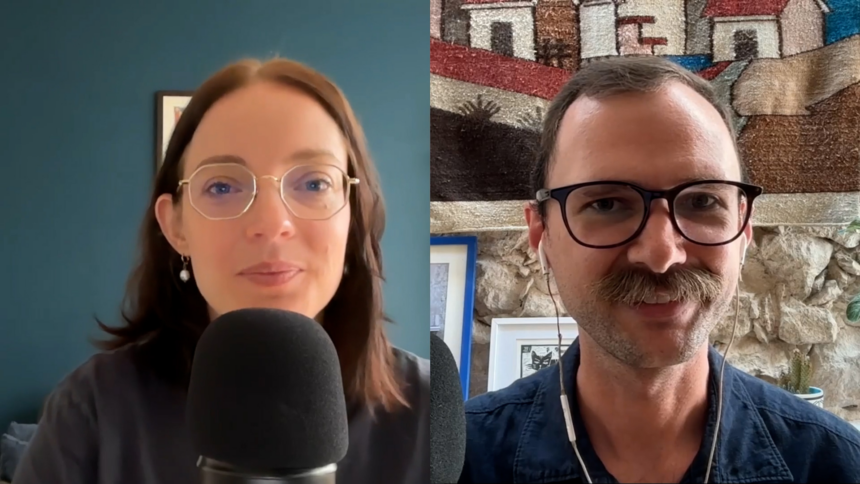
Victoria Dittmar (VD): My name is Victoria Dittmer and I’m an investigator and project manager at InSight Crime covering Mexico.
Parker Asmann (PA): And I’m Parker Asmann, another Mexico-based investigator at InSight Crime. Good morning Victoria. How are you doing today?
VD: So it’s Thursday, April 30th. Yesterday, April 29, we had some pretty remarkable news coming out from the Southern District of New York, where prosecutors released a criminal indictment against the current governor of the Mexican state of Sinaloa, Rubén Rocha Moya, along with nine other high-ranking local officials, including the mayor of Culiacán, which is the capital of Sinaloa, the head of the municipal police, a senator, and the former secretary of public security, among others.
The allegations are pretty remarkable. The officials are accused of working for the Chapitos, who is one of the factions of the Sinaloa Cartel that is led by the sons of Joaquín “El Chapo” Guzmán, an infamous drug lord who is currently serving a life sentence in the US. And the officials are charged with drug trafficking and weapons offenses.
According to what is in the indictment, their activities ranged from manipulating elections to directly supplying weapons to the capitals, to facilitating drug trafficking, and even offering this direct protection to many of their members. Mexican governments have been accused of organized crime or ties to organized crime before, but this does appear to be the first time that a sitting governor, someone who is still in office, is being formally indicted by US prosecutors.
This makes it a highly symbolic move. Also, politically speaking, all of those included in the indictment, including Governor Rocha Moya, have denied all allegations. And of course, Parker, here we’re talking about an indictment, right. So these are still allegations. They can be challenged in a court. But if they were true, what does this tell you? You and I have spent a lot of time in Sinaloa researching the Chapitos, the other factions of the Sinaloa Cartel, its criminal economies. What do you make of this?
PA: That’s right. Vic. I think the accusations are striking, to put it simply. As you and I both know, for any organized crime group to operate in Mexico, you need these types of relationships with politicians and local security forces in order to operate successfully. But the accusations that prosecutors in New York have laid out in the in the indictment take this relationship to a different level.
It’s not just a symbiotic relationship where government officials and security forces provide protection, and the criminal groups provide political support, or they threaten rivals in order to benefit the politician in charge. In this case, we’re talking about a sitting state senator, the local governor, the local mayor of Culiacán, the state capital of Sinaloa, as well as the municipal police and other significant figures in the local government.
We’ve come to describe this sort of system, this relationship, as hybrid criminal governance, where the lines between organized crime and local politics are very much blurred. And we’ve seen this type of system in other high-profile cases handled in the United States, the most high-profile of which is certainly going to be that of Genaro García Luna, the former security chief in Mexico, who was convicted on drug trafficking charges.
We’ve seen others accused of these types of connections as well, including Tomás Yarrington in Tamaulipas. Javier Duarte in Veracruz, and infamously, the former attorney general of Nayarit. So this is something that we have seen before, but the specific allegations in the indictment are truly remarkable.
You’ve read through the indictment, Vic, tell me a little bit more about the way in which the state was allegedly working with the faction of the Sinaloa Cartel.
VD: I think the key takeaway that that I have from this is this whole issue of protection, of protecting the Chapitos in very concrete ways. There are many examples, they describe for each of the people that are indicted, they describe how they protected members of the Chapitos. So it goes from “simple things” like informing them ahead of time of federal operations, for example. So if the Army was going to get closer to a lab, for example, or it was going to do a bust, then they would know ahead of time and have time to escape.
But then it goes, as you say, to another level, right? So there’s also a description of how they were collecting taxes from other drug trafficking organizations operating in Sinaloa.
We have to understand here that Sinaloa is not just the Chapitos, right. There are different factions. So allegedly, one of the indicted was collecting taxes from these other drug trafficking organizations to make it more expensive for them to conduct their operations. Here we’re talking about sort of an economic protection of the Chapitos operation.
Then things like releasing people who were arrested, you know, helping out their cases so they could be released easily, giving them access to government intelligence, access to surveillance methods and even operational support. This is specific to the case of the municipal police. So we’re talking about full on protection of their operations using various aspects and various elements of the state structure. So it’s the municipal government and the state government.
Mexico is a federal state. So state governments have significant influence in the territories where they operate. But is this something new, as you mentioned? No, it’s not necessarily something new. And we have the cases that have reached court, which we have to say are the exception rather than the rule. There are very few cases that have reached court.
But in our work across Latin America, various different countries, Colombia, Honduras, for example, we have seen how criminal organizations have evolved to not just be acting as traffickers or as exporters, fuel thieves, etc., but also key actors in various different aspects of the territory where they operate. So they have a huge influence in politics, in the legal economy, social and community issues.
This is a case of what we call criminal governance, right? So it’s not just organized crime corrupting a few officials for them to turn a blind eye. This is actually being involved in day-to-day decisions and control mechanisms to to protect their operations.
Again, what we read in the indictment are pretty explosive accusations. So, Parker, what do you think of this? Are they even believable? Is there some basis to it? Tell us a bit more about how prosecutors got to these accusations.
PA: I think that’s important point, Vic. Ultimately, it’s not up to us to decide whether these accusations are believable or not. But I think understanding the process behind how this indictment was filed is important to keep in in consideration.
So what happened in this case is that the prosecutors in the Southern District of New York, which is one of the premier prosecutor’s offices in the United States, what they did is they presented the evidence that they had to a grand jury and that grand jury, which is comprised of several citizens, they voted in favor of prosecutors filing an indictment against the officials listed in the criminal charges.
Now, if this case were to go to trial, it would be up to a jury to again analyze the evidence that the prosecutors presented and determine whether or not it’s sufficient enough to convict those that have been accused of these charges. So this isn’t a case where prosecutors simply decided one day to the next that they were going to file these criminal charges, which are extremely serious, against several high-ranking officials in Mexico. This was a months-long process that went through a grand jury process and eventually led to an indictment.
You and I, Vic, have done a lot of work on the ground in Sinaloa investigating criminal dynamics, political corruption, links between officials and organized crime over many years. We’ve heard a lot about these accusations over the course of our field work as well. Tell me a little bit more about our work on the ground, and how we understand this relationship between organized crime and political actors.
VD: I think the first thoughts we have when reading such an indictment is, as you say, obviously, we can’t say if this is true or not, but it’s certainly not completely far fetched, right?
When we have been in Sinaloa conducting research, we have documented how various members of different factions have acted with relative freedom across various parts of Sinaloa. For example, one interview that I have very much in mind is with a fentanyl producer who we asked if he ever felt the pressure of the law, if he was worried that if he was going to get captured, his whole business and obviously himself would get into trouble.
What he answered to us was that he wasn’t really worried. He believed the structure of the Chapitos. He was independent, but he paid for security to the Chapitos. So he was pretty confident that they would protect them if if he got captured and they would act in favor of him to get him released.
I think there are countless examples of that. There’s also other interesting things that we have seen now that the Sinaloa Cartel got into a civil conflict in which both the Chapitos and the Mayiza faction, which is the faction associated with El Mayo Zambada, who was kidnaped by the Chapitos, moved to the US, where he’s now in jail and going through his judicial process.
Obviously, a huge conflict began in Sinaloa that is still ongoing today. We have seen how municipal police have been some of the main targets. So it also raises a question of to what extent criminal groups see them as targets, as in, seeing them related to their rivals.
Then there’s also the long-standing rumors that Rocha Moya, the governor, had to do something with the kidnaping of El Mayo. It is rumored that he was summoned to that meeting where El Mayo was then betrayed and taken to the US. There’s a lot of inconsistencies there that the government hasn’t been able to fully explain.
So these suspicions have already been kind of brewing in Sinaloa, right? But Parker, speaking of El Mayo, why isn’t El Mayo mentioned?
PA: This is an interesting question, right? The indictment is pretty much just focused on the Chapitos. They seem to be the one faction of the Sinaloa Cartel that is singled out throughout the indictment. And that could suggest that maybe members of that faction who have been arrested and transferred to the United States are cooperating with US prosecutors.
Two of the most high-profile individuals currently in US custody would be Ovidio Guzmán and Joaquín Guzman, two sons of the former Sinaloa Cartel leader known as El Chapo. Both of them are cooperating with US prosecutors in hopes of receiving a lighter sentence.
Some of the accusations that you see in the indictment are extremely detailed, talking about specific dollar amounts that local officials were paid in bribes for protecting drug shipments, for attacking rivals, for other criminal conduct. There are some potential ledgers that are also included in the indictment.
We don’t yet know where exactly those ledgers came from, the context of how they got into the possession of US prosecutors. But it seems likely that a lot of this information that is included in the indictment came from individuals who are cooperating with the US government, and certainly at the top of that list are Ovidio and Joaquin.
It’s also interesting that that this indictment falls when it does. There’s been a lot of tension, if you will, between the US and the Mexican government in recent weeks, and really since President Donald Trump took office for his second term.
Tell me a little bit about this tension that we’re seeing and sort of the context of the US Mexico relationship amid this very damning indictment against the governor of Sinaloa?
VD: I think we can’t really ignore the current tension that we’re seeing between the Sheinbaum and Trump governments. This action itself caused a significant amount of tension in terms of at least how the Mexican government responded, which was going back to this argument of no intervention, sovereignty.
It’s tricky because Rocha Moya is the first official from the ruling party Morena that is formally linked to organized crime. It puts Sheinbaum in a difficult position. We know there is now a growing willingness as well from the US to not just target traffickers but also politicians. There’s been also many suspicions about who is next, which governors or mayors or security officials.
There’s a lot of questions about what happens now. The relationship is not easy between Mexico and the United States. Obviously, both governments cooperate, but these tensions can challenge that, can challenge this cooperation that is needed between both governments.
So yes, Parker, many questions that we still have. It’s certainly interesting to see what will happen with Rocha Moya. And it’s something we’re going to keep an eye as well, how the relationship between the US and Mexico evolves.
We really encourage you to keep up with our website, keep up with our coverage, read all of our profiles on the Chapitos, the Sinaloa Cartel, and even coverage on previous cases of elites and organized crime.
We’ll see you next time. Thank you.
Subscribe to our newsletter to receive a weekly digest of the latest organized crime news and stay up-to-date on major events, trends, and criminal dynamics from across the region.
Donate today to empower research and analysis about organized crime in Latin America and the Caribbean, from the ground up.
We go into the field to interview, report, and investigate. We then verify, write, and edit, providing the tools to generate real impact.
Our work is costly and high risk. Please support our mission investigating organized crime.
Sponsored by
Member of
Sign in by entering the code we sent to , or clicking the magic link in the email.
Refund Policy. This site is protected by reCAPTCHA and the Google Privacy Policy and Terms of Service apply.