

Hollywood has a habit of celebrating progress on disability representation without making it permanent. Every few years a film breaks through, a moment lands, and the conversation starts again — only to fade before anything structural changes.
This month, five film and television productions
have been honored with a Seal of Authentic Representation, recognizing their commitment to casting actors with disabilities in roles that reflect real, lived experience. They join 67 productions recognized since 2019. It is proof that authentic casting is possible. The question is why it remains the exception.
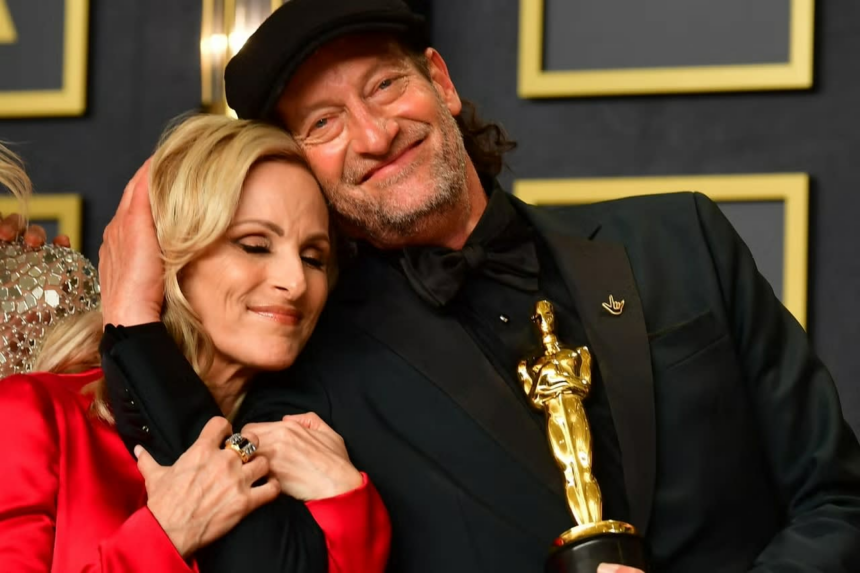
It is a question that came into sharp focus earlier this year, when the Academy Awards offered a small but telling moment. Academy president Lynette Howell Taylor recognized Marlee Matlin for her decades of advocacy — work that helped drive the development of captioning technology in film long before Hollywood fully grasped the business case for accessibility. When the camera found Matlin, she signed ‘I love you’ to the audience. It was a small gesture that carried the weight of an entire career.
That moment brought me back to 2022, when CODA swept the Academy Awards and it felt like a genuine shift was possible. A turning point for disability representation in Hollywood. Not just for a single film, but for an industry that had spent decades telling stories about disability without the people at the center of them.
I still believe it could be. But progress has not kept pace with the promise of that moment.
The Academy of Motion Picture Arts and Sciences is a genuine partner in this work. For several years, our foundation has worked closely with them on initiatives that advance disability inclusion, and that collaboration continues to bear fruit. But meaningful moments on a stage, however important, are not the same as industry-wide change.
The numbers tell us how far we still have to go. Last year, alongside the Geena Davis Institute, our foundation published research analyzing 350 scripted TV series over seven years. Across those shows, only 3.9 percent of characters had a disability, despite people with disabilities making up nearly 30 percent of the U.S. population. And of the characters with disabilities who did appear, only 21 percent were played by actors who actually share those disabilities. It is a choice the industry keeps making, passively or otherwise.
The standard for the Seal is deliberately simple. A speaking role of at least five lines, played by an actor with a disability. The honorees show that bar is being cleared. What needs to happen now is for the industry to stop treating that as exceptional and start treating it as the floor.
Here is what decades of this work have taught me: Hollywood does not have a talent problem. Every time a door opens, the work speaks for itself. What the industry has is a habits problem — a quiet tendency to treat disability as a specialty category, something to address when the advocacy gets loud enough, rather than a dimension of human experience that belongs in every kind of story.
The gap between individual recognition and lasting change is precisely what we are still trying to close. It cannot be fixed by any single moment. Only decisions do: in writers' rooms, in casting offices, in development meetings, made consistently enough that authentic representation stops being a cause for celebration and becomes simply the way things are done.
When people with disabilities take ownership of their own stories, to write them, perform them, shape them from the inside, something happens that imitation cannot produce. This is not just a moral argument, though it is that too. It is an artistic one. And it is a business one. Market research consistently shows that audiences seek out authentic representation and respond to it. The demand is there, the talent is there, and studios have already made commitments to audition actors with disabilities. The infrastructure for change exists. What is still missing is the urgency to make it stick.
Award seasons come and go. What shapes Hollywood culture over the long term is not what gets celebrated on any given night but what gets made, funded, cast, and greenlit year after year. The industry as a whole — studios, streamers, producers, casting directors, writers — has both the ability and the evidence to move faster than it has.
We have already shown what this looks like when it works. The only question left is whether Hollywood is willing to stop treating that as the exception and start building a culture where it no longer needs to be pointed out at all.
Jay Ruderman is President of the Ruderman Family Foundation, author of "Find Your Fight: Make Your Voice Heard for the Causes That Matter Most," and the host of the award-winning podcast "All About Change."
How does it work?
There are no comments for this story
Be the first to respond and start the conversation.
More stories from writers in
Critique and other communities.
Maybe I’ll change my name, not sure to what. Skylovia or Parentheses, perhaps, maybe both: Skylovia Parentheses will not do things I do.
By
13 days ago in
Critique
So, this latest spate of conspiracisms involves scientists with mysterious deaths in the United States, China, and elsewhere. What is happening to them? Are governments trying to stop rational thought and investigation in our world or what?
By Skyler Saunders4 days ago in Critique
You would think that I would be used to loss by now. I was five years old February seventeenth, the day that two masked men, armed with assault rifles, entered the Free Citizens First Credit Union on the corner of First and Crimson. They subdued the guards and zip tied the bank manager to the bronze leg of Wilford Citizens, the bank’s founder, statue in the center of the lobby.
By Amos Glade6 days ago in Fiction
A garden’s crown A flower renowned Glorious colors Bountiful colours Lushly full robes Holding majestic globes Image created in Gemini
By Mother Combs7 days ago in Poets
© 2026
Creatd, Inc. All Rights Reserved.