Now
59°
Sat
65°
Sun
62°
by AUSTIN DENEAN | The National News Desk
WASHINGTON (TNND) — More officials at the Federal Reserve are raising concerns about how the artificial intelligence boom is impacting the economy, from increasing inflation risks to what could happen to the financial system if the buildout goes bust.
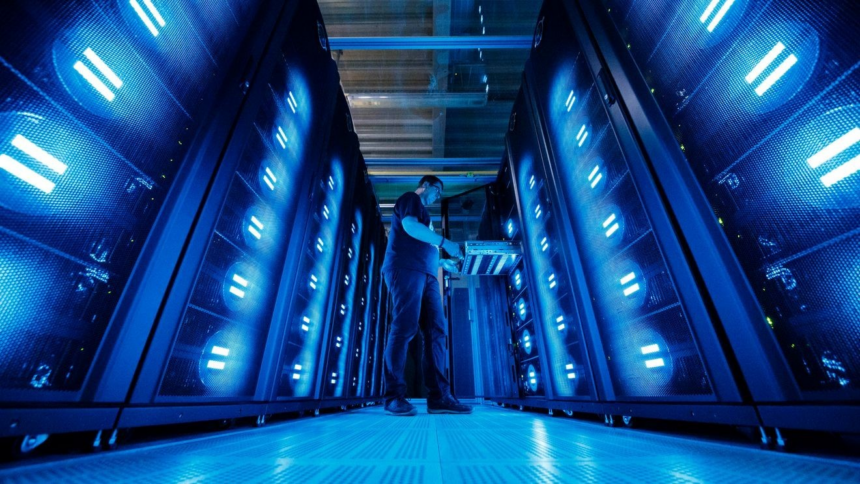
It has created a challenging dynamic for the Fed to navigate as it also faces higher energy prices from the war in Iran and lingering effects from President Donald Trump’s tariffs. AI investment has been a leading driver of economic growth as companies make multibillion-dollar bets to ramp up construction of data centers, which has also put pressure on inflation with robust demand for computer chips and other related components that are also used in consumer electronics.
A growing chorus of Fed officials have highlighted the impact AI is having on price pressures in recent weeks as they try to decipher how high to raise interest rates to bring it down.
“Currently, the AI build-out is exerting upward pressure on demand and inflation,” Fed Vice Chair Phillip Jefferson said in a speech on Monday.
“In the future, advancements in productivity could exert downward pressure on inflation while continuing to support growth,” he added.
Chicago Fed President Austan Goolsbee said the AI boom is contributing to the risk of overheating the economy in a way that could be difficult for the Fed to counteract.
“The AI boom is contributing to the potential of overheating in the economy,” Goolsbee told reporters on Thursday. “When you’re getting major business investment, almost unprecedented levels of business investment, there’s a high danger that the economy’s capacity cannot handle that kind of a pig through the python.”
Similar concerns are prevalent among Fed officials. Minutes from its October meeting showed many officials viewed the AI buildout as a “material source of inflation risk,” adding another hurdle to their efforts to bring price increases under control.
The robust demand for equipment used in data centers has been evident in inflation data. Producer prices for electrical components have climbed nearly 32% from last year, while electrical machinery rose 14.3%, according to the producer price index. Consumer electronics have also jumped, increasing costs for goods like laptops and smartphones.
The additional risks come as the Fed is already struggling to contain inflation from the energy shock caused by the war with Iran and lingering effects of tariffs. Consumer prices climbed 0.4% in October from the month prior, according to government data. An annual comparison was unavailable due to last year’s government shutdown, but economists estimate prices climbed 4% from 2025.
Inflation has been running above target for more than five consecutive years, driving consumer frustrations about the state of the economy and putting pressure on the Fed to show it is making progress.
A rate increase at the December meeting is widely expected by investors and economists, as inflation data since October’s pause has been hotter than expected and has shown signs of the energy shock spreading into other parts of the economy. Odds of another hike in January have jumped in recent weeks as more data shows elevated inflation and officials continue to open the possibility of having to do even more in 2027.
The Fed’s benchmark rate is currently set at a range of 3.75% to 4%, which an increasing number of officials have said is not doing enough to contain inflation. A question facing the central bank is whether higher rates will be enough to temper trillions of dollars’ worth of investment.
Fed chair Kevin Warsh has made figuring out AI’s impacts on the economy a priority, creating a task force to examine the issue as he tries to reshape how the central bank determines its monetary policy. On Monday, he said the Fed was modeling various scenarios on what the impact might be.
Warsh did not address the inflationary effects of the AI buildout and instead focused on how AI might affect the economy. In the best case, it would spur new economic growth with boosts in productivity that do not increase unemployment. In a worse case, the technology could cause significant labor market disruption even if it leads to higher growth. He said there were also concerns that returns on AI investments could be disappointing and fuel a stock market correction.
“Our job is to prepare for whatever comes next,” Warsh said. “That means contingency planning, which becomes only more important when the world is changing this fast. Our aim today is a humble one: to ask the right questions.”
Policymakers and Wall Street are also becoming increasingly concerned about what could happen if the AI boom fails to deliver. Minutes from the October meeting showed nearly all officials raised concerns about negative consequences to the financial system if AI yields disappointing results, pointing to a rapid rise in AI-related debt and an increasing concentration “among a small number of firms.”
Other central banks are also trying to get a handle on how AI is presenting new risks as much of the world has also struggled to get inflation under control. International Monetary Fund Managing Director Kristalina Georgieva said on Thursday that demand for AI hardware and other related goods was pushing up consumer prices around the world and is likely to lead to higher rates.
“This calls for a tightening of monetary policy in many economies,” she said.
2026 Sinclair, Inc.