Thank you for visiting nature.com. You are using a browser version with limited support for CSS. To obtain the best experience, we recommend you use a more up to date browser (or turn off compatibility mode in Internet Explorer). In the meantime, to ensure continued support, we are displaying the site without styles and JavaScript.
Advertisement
Nature Health (2026)
The breakdown of social connections in the USA may have led to increases in substance use and associated health harms. Here we report the effects of a multilevel, social health capital intervention tested in a randomized controlled trial (N = 511 randomized; 481 analysed) across 13 US states. The trial randomized participants to a multilevel community-based, remote, group intervention with healthcare access (that is, remote human immunodeficiency virus (HIV) and hepatitis C virus testing and naloxone) or a control condition with relevant Centers for Disease Control and Prevention-developed reading materials. The primary outcome was a composite score based on: (1) testing for HIV, (2) testing for hepatitis C virus, (3) HIV prevention (for example, using pre-exposure prophylaxis or condoms if sexually active, or disinfecting syringes if injecting drugs), (4) requesting naloxone, (5) carrying naloxone and (6) making or rebuilding at least one social connection. The intervention provided substantial benefits at the immediate follow-up (odds ratio (OR) of 4.44, 95% confidence interval (CI) 3.17 to 6.22, P < 0.001) and remained superior at the 3-month follow-up (OR of 1.68, 95% CI 1.22 to 2.33, P = 0.010), with the primary outcome findings no longer significant at the 6-month follow-up (OR of 1.44, 95% CI 1.04 to 2.00, P = 0.090). These encouraging findings support testing the intervention for other public health concerns and evaluating whether booster sessions, ongoing peer contact or continued access to health resources sustain benefits over time. ClinicalTrials.gov registration: NCT05363865.
As participation in civic and community activities and social time with family, friends and coworkers have decreased since the latter half of the twentieth century, Americans’ social and health capital has deteriorated1,2,3. Smaller social networks, fewer friends and fewer opportunities for civic engagement have weakened norms of reciprocity, mutual assistance and trust, while increasing isolation and loneliness1,4. In turn, social isolation is associated with suicide5,6, non-medical drug use7 and drug overdoses8, as well as cardiovascular disease9, dementia10,11 and cancer mortality12 (for benefits of social connections, see13,14,15,16,17). Accordingly, in 2023, Dr. Vivek Murthy, the then-US Surgeon General, declared social isolation an ‘epidemic’,18 and the Office of Disease Prevention and Health Promotion centred its Healthy People 2030 initiative on social determinants of health, including improving access to care and social resources19,20,21.
In this Article, we report the effects of a multilevel social intervention that weaves a social fabric for people from Appalachia and the Midwest, oversampling participants from rural and non-metropolitan counties22 in those states (Fig. 1). Despite their abundant natural and social resources, these areas have confronted poverty and population decline since the early twenty-first century. Multiple generations have grappled with the end of the coal mining industry and the ensuing unemployment and loss of income23,24. In comparison to the USA as a whole, the Appalachian region has increased rates of diabetes, obesity and suicide, as well as higher mortality from many health conditions (for example, heart disease, cancer, stroke and diabetes)25. These regions have also been the epicentres of most predicted and actual outbreaks of the human immunodeficiency virus (HIV) and hepatitis C virus (HCV)26,27 in the USA over the last decade28, fuelled by injection drug use, risky sexual behaviours and lack of access to prevention and treatment29. Despite slight decreases in drug overdose deaths in recent years, these regions contribute greatly to the fatal drug overdoses in the USA each year30,31.
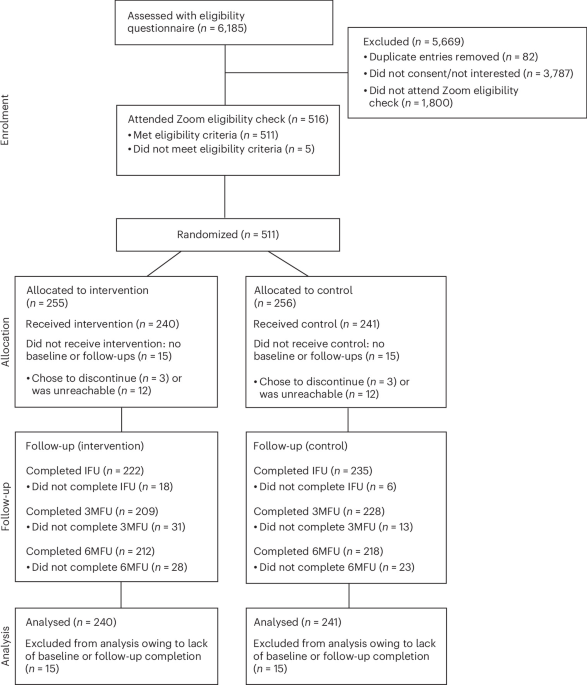
Number of participants included or removed at each stage, from enrolment, allocation and follow-ups to the final modified intent-to-treat analysis based on N = 481. 3MFU, 3-month follow-up; 6MFU, 6-month follow-up; IFU, immediate follow-up.
The regional vulnerability of various Appalachian and Midwestern areas is further fuelled by isolation, stigmatization of people who use drugs, and policies that actively restrict harm reduction and drug treatment services26,28,32,33,34,35,36,37,38,39. Smaller towns and rural areas (for a comparison with large urban areas, see refs. 22,40,41) carry particular risks of drug-related harms owing to four features: (1) economic distress brought on by deindustrialization, (2) physical conditions, including limited transportation, longer distances between places and insufficient infrastructure, (3) social conditions, including a lack of anonymity and stigmatization of people who use drugs and (4) policy conditions, including limited availability of harm reduction and drug treatment services32. In a nationally representative sample, rural participants, compared with urban ones, were less likely to test for HIV, with a lifetime HIV testing frequency of 32.2% in the most rural areas versus 43.6% in the most urban areas36. As of the 2020 US Census, rural areas had 5.1 primary care physicians per 10,000 residents, whereas urban areas had 8.0 physicians per 10,000 residents42. Reduced availability of primary healthcare services has been linked to lower healthcare utilization (for example, primary care and specialty care visits)43, poorer health44 and lower life expectancy45. In addition, consistent with the United States Department of Agriculture (USDA) Economic Research Service’s Rural–Urban Continuum Codes, small metropolitan areas in Appalachia and the Midwest often share demographic and economic characteristics with micropolitan and non-metropolitan communities, distinguishing them from large metropolitan centres22,40,41. Thus, the health context of the substance use epidemic in Appalachia and the Midwest is ideal to test an intervention that builds social groups to promote social connections and health behaviours while facilitating access to healthcare.
Tackling the staggering substance use crisis in rural areas and smaller towns in Appalachia and the Midwest has proven especially challenging46. For example, implementing testing and harm reduction strategies in these areas has largely failed to produce significant increases in HIV/sexually transmitted infection testing47 or harm reduction practices (that is, outpatient treatment, case management and peer support)48,49,50. Meanwhile, the Communities that HEAL (Helping to End Addiction Long-Term) intervention, where 43% of the targeted communities were rural, has had promising implementation outcomes in Kentucky, Massachusetts, New York and Ohio—regions receiving the interventions achieved 79% higher naloxone distribution compared with regions receiving usual care (adjusted relative rate of 1.79; 95% confidence interval (CI) 1.28 to 2.51; P < 0.001)51. However, this ambitious trial has not verified effects on adoption of naloxone on individuals, nor did it include HIV or HCV testing. Furthermore, no other trial has been designed to test the social health capital intervention examined here. In fact, past trials, alongside the continued burden of poverty and disease in these regions, highlight the need for innovative programmes to address these social health problems in effective ways.
The theory behind the multilevel intervention we designed is shown in Fig. 2. Following a social regulatory framework for behaviour change, individuals can best select and plan to achieve personal goals in the presence of others and with the support of access to healthcare52,53,54. The group can provide support for viable solutions, challenge unrealistic plans, share their own experiences and act as role models for different approaches to problem-solving55,56. Social integration within a group can also enhance social capital by providing information and cognitive and emotional resources to cope with difficulties, particularly when populations experience isolation56,57. Moreover, the stigma surrounding substance use leaves people who use drugs (PWUD) socially ostracized and without access to life-saving health resources such as naloxone and syringe service programmes58,59,60,61,62,63,64. Therefore, increasing contact between PWUD and the community at large (that is, people who do not use drugs (PWNUD)) and increasing healthcare access (HCA) are probably critical. Bringing people from antagonistic communities into contact can reduce prejudice when the group shares a common goal65. In addition, supplying health resources remotely by, for example, mailing naloxone or HIV test kits is key to decreasing the health risks of isolated populations27. Thus, this research tested a multilevel intervention involving social integration components—goal-setting discussions and contact with others through Zoom sessions and an ad hoc virtual social network to continue discussions—as well as access to healthcare by remote provision of HIV/HCV test kits and naloxone.
The multilevel intervention leveraged social integration; goal setting, support and implementation; and access to healthcare (that is, HIV and HCV test kits and naloxone) to increase HIV and HCV testing and prevention and reduce substance-use harm in 13 states of the USA. GA, Georgia; IL, Illinois; IN, Indiana; KS, Kansas; KY, Kentucky; MI, Michigan; MO, Missouri; NC; North Carolina; OH, Ohio; PA, Pennsylvania; TN; Tennessee; VA, Virginia; WV, West Virginia. Map created using maps package in R with US Census Bureau data.
Source data
This was an unblinded, superiority randomized controlled trial (RCT) that compared two parallel arms with participants recruited from 13 states in Appalachia and the Midwest: Georgia, Illinois, Indiana, Missouri, North Carolina, Kansas, Kentucky, Ohio, Tennessee, West Virginia, Michigan, Pennsylvania and Virginia (Figs. 1 and 2). The states were selected because they included counties identified as at risk for rapid transmission of HIV and HCV28. We oversampled areas with lower population density and smaller economic scales, including rural areas and small cities with fewer than 250,000 inhabitants. The intervention was manualized and informed by a large regional community advisory board (CAB; Grid for the Reduction of Regional Vulnerability (GROV; thegrov.org); see end of Article for full list of members) that contributed to the intervention and study design. We created social groups that met virtually to promote the setting and achievement of life-improvement goals among their members; promote intergroup contact between PWUD and PWNUD66; and increase access to HIV testing, HCV testing and naloxone nasal spray (also known by the commercial name ‘Narcan’) in the critical region of Appalachia and the Midwest.
This intervention was designed to improve critical health and social outcomes. We hypothesized that, relative to the control condition, participants assigned to the intervention would demonstrate greater engagement in a single composite outcome reflecting HIV/HCV prevention, overdose prevention and social connection behaviours. This composite score was calculated from six prespecified indicators: HIV testing, HCV testing, HIV prevention behaviours when relevant (that is, using PrEP or using condoms if having anal or vaginal sex, disinfecting syringes or using syringe exchange programmes if using injection drugs), requesting naloxone, carrying naloxone and forming at least one new or re-established social connection. These indicators were selected because they aligned directly with the intervention’s core components and resources: education about HIV/HCV testing and prevention, provision of at-home HIV/HCV test kits and naloxone, and support for initiating or re-establishing social connections. Accordingly, our primary hypothesis focused on improvement in the overall composite outcome, although we also separately analysed each of the six individual indicators as secondary outcomes. The intervention was evaluated at immediate, 3-month and 6-month follow-ups. The intervention processes were studied by analysing their effects through social integration processes (that is, topics discussed in the group sessions, number of sessions attended and enrolment in the virtual social network) and remote access to healthcare (that is, HIV/HCV test kits and naloxone).
As shown in Fig. 1, despite reminders, the excluded 30 participants did not complete the baseline or any follow-ups, probably because they chose not to continue the study, emails and calls did not reach them or other unknown reasons. All other participants were included in the analysis. Retention across cohorts at each follow-up ranged from 89.40% to 98.96%, meeting high retention standards for clinical trials67,68 (Methods).
Participants were drawn from the counties shown on the map in Fig. 2. The demographic characteristics of the analytic sample of 481 participants are described in Table 1. The sample was roughly evenly split between PWUD and PWNUD, both at the sample level (48.86% PWNUD and 51.14% PWUD) and within each condition (intervention condition, 43.75% PWNUD and 56.25% PWUD; control condition, 53.94% PWNUD and 46.06% PWUD). As presented in Table 1, the sample had a high level of diversity across all demographics, including gender, race, ethnicity, education and living situation. Based on the testing data, the sample had a substantial risk for HIV and HCV positivity, with 7 participants (1.46% overall rate) being positive for HIV and 23 (4.78%) being positive for HCV. In addition, random assignment ensured the demographic and clinical characteristics were generally balanced across the intervention and control conditions (Table 1).
All analyses (Methods) were conducted as modified intent to treat, including all participants who completed the baseline or at least one follow-up assessment (N = 481). We analysed a composite primary outcome consisting of a sum of ‘yes’ responses to (1) testing for HIV, (2) testing for HCV, (3) carrying out HIV prevention behaviours when relevant, (4) requesting naloxone, (5) carrying naloxone and (6) making or rebuilding at least one social connection outside of the intervention (Fig. 3). This composite variable ranged from 0 to 6 and was treated as a continuous outcome. For this composite variable and all other continuous outcomes, we calculated the odds ratio (OR) and 95% CI from the raw means and standard deviations (s.d.) of the conditions to more easily compare effect sizes between binary and continuous outcome variables. However, the P values reported are derived from the linear regression models, which also control for PWUD status. We discuss unadjusted P values in the text and provide adjusted P values for all primary and secondary outcomes in Table 2 to account for multiple testing. Most results for both adjusted and unadjusted P values aligned in terms of statistical significance, and any inconsistencies are noted accordingly. Results, which appear in Table 2 and Fig. 3, indicated beneficial effects at the immediate follow-up (OR of 4.44, 95% CI 3.17 to 6.22, P < 0.001) and at 3-month follow-up (OR of 1.68, 95% CI 1.22 to 2.33, P = 0.010), with a loss of statistical significance at the 6-month follow-up (OR of 1.44, 95% CI 1.04 to 2.00, P = 0.090).
a–c, Graph showing the predicted mean values of the primary outcome in the intervention condition and control condition at the immediate (a), 3-month (b) and 6-month (c) follow-ups (N = 481). The primary outcome is the sum of six dichotomous outcomes: (1) testing for HIV, (2) testing for HCV, (3) HIV prevention when relevant, (4) requesting naloxone, (5) carrying naloxone and (6) making or rebuilding at least one social connection outside of the intervention. Each red dot represents an individual participant’s value for the primary outcome with slight random noise added to reduce overlap. The error bars represent 95% CIs around the predicted mean for each condition (black dots).
Source data
Our secondary outcomes were the six individual outcomes that composed the primary outcome: (1) testing for HIV, (2) testing for HCV, (3) HIV prevention behaviours when relevant, (4) requesting naloxone, (5) carrying naloxone and (6) making or rebuilding at least one social connection outside of the intervention. All results are presented in Table 2. We also repeated the analyses for participants across rural and other counties and across Appalachian and non-Appalachian counties. The results from these sensitivity analyses appear in Table 3, and, despite lower statistical power, suggest very similar results.
Relative to the control condition, participants in the intervention condition were significantly more likely to test for HIV at the immediate follow-up (OR of 4.44, 95% CI 2.29 to 9.33, P < 0.001), although this effect was no longer significant at the 3-month and 6-month follow-ups, once test kits were also available to control participants. The intervention condition participants were also more likely to test for HCV at the immediate and 6-month follow-ups (OR of 4.45, 95% CI 2.15 to 10.13, P < 0.001 at the immediate follow-up; OR of 1.88, 95% CI 1.21 to 2.96, P = 0.005 at the 6-month follow-up), although there was no significant difference at the 3-month follow-up (P = 0.062). The 6-month follow-up effect became non-significant after P value adjustment. There were no significant differences for HIV and HCV prevention behaviours across conditions at any timepoint.
Across two follow-ups, participants in the intervention condition requested naloxone more than participants in the control condition. This ranged from a large effect at immediate follow-up (OR of 410.41, 95% CI 59.02 to 51,835.61, P < 0.001), when only the intervention offered naloxone delivery, to a small effect at the 3-month follow-up (OR of 1.59, 95% CI 1.10 to 2.30, P = 0.014) and no statistically significant difference at the 6-month follow-up (OR of 1.35, 95% CI 0.93 to 1.95, P = 0.111). In addition, intervention participants were more likely to carry naloxone at the immediate follow-up than control participants (OR of 1.59, 95% CI 1.02 to 2.49, P = 0.043), but this effect did not persist at the 3-month and 6-month follow-ups, once naloxone was available to control participants as well. For these two outcomes, the intervention effect on requesting naloxone observed at the immediate follow-up remained statistically significant after correcting for multiple comparisons.
There was a small but significant effect on a dichotomized measure of whether participants made or re-established at least one social connection (OR of 1.60, 95% CI 1.09 to 2.36, P = 0.017) at the immediate follow-up, with the intervention condition being more likely to have done so. This effect was no longer significant at the 3-month and 6-month follow-ups. The effect at the immediate follow-up was also no longer significant after correcting for multiple comparisons.
Beyond measuring the outcomes following the intervention, we also conducted a series of post hoc process analyses to investigate whether the effects were related to the social integration and HCA processes on which it was based (Fig. 2). We first estimated associations between the primary outcome and three measures of social integration processes (that is, discussion topics, the number of sessions attended and registering for an account on the GROV platform) while controlling for PWUD status. These analyses, which were based on the intervention condition (N = 241), revealed a positive correlation between GROV sign-ups and the primary outcome at the immediate follow-up (b = 0.55, 95% CI 0.10 to 1.00, P = 0.017). One participant assigned to the control arm attended the intervention sessions with their spouse (who was in the intervention arm) and signed up for GROV. For this reason, they are included in these process analyses. In the outcome analyses, they are included with the control arm as the analyses are intent to treat. Furthermore, there was a positive correlation between the number of sessions attended and the primary outcome (b = 0.20, 95% CI 0.02 to 0.39, P = 0.027) and between GROV sign-ups and the primary outcome (b = 0.56, 95% CI 0.07 to 1.05, P = 0.025) at the 3-month follow-up. There was also a non-significant positive correlation between GROV sign-ups and the primary outcome at the 6-month follow-up (b = 0.49, 95% CI −0.01 to 1.00, P = 0.055). To verify associations between the primary outcome and the discussion topics, we used Generative Pre-trained Transformer (GPT; a large language model) to rate how much each session discussed six secondary outcome topics (for example, HIV testing or carrying naloxone) and combined those ratings into a single GPT score. We then regressed the composite intervention outcome on the GPT discussion score, which reflects conversation about the six secondary outcomes integrated into the composite outcome. Suggesting that the discussions were important to the intervention outcome, the GPT discussion score showed a significant positive association with the composite outcome at each follow-up (immediate follow-up: b = 0.91, 95% CI 0.33 to 1.48, P = 0.002; 3-month follow-up: b = 0.85, 95% CI 0.21 to 1.48, P = 0.010; and 6-month follow-up: b = 0.79, 95% CI 0.14 to 1.45, P = 0.018).
The multilevel intervention we tested encompassed HCA as a structural component. Yet, we considered that withholding potentially life-saving resources such as HIV/HCV test kits and naloxone from control participants, who are from communities with elevated HIV/HCV and overdose risk, for an extended period was unacceptable. Therefore, control participants were intentionally provided delayed access starting from the immediate follow-up for ethical and humanitarian reasons. Unavoidably, the staggered provision of HCA across conditions introduced a potential confound in interpreting the primary analyses. Specifically, at the 3-month follow-up, intervention participants had had HCA for about 4 months, while control participants had had it for only 3 months. This raised the question of whether observed differences between conditions simply reflected this disparity in HCA duration, rather than the broader multilevel intervention effect. We therefore conducted a time-since-HCA analysis to assess this possibility directly.
Rather than comparing conditions at fixed calendar follow-up timepoints (immediate, 3 months and 6 months), the time-since-HCA analysis re-anchored each participant’s outcomes relative to the time elapsed since they personally received HCA. Using the primary outcome scores from the immediate follow-up to the 6-month follow-up, and controlling for PWUD status, three types of models estimated with maximum likelihood (that is, linear, quadratic and natural spline with one knot at 1 month post access) were compared using Akaike information criterion (AIC) and Bayesian information criterion (BIC). The linear model had the worst fit (AIC of 4,269.44; BIC of 4,306.36), while the quadratic and natural spline models performed similarly and were selected for further analysis (AIC of 4,228.50; BIC of 4,275.97). Both models were refined using restricted maximum likelihood, and we compared outcomes between conditions at 1 month, 3 months and 6 months after HCA (post-access timepoints).
As illustrated in Table 3, both models showed a significant intervention effect at 1 month post access (quadratic: mean difference of 0.45, 95% CI 0.22 to 0.67, P< 0.001; natural spline: mean difference of 0.43, 95% CI 0.20, 0.65, P < 0.001). For the quadratic model, the intervention effect was non-significant at 3 months post HCA (mean difference of 0.22, 95% CI −0.01 to 0.45, P = 0.057) and marginally significant at 6 months post HCA (mean difference of 0.23, 95% CI 0.00 to 0.45, P = 0.048). By contrast, for the natural spline model, the intervention effect was marginally significant at 3 months post HCA (mean difference of 0.24, 95% CI 0.01 to 0.47, P = 0.044) and non-significant at 6 months post HCA (mean difference of 0.21, 95% CI −0.02 to 0.43, P = 0.071). Both models revealed a clear and significant advantage of the intervention at 1 month post access, but this effect diminished over time, becoming only marginally significant or even non-significant at 3 and 6 months post access, depending on the model used. Overall, this trend indicates that, when exposure to HCA is held constant, the intervention’s effects are most pronounced in the early post-access period and gradually wane, but they do not completely fade, as control participants accumulate similar exposure over time. This suggests a meaningful, likely time-sensitive benefit from the broader multilevel intervention (that is, discussion topics, number of sessions attended and signing up for GROV) that extends beyond HCA alone.
Overall, our results showed that we developed an efficacious social health capital intervention to increase HIV and HCV testing and address drug use harm, including in critical rural and small-town areas in the USA. The intervention had a meaningful impact on our composite outcome (Fig. 3) and several key outcomes among the study participants. A key innovation of our intervention was the creation of a virtual community. As shown in the trial schema (Supplementary Fig. 1), this began with participants meeting during the Zoom sessions and then continued on the GROV social media platform. Within these newly created communities, participants were able to discuss their experiences and struggles, including but not limited to social and health concerns; listen to and support each other; and ultimately take meaningful action to improve their lives and health, including carrying naloxone to protect others in their communities. All in all, by establishing and maintaining virtual connections with others, participants became better equipped to address important life decisions that affect their health.
The delayed access to healthcare in the control condition has important implications for interpreting the primary analyses. Although HCA is a structural component of the intervention, control participants could request test kits and naloxone starting at the immediate follow-up for ethical and humanitarian reasons. Consequently, differences between conditions at early follow-up timepoints reflect variations in HCA duration rather than solely the effects of the broader multilevel intervention. Therefore, the primary analyses should be viewed as capturing the combined effect of HCA and the social integration components of the intervention, rather than isolating the effects of its components.
To examine whether control participants catch up to intervention participants once they are provided access to test kits/naloxone, we also conducted time-since-HCA analyses. We re-anchored outcomes on the basis of the time elapsed since each participant received HCA. These analyses revealed that a significant advantage from the intervention persisted 1 month after access, even after accounting for differences in kit exposure. This suggests that the social integration elements, including structured discussion topics, session attendance and registration with GROV, all provided additional benefits beyond HCA alone. However, this advantage weakened over time, becoming only marginally significant or non-significant at 3 and 6 months post HCA. In summary, the findings highlight the importance of HCA in driving outcomes in this intervention while also underscoring the meaningful, time-sensitive role of the social integration components in the early post-access period. Future studies may consider extending the social integration component throughout the entire intervention period to examine whether more sustained social integration yields more lasting effects.
Given the heightened vulnerability of residents in Appalachia and the Midwest, particularly those who use drugs, the success of our intervention represents a major step forward and potential avenue for future intervention work, both for the HIV, HCV and substance use epidemics and for public health more broadly. For example, a national study of hospitalizations of people who use substances found average screening rates of 40% for HIV and 32% for HCV, which are suboptimal for such an at-risk population69. In our sample, the screening rates were comparable. Specifically, the baseline rates of HIV and HCV screening were 55.9% and 32.6%, respectively, indicating a vacuum of access to life-saving health resources supplied by our intervention.
While our study focused especially on the substance use crisis in Appalachia and the Midwest, our novel group and community approach need not be limited to this context. The social health capital intervention we examined has the potential to address other public health concerns and community issues, such as diet and exercise, civic engagement and climate change. Our intervention consisted of (1) promoting individual goal setting and completion in a group, (2) providing an online social platform and (3) giving access to resources necessary to execute socially and personally beneficial behaviours. As such, the intervention’s core tenets could be adapted to achieve other objectives. For example, an intervention to increase civic engagement might promote goal setting for community involvement and political awareness, feature a social platform focused on civic issues and provide transportation to local meetings and events. Our intervention is a particular test of a broader model of social integration, a space that allows individuals to thrive with others.
There are some limitations to our study. One is that our trial was not powered to assess the intervention’s impact on HIV and HCV infections, which would require a much larger sample or a sample with a much higher rate of infection. In terms of implementation, the intervention requires dedicated facilitators who have undergone intensive training. The intervention’s implementation is also relatively labour-intensive, including two email follow-ups from facilitators, multiple reminders to participants and daily, group-tailored posts to GROV. A limitation of the substance-use measure is that it was assessed only as use ‘without a prescription or more than prescribed’. We did not assess use for non-medical purposes. Therefore, some participants engaging in non-medical prescription drug use may have been misclassified as PWNUD rather than PWUD, potentially attenuating estimated intervention effects on PWUD. In addition, participation in the intervention requires access to a stable internet connection and a device with a camera and microphone. This makes the intervention untenable in some parts of the world, including some of those studied here before the coronavirus disease pandemic made virtual communication the norm. In addition, the topics discussed are sensitive, making privacy and confidentiality important concerns.
Finally, the benefits of the intervention may be persistent and cumulative. Here, we presented data on participants directly affected by the cohorts and on the HCA provided by the intervention. However, given the fundamentally social character of the intervention, these effects may go beyond our study participants and infuse their other social environments, contributing to the well-being of family members, work colleagues and others in their milieu. In any case, the notable success of this intervention presents an opportunity to improve mental health and reduce preventable chronic diseases. This intervention can strengthen a social fabric that is currently not well equipped to address the complex contemporary social and health problems of the USA.
The project was an RCT testing an intervention to increase HIV and HCV testing, reduce substance-use harm and increase social connections. Participants were recruited from the counties in Fig. 2, which span Appalachia and the Midwest. Participants were individually randomized to the intervention or a control condition at a ratio of 1:1, and primary and secondary outcomes were measured immediately after completing the intervention and at 3 and 6 months. The primary endpoint was a composite sum based on the number of ‘yes’ responses (score of 1) to whether individuals (1) engaged in testing for HIV, (2) engaged in testing for HCV, (3) carried out HIV prevention behaviours when relevant, (4) requested naloxone, (5) carried naloxone and (6) made or rebuilt at least one social connection outside of the intervention. The secondary outcomes were each of the six outcomes integrated into the primary outcome. Recruitment for the RCT commenced in February 2024, with the first group meeting on 1 March 2024, and all participants finishing their follow-up assessments by 21 July 2025. Participants were recruited in cohorts because the group design required reaching a predetermined number of participants who could attend a Zoom meeting before randomization occurred. Thus, although randomization was individual, participants shared temporal dependencies that could be best controlled through this design.
Following randomization, participants in the intervention condition attended three 90-min weekly Zoom sessions over 3 weeks and were invited to join the GROV application, a private, moderated, online social network platform created for the study. They were also offered HIV and HCV test kits and naloxone in the baseline questionnaire and thereafter. The research team mailed the requested kits to participants’ addresses and tracked all deliveries. Participants in the control condition received Centers for Disease Control and Prevention (CDC)-developed reading materials70,71,72 about HIV and HCV prevention once a week for 3 weeks. However, these participants did not attend Zoom sessions, did not participate in the GROV platform and were offered at-home HIV and HCV test kits and naloxone only after the first follow-up, which began within 24 h of the end of the intervention and control procedures. HIV, HCV and naloxone kits were sent to control participants for ethical reasons, to allow relatively fast access to testing and naloxone among all participants. Thus, the immediate follow-up tests the efficacy of the total combination of Zoom meetings, GROV and remote access to test kits and naloxone. The other two follow-ups examine the delayed effects of the Zoom meetings and GROV, after access to test kits and naloxone had been made available to both conditions.
To effectively address the complex needs of the Appalachian and Midwestern communities involved in this project, we convened and maintained a CAB throughout the trial. CAB members were recruited through a systematic digital outreach strategy, the results of which have been reported elsewhere73. Specifically, research team members sought out health departments, coalitions, agencies and any other community organizations, including many relevant to substance use and/or HIV and HCV prevention and others concerned with general employment, religious, educational, legal and social needs of the community. Members of these organizations were contacted via email, phone calls and videoconferencing using a cascading protocol. Over a span of 5 months, 2,118 contact attempts led to the recruitment of CAB members from organizations in 73 of the 99 target counties73. Each CAB advisor received an annual stipend of US$200 and engaged through a CAB website and via email, in addition to attending Zoom CAB meetings. In addition, an in-person meeting was conducted in March 2025. During these meetings, the researchers presented the CAB with details about project development, interim results (for example, pilot data), and the implementation and design specifics for Mighty Networks (GROV). The CAB’s feedback contributed substantially to the intervention, including the total number of sessions and the topics covered. In addition, CAB members made presentations on issues of interest, and outside speakers were invited as well.
Although the CAB was involved in the overall project, 15 CAB members formed a specific intervention design taskforce (IDT). The IDT met at least once a month over 12 months in 2022 and 2023 and developed the RCT guidelines, including which topics to address, which group activities to include and which resources to provide. These meetings lasted an hour and were moderated by the project’s principal investigator. The IDT created guidelines and a manual for the intervention protocol used in the RCT.
The RCT was informed by a pilot study conducted from July to November 2023, which examined the intervention process using a smaller sample (N = 62 across eight cohorts; approximately seven to eight participants enrolled per cohort). The pilot study allowed the research team to modify the study design, improve recruitment and retention practices, test the supply of HIV/HCV kits and naloxone as an intervention element, and adjust the sample size calculation. According to the pilot data, 32% of the intervention condition and 21% of the control tested for HIV. These estimates were used in the power calculations for the RCT. In addition, the pilot study enabled intervention refinements and ensured that the recruitment, verification and retention procedures were successful. In the pilot phase, both participants in the intervention and control conditions had access to the self-test kits and naloxone throughout the study period. Although this decision made important resources available to all participants, this design prevented us from examining the additional effect of providing access to HIV and HCV test kits and naloxone. To address this issue, the actual trial relied on a delayed-access design. Specifically, whereas intervention participants received test kits and naloxone since the baseline, control participants were given access only after the immediate follow-up assessment.
All research team members were located in the USA. Target states were selected because they included counties identified as at risk for rapid transmission of HIV and HCV28. Participants were recruited from most counties in the following 13 US states: Georgia, Virginia, Missouri, North Carolina, Kansas, West Virginia, Tennessee, Ohio, Indiana, Kentucky, Pennsylvania, Illinois and Michigan (Fig. 2). Eligible counties had to be located within these states, but participants located within the metropolitan areas of Atlanta, Chicago or Philadelphia were excluded. We oversampled areas with lower population density and smaller economic scales, including rural areas and small cities with fewer than 250,000 inhabitants. The RCT took place completely remotely via Zoom, GROV, phone, email and regular mail (that is, for delivery of at-home HIV/HCV test kits and naloxone).
The study protocol, informed consent form(s), recruitment materials and participant-facing materials were reviewed and approved by the University of Pennsylvania’s Institutional Review Board (IRB) under protocol no. 849203. The protocol was first submitted in January 2022 and received full IRB approval in January 2024, before participant enrolment. The approval protocol allowed enrolment of an estimated 600 participants and included eligibility criteria for state and ZIP code of residence and questions about substance-use status to identify PWUD and PWNUD. This protocol had also been reported to the National Institutes of Health (NIH) in October 2023 and approved by the grant’s programme officer.
In February 2024, during enrolment of the first cohort, we submitted an IRB modification to add immediate postintervention outcome measures. This modification was approved before implementation and applied to all cohorts. From the enrolment of the first participant to the 6-month follow-up cutoff for the final group, we submitted 12 additional IRB modification forms. These updates addressed consent forms, risks and benefits, and personnel. All modifications received IRB approval before the implementation of corresponding changes.
The trial was registered on ClinicalTrials.gov (CTG) as NCT05363865, and the clinical trial record is available at https://clinicaltrials.gov/study/NCT05363865. The record was first submitted on 2 May 2022, which was before enrolment of the first participant on 30 January 2024. It was subsequently updated to align with the IRB-approved protocol, clarify outcome descriptions and correct clerical errors. These updates are summarized in Supplementary Table 1. After enrolment began, the registered outcomes were revised to clarify the organization of individual questionnaire items into broader domains and subsequently to streamline six intervention-promoted behaviours into a single composite outcome; these revisions did not change the underlying measures or experimental procedures.
On 8 March 2024, shortly after enrolment began, we added immediate follow-up assessments to reflect the February 2024 addition of those measures to the IRB protocol and corrected the sample size in the CTG record (N = 600). Specifically, when we first created the CTG record on 2 May 2022, we included a placeholder N = 2,400. The N of 2,400 was never considered for the trial as planned, nor was the funding sufficient for such a trial. Therefore, a clerical change was introduced to accurately reflect the planned N. In addition, we clarified the eligibility criteria in the CTG record to align with the IRB-approved protocol and the study design, which includes lifetime substance use, not just substance use in the recent past.
On 8 March 2024, the outcome descriptions in the CTG record were also reorganized to better reflect the domains specified in the IRB-approved protocol. Previously listed discrete measures, including HIV/HCV status awareness, HIV/HCV treatment, naloxone receipt, syringe service use, disinfection of injection equipment and social connection measures, were grouped under broader outcome domains: HIV testing and treatment, HCV testing and treatment, harm reduction and substance use recovery service use, and social connection and community building. Secondary outcomes were similarly reorganized into broader domains, including HCA, stigmatizing conversational language, and substance use.
On 10 June 2024, the outcome domains were further clarified. Finally, on 10 March 2025, we consolidated primary outcomes to create a composite score comprising six behavioural outcome measures. This composite measure was designated as the new primary outcome in the CTG record, while the individual components integrated into the composite became secondary outcomes. In response to reviewers’ suggestions, we centred this report on this streamlined set of measures to reduce multiplicity. However, for transparency, we have reported the results for all outcomes prespecified before the beginning of participant enrolment in Supplementary Table 3.
The data safety and monitoring board (DSMB) consisted of a bioethicist and two clinical psychologists. The DSMB members were independent of the study team and not involved in the trial design or implementation. The DSMB reviewed the study (1) on 17 July 2024, approximately 6 months after the study began, (2) in November 2024, when recruitment was nearly completed and (3) in August 2025, after the study had concluded. During these meetings, the DSMB examined the study’s background, recruitment and retention rates, outcome summaries, preliminary data, reports of potential adverse events, and participant feedback.
Throughout the intervention period, we conducted weekly safety data and adverse event reports. These reports aimed to monitor safety and did not constitute formal interim efficacy analyses. We provided these reports to the DSMB twice. Predefined stopping criteria included instances of a participant assaulting another participant or facilitator, whether during or outside an intervention session, as well as the disclosure of another participant’s private information to others (for example, on social media). Because neither of these occurred, the trial continued as planned.
All investigators responsible for the conduct, management or oversight of the trial completed human subjects’ protection training through the Collaborative Institutional Training Initiative and the International Council for Harmonisation of Technical Requirements for Pharmaceuticals for Human Use Good Clinical Practice training programmes.
The Clinical Trial Manual is available via the Open Science Framework (OSF) at https://osf.io/uhy8w/?view_only=d4b84f1f32544e64a67b561babbce798 and includes all study procedures and the intervention protocol.
Eligible participants were 18 years or older, had access to an electronic device, were not concurrently enrolled in other HIV-related trials and resided in one of the target counties described in the ‘Study setting and target counties’ section. Participants must have had access to an internet-enabled electronic device, such as a smartphone, tablet or computer, that allowed participation in study activities, including online assessments and, if assigned to the intervention condition, virtual sessions. Participants also had to provide informed consent, complete identity and location checks, and comply with study procedures in either English or Spanish. Although Spanish-language participation was available, all randomized participants chose to complete study procedures in English. Individuals were excluded if they were unable to provide informed consent, did not reside in a target county, lacked access to the required technology or had previously enrolled in the study.
The trial procedures from recruitment to the completion of outcome measures are shown in Supplementary Fig. 1.
The enrolment of participants occurred on a rolling basis for 10 months from 30 January 2024 to 20 November 2024. Participants were recruited from the target counties via community outreach, a participant sampling company (that is, Forthright), and snowball recruiting through participants or the CAB. Forthright is a survey sampling company that allows direct recruitment of participants from our target states and regions. The company identified participants in the target counties and emailed invitations to the study. We also posted social media ads and paper flyers, in addition to similar efforts by CAB members. All invitations, ads and flyers described the study’s purpose and linked participants to an initial, short, informed consent form detailing all procedures, risks and benefits, along with a screening questionnaire that participants could consent to complete. Our goal was to enrol a stratified sample with approximately half PWNUD and half PWUD, while also ensuring diversity across gender, race/ethnicity and geography within the target counties. To achieve this goal, the research team regularly reviewed recruitment and screening data to assess whether certain demographic groups were under-represented. The enrolment process achieved our study’s stratification goal without the need for additional targeted recruitment of any population.
This screening questionnaire contained an initial consent form that notified participants that they would be asked to provide their name and ZIP code and answer questions about past or present illicit substance use. If eligible, participants were asked, “Are you currently using or have you ever used any of the following drugs [as listed above]” with a ‘yes’ or ‘no’ answer. On the basis of this item, participants were classified as PWUD if they reported present or past use of “amphetamines (prescription stimulants like Ritalin, Adderall) without a prescription or more than prescribed; methamphetamines (‘speed’, ‘meth’); cocaine (‘coke’, ‘blow’); prescription opioids (like OxyContin, Vicodin, Percocet) without a prescription or more than prescribed; heroin (‘smack’); fentanyl; hallucinogens (‘LSD’); thinner or other inhalants or solvents (like glue); ketamine (‘special k’); or prescription pills for anxiety (such as diazepam (Valium), lorazepam, alprazolam) without a prescription or more than prescribed)”. Of the participants who consented, 51.14% were PWUD and 48.86% were PWNUD.
Participants from all sources who successfully completed the screening questionnaire from January 2024 to August 2024 were contacted. They completed an intake form that collected their contact information (that is, email address, home address and phone number), an alternative contact to use if the participant was unreachable and their availability for meetings.
The research team used participants’ schedule information to organize the one-on-one online Zoom identity and location check and to coordinate the cohort set-up. On the basis of the screening questionnaire, we filtered out duplicate participants by checking IP addresses and automatically comparing them with previous responses. If the participant was not identified as a duplicate participant, research staff scheduled a one-on-one Zoom check to verify their identity (for example, driver’s license or state ID) and obtain proof of state residency via a screenshot or screen share of the participant’s Google Maps. This check also allowed research team members to answer questions about the study’s purpose, confirm the participant’s availability to attend sessions and explain the compensation procedures.
Participants provided informed consent at two points: first in the initial screening and intake form, and again in the baseline questionnaire. Participants indicated their consent by selecting the appropriate option at the end of the statement and providing an electronic signature. At the IRB’s request, the form provided an overview of the research study, including the general activities to be conducted in group 1 (the control condition) and group 2 (the intervention condition). The informed consent stated that participants would be randomly assigned to one of the two groups. Participants were told they were being asked to participate in the study because of their residency in the Appalachian or Midwestern regions and their expressed interest. Participants were also told how their private information would be protected during the sessions and on GROV and how to contact the research team or the IRB with any questions or concerns.
Forming a cohort took approximately 2 weeks. We initially considered recruiting 600 participants across 25 cohorts of 24 participants each. However, because the cohorts recruited more slowly, we enrolled 30 cohorts, each with an average of 17.0 participants. This decision was based on the consideration that statistical power was not substantially affected, whereas waiting longer would have led to losing participants who were interested in the study but did not want to wait more than 2 weeks to begin.
Randomization occurred on a rolling basis over 10 months. Participants were enrolled and assigned to a scheduling cohort on the basis of availability for potential intervention sessions. These cohorts were formed solely for logistical purposes and did not serve as the randomization units. A cohort was formed when at least ten participants had overlapping availability for a particular intervention session time, which was arranged to facilitate attendance after work hours and during weekends.
Within each scheduling cohort, research coordinators randomly assigned each participant a computer-generated code ranging from 1 to 2,000. Participants’ codes were stored in secure online servers accessible only to the research team. Research coordinators arranged computer-generated codes from smallest to largest and alternated assignment to the intervention or control conditions. PWUD and PWNUD participants were randomized separately to maintain similar proportions across the intervention and control conditions. Overall, 30 cohorts were formed, each comprising 12–22 enrolled participants, with half allocated to the intervention condition and the other half to the control condition. Following randomization, participants received an email via REDCap containing a link to the baseline questionnaire and a description of the study procedure based on their assigned condition.
The assignment to conditions occurred after participants were enrolled and assigned to a cohort. The informed consent form provided participants with general information about procedures they would undergo if assigned to either group 1 (that is, the control condition) or group 2 (that is, the intervention condition). This information was shared for ethical reasons and to ensure availability for the Zoom sessions, in case participants were randomized to the intervention, as this would require time availability, reliable internet access and a webcam.
Owing to the nature of the intervention and control conditions, participants, facilitators and other research team members, including analysts, were not masked to the study conditions. The outcomes were mainly either objective or self-reported by participants, so no research staff was responsible for subjective outcome ratings.
The intervention condition consisted of facilitated Zoom sessions structured for goal setting, access to GROV, and reminders about goals and the availability of HIV/HCV test kits and naloxone between Zoom sessions. The control condition consisted of CDC-developed reading materials about HIV and HCV prevention and delayed access to HIV/HCV test kits and naloxone starting from the immediate follow-up for ethical and humanitarian reasons.
Facilitators were selected from the IDT and research team, as well as through advertisements on professional listservs and referral requests to the CAB. All facilitators (a total of eight) completed 2 h of training each week for 4 weeks. In the first training sessions, delivered by clinical psychologists, the facilitators were introduced to the study’s purpose, the theoretical foundations of behaviour change and the format of each session. The training involved case studies, mock sessions, practice of role-playing, posing open questions, listening and clarifying, obtaining specific answers, elaborating, paraphrasing, reframing, summarizing, and eliciting and testing the value and feasibility of a goal. During the last session, trainees were asked to self-assess their strengths, limitations and ethical concerns. Facilitators referred to the session guidelines detailed in the Intervention Guide and to videos of model sessions obtained during a pilot trial. The facilitators had a bachelor’s degree or a more advanced degree in behavioural science. They received supervision for each session, could discuss sessions individually with the supervisor, and met biweekly with other facilitators and the clinical supervisors to discuss their progress. Each facilitator who was not an employee of the University of Pennsylvania received US$75 per session as compensation.
The intervention consisted of three Zoom sessions (90 min each, once a week for 3 weeks), registering for the GROV social platform, and having access to at-home HIV and HCV test kits and naloxone. The intervention took place entirely virtually, via Zoom, GROV and mail. Following randomization, participants in the intervention condition received an email with a link to the baseline questionnaire, programmed on REDCap, an invitation to join the GROV application, and the time and Zoom link for the upcoming group sessions. The Zoom sessions were led by a facilitator supported by a cofacilitator. The cofacilitator scheduled Zoom sessions, handled technical issues, called late participants with a reminder, and addressed participants’ questions about testing, payment or referrals. Furthermore, each session was supervised by a clinical psychologist who provided guidance and redirection to the facilitator as needed and rated the facilitator’s fidelity against the intervention manual. This real-time supervision ensured that sessions were conducted as effectively and safely as possible. At the start of each group, facilitators emphasized that discussions were to be kept confidential and that no one outside the group was allowed to listen in. Zoom links were shared only with group members, and the cofacilitator would let people in from the Zoom waiting room to ensure only group members joined.
During the sessions, facilitators assisted participants in identifying their personal goals and guided the group conversation to help individuals create a plan. Participants took turns sharing their goals and receiving comments, suggestions and support from fellow group members. The intervention followed a conversational rather than a didactic approach. Throughout each session, facilitators encouraged participants to discuss specific, achievable goals and challenged them to explore deeply and identify meaningful, long-lasting changes they wished to make. The facilitator actively fostered mutual help, reciprocal encouragement, and appreciation of participants’ efforts and achievements. The facilitator also reminded participants that free testing and naloxone were available, in passing and in a pressure-free way. After the first and second session, facilitators contacted each participant via email or GROV chat to review their individual goals and action plans, providing team contact information in case of questions or concerns.
The first meeting focused on social integration. The facilitator welcomed participants by stating the study goals, which were to collectively meet interpersonal goals, address health concerns (for example, substance use, mental health issues and HIV/HCV), and build a community that encouraged safe and healthy behaviours. Participants introduced themselves and elaborated on their reasons for joining the study. Then, the facilitator individually explored and challenged participants’ interpersonal goals (for example, “Are there people you want to reconnect with?”). Each participant arrived at an interpersonal goal they wanted pursue during the coming week. Facilitators also reminded participants about the GROV application that could be used to continue the conversation.
At the beginning of the second session, the facilitator asked about everyone’s progress on their goals from the previous week. The facilitator mentioned the availability of free HIV/HCV tests and naloxone. Then, the facilitator individually explored participants’ physical and mental health goals (for example, “What changes do you want to make related to your health, physical or mental?”, “What would that entail?”, “What progress could you make in the next week?”). Each group member arrived at a health goal they would pursue and discuss next week. Facilitators also reminded participants about the GROV application that could be used to continue the conversation.
In the third meeting, participants reviewed their progress towards the goals set during the prior week and formulated plans for the next 3 months, often building on and deepening their goals from the first two meetings. Finally, each participant was encouraged to express appreciation for the support and benefits received from fellow group members. Facilitators also reminded participants about the GROV application that could be used to continue the conversation.
The clinical supervisor rated each facilitator session on the following items:
Asking questions (1, few questions to 5, appropriate, open/closed questions and verbal tracking).
Summarizing (1, does not summarize to 5, complete summary, appropriate closing, summarizing strengths and next steps).
Empathizing (1, not paying attention to 5, responses add significantly to the feeling and meaning of what participants discuss and encourage deep self-exploration) and reflection (1, does not reflect feelings to 5, consistently reflects on feelings in an appropriate fashion).
Observing (1, does not use observation skills to 5, uses appropriate observation skills and is able to discuss observations) and paying attention (1, does not pay attention to participants’ behaviour to 5, pays acute and complete attention to participants’ behaviour).
Having positive regard for participants (1, does not show to 5, shows consistently).
Encouraging others (1, makes no use to 5, intentionally uses a range of appropriate and timely encouraging skills).
The ratings for each item were averaged as an overall fidelity score ranging from 1 to 5. In addition, the supervisor obtained the sum (‘yes’/‘no’) of ability to set, challenge and review goal progress as a measure of goal protocol implementation and the average of the facilitator’s ability to address HIV, HCV, naloxone, syringe use, substance use and social–behavioural outcomes (1, poor to 5, excellent, or 6, not applicable/no opportunity) as a measure of addressing outcomes. After each session, the clinical supervisor completed the Fidelity Form and provided feedback to the facilitator, summarizing successful interventions and those needing improvement. The fidelity scores of the facilitators, as rated by the clinical psychologist, were highly satisfactory. Specifically, the mean overall fidelity was 4.88 (range 4.33–5.00), the mean score for addressing outcomes was 4.77 (range 4.03–5.00) and the mean goal protocol implementation was 2.77 (range 1.67–3.00).
The purpose of the GROV application was to allow the conversations and connections that occurred in the Zoom sessions to continue after the sessions concluded. The GROV platform was hosted at Mighty Networks, a commercial software. GROV was accessible only to intervention participants and to members of the research team. The platform could be accessed via a downloadable mobile application or website. At the start of the intervention, participants received an email with a link to create a GROV account. Within GROV, participants could make posts, comment on posts, send messages in a group-wide chat and chat directly with other users, although not privately. A member of the research team made daily posts on the platform to generate interest and conversation among group members on topics relevant to the study, such as harm reduction, relationship formation, physical and mental health, and seasonal local events.
Control participants received an email link to the REDCap baseline questionnaire and reading materials once a week over the same 3-week period as the intervention participants within the cohort. Reading materials were developed by the CDC and covered HIV and HCV prevention. When participants opened the reading materials sent via email, they were marked as complete for that week and received payment. If the reading was not completed within about 2 days, the research team would send participants a reminder via email. Control participants did not attend Zoom sessions and were not invited to join the GROV application. Moreover, control participants did not have access to at-home HIV and HCV test kits or naloxone until the immediate follow-up, after completion of the intervention.
For ethical reasons, HIV and HCV self-test kits and naloxone were available to all participants, regardless of experimental condition, albeit at different points. Participants in the intervention arm could request kits in the baseline questionnaire, during the sessions, in a brief post-session 2 questionnaire, in any of the follow-up questionnaires, or by contacting the research team via email. Control condition participants were given access to test kits and naloxone immediately following the intervention and could request them in any subsequent follow-up questionnaire.
Kit requests were recorded in a centralized Box folder. Test kits and naloxone were ordered biweekly, with quantities determined by the influx of requests. Participants were eligible to receive up to one unit of each kit type per interval (that is, from the baseline to the immediate follow-up, from the immediate follow-up to the 3-month follow-up, and from the 3-month follow-up to the 6-month follow-up), for a maximum of three distributions per participant. However, this limit was not applied strictly in all cases. When participants reported not receiving a shipment or requested extra kits for peers or friends who were interested in testing or wanted to carry naloxone, we provided additional kits and naloxone supplies. Duplicate requests within each interval were removed before processing. Orders were shipped via commercial carriers weekly.
Participants completed study assessments at several timepoints: baseline, post-session 2 questionnaire, immediate follow-up, 3-month follow-up and 6-month follow-up. The post-session 2 questionnaire was specifically completed by those assigned to the intervention condition. Follow-up assessments were conducted electronically via REDCap. During each follow-up assessment, participants had the opportunity to update their contact information, ensuring ongoing engagement and the timely delivery of reminders for upcoming study procedures.
As described in the trial registration section, we made three documented clarifications (that is, on 8 March 2024, 10 June 2024 and 10 March 2025) to the outcome structure during the study to consolidate outcomes and improve alignment between the registration record, IRB-approved materials and the measures administered. These changes did not introduce new constructs or measurement domains; rather, they clarified and combined overlapping outcomes already represented in the registration materials. These clarifications were documented before analysis of the relevant outcome data and were not made in response to the observed results.
Following advice received during the review process, we present the primary and secondary outcomes according to the finalized 10 March 2025 trial registration record (V8). We also report all other outcomes specified in the pretrial registration record (V5) in this report. In addition, we include two clarified social-connection outcomes: one consolidating new and re-established social connections into a single outcome and one reflecting participants’ perceived support from and connection to others. These items reflect the same prespecified social-connection constructs and align with the IRB-approved clarifications made during the study. This supplementary reporting approach preserves the pretrial registration outcome domains while presenting the results using the clarified structure requested by the reviewers.
All primary, secondary and additional outcomes are listed below. The detailed measures for each outcome are listed in Supplementary Table 2. Objective measures comprise HIV test requests, HCV test requests and naloxone requests, which were recorded by the study team. All other outcomes consist of self-report measures assessed in the follow-up questionnaires.
To create our composite primary outcome, we assessed participants’ engagement in six key behaviours targeted by the intervention: (1) testing for HIV, (2) testing for HCV, (3) practising HIV prevention behaviours, (4) requesting naloxone, (5) carrying naloxone and (6) making or rebuilding at least one social connection outside of the intervention. For each of the six behaviours, participants received a score of 1 if they engaged in that behaviour and a score of 0 otherwise. As all six behaviours were equally important targets of the intervention, we weighted the components equally and summed their scores to create the primary outcome, which ranges from 0 to 6.
Our secondary outcomes consist of the six behaviours comprising the composite primary outcome: (1) testing for HIV, (2) testing for HCV, (3) HIV prevention, (4) requesting naloxone, (5) carrying naloxone and (6) making or rebuilding at least one social connection outside of the intervention since joining the study.
We also collected data on the additional outcomes presented in Supplementary Table 2. The results of these additional measures are presented in Supplementary Table 3.
At the 6-month follow-up, participants in the intervention condition were asked to express their opinions of the group sessions by answering the following three questions: (1) “How much did you enjoy the discussion sessions?”, (2) “How committed to returning to the sessions were you?” and (3) “How committed to helping other group members were you?” All items were rated on a 4-point scale ranging from 1: not at all to 4: a lot. Overall, participants expressed strong enjoyment of the sessions (mean of 3.55, s.d. of 0.72) as well as strong commitment to returning to the sessions (mean of 3.61, s.d. of 0.71) and helping other group members (mean of 3.31, s.d. of 0.86).
Furthermore, at the 6-month follow-up, participants in both conditions were also asked to rate their satisfaction with the study process by responding to the following nine items: (1) “The intervention provided support to make the changes I wanted.”, (2) “The intervention allowed me to meet new people.”, (3) “Through the intervention, I met others who inspired me.”, (4) “The intervention gave me an opportunity to set goals.”, (5) “The intervention gave me an opportunity to realize my goals.”, (6) “The intervention made me feel like others cared for me.”, (7) “The intervention made me think about how I wanted to live my life.”, (8) “The intervention made me realize how much I can help others.” and (9) “The intervention gave me useful information.” All items were rated on a 4-point scale ranging from 1: not at all to 4: definitely yes, and the nine items were averaged to form a composite measure of participant satisfaction (α = 0.96). Overall, participants in the intervention condition reported higher satisfaction with the study process compared with those in the control condition (intervention condition: mean of 2.74, s.d. of 0.91; control condition: mean of 2.19, s.d. of 0.99).
Using an OpenAI Team account, we conducted an analysis using a large language model to determine the extent to which each outcome was discussed during the Zoom sessions. Sessions were recorded, transcribed and coded with GPT to acquire ‘Not at all’ (score of 0), ‘Somewhat’ (score of 1) or ‘Very much so’ (score of 2) responses concerning how frequently intervention sessions addressed HIV, HCV, naloxone, syringe use, substance use and social outcomes.
The follow-up questionnaire asked participants whether they had experienced an overdose or attempted suicide since the beginning of the study. If participants reported experiencing one of these events, a member of the research team contacted them to ensure their safety. In addition, team members were trained to refer participants to appropriate resources if they expressed a need (that is, difficulty accessing necessary medical treatment). Further information about adverse events is reported below. No adverse events or harms were linked to the study.
All staff members were trained to recognize and document any unusual events or circumstances that may occur during data collection. They were instructed to immediately report any adverse events to the principal investigator, other senior personnel and the University of Pennsylvania’s IRB. The research team would receive an automated email alert whenever a participant reported potential suicide attempts and overdose episodes in the questionnaires. In that case, a research team member would call the participant within 24 h. Contact attempts began with a phone call, and if participants did not respond, the staff left an email and voicemail prompting them to call back. If participants did not respond within 2 days, the team called and emailed their alternative contact. A total of three overdoses (two in the intervention and one in the control condition) and four suicide attempts (two in the intervention and two in the control condition) were reported between the baseline and the immediate follow-up measure. Each was investigated in accordance with a risk assessment and referral protocol, and no negative incidents were linked to the intervention. These reports were also analysed by the DSMB.
Participants who tested positive for HIV or HCV were called about further testing and/or linkage to care. For HIV, a member of the research team would call participants to verify the submitted test results and ensure they had the necessary resources and contacts for confirmatory testing. For HCV, the test kit was returned to the laboratory that provided the mail-in service, and the laboratory provided referrals to treatment.
We made every effort to retain participants who had consented to participate in the study. Our study retention plan drew on our pilot and previously successful retention protocols to achieve a retention rate of 80% or higher. Retention exceeded this target, reaching 98.96% (n = 476) at the baseline, 95.01% (n = 457) at the immediate follow-up, 90.85% (n = 437) at the 3-month follow-up and 89.40% (n = 430) at the 6-month follow-up among analysed participants.
We used established best practices to retain participants while being sensitive to undue disclosure of those participating in the study (for example, obtaining participants’ cell phone number, email and contact information for one person who could help us contact them)74. At enrolment, participants were asked to provide a cell phone number, email address and contact information for one person who could assist study staff in reaching them if needed. Participants’ preferred mode of recontact, such as email or SMS, was also documented.
A structured follow-up reminder schedule was implemented. Participants who did not respond to an initial REDCap questionnaire reminder automatically received additional email notifications 2 and 4 days after the first notification. If the participant still did not complete the assessment 2 weeks after the first electronic notification, the retention activities were escalated to a research staff member who increased contact. If the participant was still unresponsive, other available modes (for example, a phone call) were used. Each contact was logged and organized in an electronic retention system. After 42 days without response to reminders, participants were no longer contacted.
All participants completed an online baseline questionnaire (US$50) and three follow-up questionnaires (US$50 for each) up to 7 months post enrolment. Intervention participants received US$20 for each discussion session and US$15 for signing up for GROV (US$75 in total). Control participants received US$25 for reading each set of materials (US$75 in total). All enrolled participants were compensated US$275 for their participation, regardless of assigned condition, to equalize incentives. From an equity standpoint, this payment plan aimed to recognize participants’ opportunity costs, encompassing potential difficulties related to childcare, employment, transportation and other resource constraints. Compensation procedures were introduced into the study protocol to alleviate research-related burdens. However, they are not deemed a core component of future implementation.
Given a maximum cohort size of 24 participants, we sought to enrol 25 cohorts totalling 600 participants as the goal. This number was calculated following the tutorial by Hemming et al. and their Shiny CRT Calculator75, which estimates the adequate cluster size and power for an RCT with a standard parallel-arm design and a baseline measure. The modelled RCT used a cohort sampling structure, had a fixed number of clusters, ran for a fixed time duration, and contained both binary and continuous outcomes. We set the significance level for the power and sample size calculations to 0.025, using two-sided hypothesis tests. We used the pilot study’s data collected from July to November 2023 to estimate the number of clusters per condition and the cluster sizes. For binary outcomes (for example, HIV testing), an effect size of 0.9 (that is, Cohen’s d; a control proportion of about 0.21 and an intervention proportion of about 0.32) with a power of 0.90 requires 24 clusters per condition and six participants in each cluster (that is, 24 × 2 × 6 = 276).
We updated the power calculation in the IRB protocol, which was approved in January 2024. This plan had been initially reported to the NIH in October 2023 and approved by the programme officer. However, the average cohort size was smaller than initially anticipated, and we enrolled 30 cohorts, each with an average of 17.0 participants. Thus, our final enrolled sample contained N = 511 participants, 30 of whom did not complete any baseline or follow-up surveys or receive the intervention/control. Therefore, these participants were dropped from the analyses, and the final analysed sample contained N = 481 participants, with 240 in the intervention condition and 241 in the control condition. As we maintained high retention rates at all follow-up timepoints (95.01% at immediate, 90.85% at 3 months and 89.40% at 6 months), statistical power remained excellent. The median retention rate at the 6-month follow-up is comparable to that of trials with similar proactive retention strategies in similar at-risk populations74.
The initial power calculation was based on a cluster-randomized trial design, reflecting the original plan to recruit and randomize participants by geographic region (that is, the same state or nearby states). However, during the pilot phase, the recruitment rates varied notably across regions. This variability made cluster-level randomization operationally impractical and unnecessary. Therefore, individual-level randomization was adopted as a more feasible and acceptable approach.
Considering these important factors, the original power calculation based on cluster randomization was retained as a conservative planning estimate, as it accounted for intraregion correlation and the associated design effect. With individual-level randomization, the statistical efficiency is expected to be at least comparable to that of the cluster design and likely improved, provided that any residual clustering is appropriately managed.
Following the conclusion of the trial, we re-estimated the sample size required to achieve a power of 0.90 given an individually randomized design and the effect size we obtained for our primary outcome (Cohen’s f2 = 0.18). Using a significance level of 0.025, we calculated that the total sample size required would be N = 86.
The statistical analysis plan received IRB approval in January 2024. We conducted analyses between group conditions (intervention versus control). For most variables, we included drug use as a covariate (PWUD and PWNUD). However, for outcomes focused solely on people who inject drugs (that is, syringe service program use, sharing syringes or disinfecting injection equipment), we did not control for substance use because the items were asked only among PWUD. The results are the same irrespective of this and virtually all other model specifications. However, we did not control for baseline values in our analyses because baseline measures for certain outcomes were not comparable to the follow-up measures for those same outcomes. For example, for both HIV testing and HCV testing, the baseline measures asked whether participants had ever been tested, while the follow-up measures asked whether participants had been tested since joining the study.
All primary analyses were conducted using a modified intent-to-treat method, including all participants who completed the baseline or at least one follow-up assessment. For each primary and secondary outcome, we first tested the null model (that is, including only a random intercept and no predictors) at the immediate follow-up and examined the intraclass correlation coefficient (ICC) to determine the degree of clustering within cohorts. As the control participants did not interact with one another, we expected to see clustering only within the intervention arm and thus tested the null models using only the intervention participants’ data. As no model produced an ICC greater than 0.10 and most produced an ICC ≤0.08, we elected to analyse our data using linear or logistic regression rather than multilevel modelling. For binary outcomes exhibiting quasi-complete separation, we used Firth’s penalized logistic regression76,77. As a sensitivity analysis, we also modelled each of the primary and secondary outcomes using partially nested, random-intercept-only multilevel models. For these models, intervention participants were clustered within their assigned cohorts, while all control participants were assigned to a single dummy cohort. We then specified the model formulas to ensure random effects within only the intervention arm. As presented in Supplementary Table 4, these models produced the same pattern of results as the primary analyses.
We first conducted linear or logistic regression analyses for each outcome at each follow-up timepoint. To address concerns about multiple testing, we used a composite outcome and conducted sensitivity analyses of the primary outcome as one outcome family and the six secondary outcomes as a separate outcome family, applying Holm’s correction78 to their P values across all timepoints. This correction was not applied to post hoc outcomes. Furthermore, we analysed mixed-effects models for repeated measures for the continuous outcomes and generalized estimating equations for the binary outcomes to include all three timepoints within the same analysis, nesting timepoints within participants while controlling for PWUD status.
For each continuous outcome, we reported not only the regression coefficient and CI from the linear regression model but also the OR and 95% CI calculated from the raw means and s.d. of the conditions. For each binary outcome, we used the regression model’s coefficient estimate to obtain the OR and its corresponding 95% CI. We produced these ORs to more easily compare effect sizes between binary and continuous outcome variables. The study design enabled the assessment of the total effect of the Zoom sessions, the GROV application, and the provision of HIV/HCV testing and naloxone kit availability only at the immediate follow-up. For a description of each outcome, refer to Supplementary Table 2.
We used the last observation carried forward (LOCF) method to handle missing data, whereby a participant’s most recently observed value was used to replace subsequent missing values. This approach allowed all randomized participants with available prior data to be retained in the analysis. In the intervention condition, missing data rates were 7.50% at the immediate follow-up, 12.92% at the 3-month follow-up and 11.67% at the 6-month follow-up, with the highest rate occurring at 3 months. In the control condition, missing data rates were 2.49% at the immediate follow-up, 5.39% at the 3-month follow-up and 9.54% at the 6-month follow-up, increasing over time and peaking at 6 months. Unfortunately, we could not determine the reasons for missingness in either condition, although it appeared to be primarily attributable to survey non-response.
To investigate whether survey non-response was associated with various demographic and risk-related characteristics, we compared the demographics and risk factors of participants who completed items for the primary composite outcome with those who did not without applying LOCF, across all three timepoints. As illustrated in Supplementary Table 5, there were no significant differences between completers and non-completers at the immediate follow-up in terms of age, race/ethnicity, substance use group, injection drug use history, HIV seropositivity or HCV seropositivity. Although non-completers tended to be slightly older, the difference was not statistically significant. The distribution of substance use was nearly identical between the two groups, with 51.1% of completers and 51.4% of non-completers classified as PWUD, χ² ≈ 0.00, d.f. = 1, P = 1.000, and injection drug use history showed no significant difference, χ² = 2.30, d.f. = 2, P = 0.317. However, several demographic characteristics showed significant differences at the immediate follow-up, including education, sex assigned at birth, gender identity, living situation and employment status. Non-completers generally had higher levels of missing demographic data and were less likely to report living with family.
At the 3-month and 6-month follow-ups, differences between completers and non-completers became more pronounced across multiple demographic and risk-related factors. At the 3-month follow-up, non-completers were, on average, older than completers, although this age difference was not statistically significant. Significant differences were observed in sex assigned at birth, employment status, substance use and injection drug use history. Education, gender identity, race/ethnicity, living situation, HIV seropositivity and HCV seropositivity did not show significant differences.
For the 6-month follow-up, non-completers were significantly older than completers (49.21 ± 14.85 versus 44.90 ± 14.21 years; Welch’s t = −2.00, d.f. = 65.17, P = 0.050). Significant differences were also noted for education, sex assigned at birth, gender identity, race/ethnicity, living situation, employment status, HIV seropositivity and HCV seropositivity. Substance use showed a non-significant trend towards a higher proportion of PWUD among non-completers (62.3% versus 49.5%; χ² = 2.98, d.f. = 1, P = 0.084), while injection drug use history did not show significant differences at the 6-month follow-up.
In summary, the missing data analysis indicates that the survey non-response was not completely random and became more selective over time. While there were no significant differences between completers and non-completers at the immediate follow-up regarding age, race/ethnicity, substance use group, injection drug use history, HIV seropositivity or HCV seropositivity, differences did exist in several demographic characteristics, including education, sex assigned at birth, gender identity, living situation and employment. These differences were more pronounced at the 3- and 6-month follow-ups, suggesting that missingness may have been higher among specific subgroups. These patterns imply that the data probably do not meet the assumption of being missing completely at random. However, given the modified intent-to-treat analytic approach, these biases should have a limited impact on our outcomes.
As an alternative to LOCF, we also analysed our data using mixed-effects models for repeated measures for continuous outcomes and generalized estimating equations for binary outcomes while still controlling for PWUD status. We then calculated the overall treatment effect by averaging across all timepoints. As illustrated in Table 2, the results of these models aligned with those produced by the primary analyses using LOCF.
For post hoc analyses of the processes underlying the intervention effect, we conducted linear regressions of the composite outcome on the number of attended sessions and GROV application sign-ups. We also conducted analyses of the discussion content on the basis of the GPT 4.o Mini analysis of the Zoom session transcripts. The six items checking discussion of each secondary outcome were averaged to create a composite score similar to the intervention’s composite outcome. This composite score was then used to predict the intervention’s primary outcome in a regression analysis. All linear regressions controlled for PWUD status. Because these analyses considered aspects of the intervention, we conducted them only for the intervention condition. The staggered provision of HCA across conditions introduced a potential confound in interpreting the primary analyses. Therefore, we conducted a time-since-HCA analysis to examine whether observed differences between conditions reflected this disparity in HCA duration or were also driven by the broader multilevel intervention effect. Specifically, rather than comparing conditions at fixed calendar follow-up timepoints (immediate, 3 months and 6 months), this analysis re-anchored each participant’s outcomes relative to the time elapsed since they personally received HCA. We used primary outcome scores from the immediate follow-up to the 6-month follow-up, while controlling for PWUD status, to identify three types of models with maximum likelihood (that is, linear, quadratic and natural spline) and compared their model fit using AIC and BIC. We then refitted the selected model (that is, the model with the lowest values) using restricted maximum likelihood and computed the intervention effects between conditions at 1, 3 and 6 months post access.
During enrolment, we ensured that participants did not have access to or knowledge of the intervention beyond what was revealed in the informed consent and excluded those we determined were aware of more details. In the enrolment screener questionnaire, participants were asked how they heard about the study. If they indicated they heard about the study from a friend or family member, we asked what they had heard. None of their responses indicated that participants had learned about the intervention content in advance. Owing to space limitations, we reported the results of other prespecified sensitivity analyses, such as the per-protocol analyses, in the OSF.
As a post hoc sensitivity analysis, we reran our composite outcome analyses after excluding 23 participants recruited through snowball sampling. This was done to ensure that these participants, who may have had some awareness of the intervention contents before joining the study, did not alter the overall results. These results produced nearly identical results to the analysis of the primary outcome (intervention condition mean of 2.76, s.d. of 1.35 and control condition mean of 1.85, s.d. of 0.82; b = 0.84, 95% CI 0.64 to 1.04, P < 0.001).
Throughout the trial, the study team continued to monitor for contamination, noting any cases in which participants were exposed to procedures from the incorrect study arm. One participant assigned to the control condition attended intervention sessions with their spouse, who had been assigned to the intervention group. This participant was retained in the control condition following our modified intent-to-treat protocol.
Further information on research design is available in the Nature Portfolio Reporting Summary linked to this article.
The de-identified participant data, codebook, intervention manual and control materials are publicly available via OSF at https://osf.io/uhy8w/?view_only=d4b84f1f32544e64a67b561babbce798. To conduct our subgroup analyses, we merged our original data with the 2023 Rural–Urban Continuum Codes from the USDA Economic Research Service (https://www.ers.usda.gov/data-products/rural-urban-continuum-codes) and the 2021 list of Appalachian counties from the Appalachian Regional Commission (https://www.arc.gov/appalachian-counties-served-by-arc/). Both third-party datasets are publicly available.
ChatGPT-4o Mini was used in the textual analyses, while R version 4.4.3 was used for all other data analyses. The R code is publicly available via OSF at https://osf.io/uhy8w/?view_only=d4b84f1f32544e64a67b561babbce798.
Putnam, R. D. Bowling Alone: The Collapse and Revival of American Community (Simon & Schuster, 2000).
Kannan, V. D. & Veazie, P. J. US trends in social isolation, social engagement, and companionship ⎯ nationally and by age, sex, race/ethnicity, family income, and work hours, 2003–2020. SSM Popul. Health 21, 101331 https://doi.org/10.1016/j.ssmph.2022.101331 (2023).
Article PubMed Google Scholar
Costa, D. L. & Kahn, M. E. Understanding the American decline in social capital, 1952–1998. Kyklos 56, 17–46 https://doi.org/10.1111/1467-6435.00208 (2003).
Article Google Scholar
de Vries, M., Kim, J. Y. & Han, H. The unequal landscape of civic opportunity in America. Nat. Hum. Behav. 8, 256–263 https://doi.org/10.1038/s41562-023-01743-1 (2024).
Article PubMed Google Scholar
Motillon-Toudic, C. et al. Social isolation and suicide risk: literature review and perspectives. Eur. Psychiatry 65, e65 https://doi.org/10.1192/j.eurpsy.2022.2320 (2022).
Article PubMed PubMed Central Google Scholar
You, S., Van Orden, K. A. & Conner, K. R. Social connections and suicidal thoughts and behavior. Psychol. Addict. Behav. 25, 180–184 https://doi.org/10.1037/a0020936 (2011).
Article PubMed PubMed Central Google Scholar
Farmer, A. Y., Wang, Y., Peterson, N. A., Borys, S. & Hallcom, D. K. Social isolation profiles and older adult substance use: a latent profile analysis. J. Gerontol. B 77, 919–929 https://doi.org/10.1093/geronb/gbab078 (2022).
Article Google Scholar
Schell, R. C. et al. Identifying predictors of opioid overdose death at a neighborhood level with machine learning. Am. J. Epidemiol. 191, 526–533 https://doi.org/10.1093/aje/kwab279 (2022).
Article PubMed PubMed Central Google Scholar
Freak-Poli, R. et al. Social isolation, social support and loneliness as predictors of cardiovascular disease incidence and mortality. BMC Geriatr. 21, 711 https://doi.org/10.1186/s12877-021-02602-2 (2021).
Article PubMed PubMed Central Google Scholar
Xiang, X. et al. Dual trajectories of social isolation and dementia in older adults: a population-based longitudinal study. J. Aging Health 33, 63–74 https://doi.org/10.1177/0898264320953693 (2021).
Article PubMed Google Scholar
Shen, C. et al. Associations of social isolation and loneliness with later dementia. Neurology 99, e164–e175 https://doi.org/10.1212/WNL.0000000000200583 (2022).
Article PubMed Google Scholar
Fleisch Marcus, A., Illescas, A. H., Hohl, B. C. & Llanos, A. A. Relationships between social isolation, neighborhood poverty, and cancer mortality in a population-based study of US adults. PLoS ONE 12, e0173370 https://doi.org/10.1371/journal.pone.0173370 (2017).
Article CAS PubMed PubMed Central Google Scholar
Lem, K. et al. Social connection and physical health outcomes among long-term care home residents: a scoping review. BMC Geriatr. 21, 722 https://doi.org/10.1186/s12877-021-02638-4 (2021).
Article PubMed PubMed Central Google Scholar
Holt-Lunstad, J. The major health implications of social connection. Curr. Dir. Psychol. Sci. 30, 251–259 https://doi.org/10.1177/0963721421999630 (2021).
Article Google Scholar
Liu, L. & Newschaffer, C. J. Impact of social connections on risk of heart disease, cancer, and all-cause mortality among elderly Americans: findings from the Second Longitudinal Study of Aging (LSOA II). Arch. Gerontol. Geriatr. 53, 168–173 https://doi.org/10.1016/j.archger.2010.10.011 (2011).
Article PubMed Google Scholar
Mathes Winnicki, B. M., Hinds, Z., Newberger, N. G. & Livingston, N. A. Prospective associations between perceived social connection and alcohol use: a scoping review. Addict. Res. Theory 31, 250–259 https://doi.org/10.1080/16066359.2022.2140799 (2022).
Article Google Scholar
Kelley, A., Witzel, M. & Fatupaito, B. Preventing substance use in American Indian youth: the case for social support and community connections. Subst. Use Misuse 54, 787–795 https://doi.org/10.1080/10826084.2018.1536724 (2019).
Article PubMed Google Scholar
Murthy, V. H. Our Epidemic of Loneliness and Isolation https://www.hhs.gov/sites/default/files/surgeon-general-social-connection-advisory.pdf (United States Public Health Service, 2023).
Gomez, C. A. et al. Addressing health equity and social determinants of health through Healthy People 2030. J. Public Health Manag. Pract. 27, S249–S257 https://doi.org/10.1097/PHH.0000000000001297 (2021).
Article PubMed PubMed Central Google Scholar
The Geography of Social Capital in America SCP REPORT NO. 1-18 https://www.jec.senate.gov/public/_cache/files/e86f09f7-522a-469a-aa89-1e6d7c75628c/1-18-geography-of-social-capital.pdf (US Congress, Joint Economic Committee, 2018).
Holt-Lunstad, J. Loneliness and social isolation as risk factors: the power of social connection in prevention. Am. J. Lifestyle Med. 15, 567–573 https://doi.org/10.1177/15598276211009454 (2021).
Article PubMed PubMed Central Google Scholar
Sanders, A. Rural–Urban Continuum Codes for Metro and Nonmetro Counties https://www.ers.usda.gov/data-products/rural-urban-continuum-codes (Economic Research Service, US Department of Agriculture, 2023).
Kratzer, N. W. Coal mining and population loss in Appalachia. J. Appalach. Stud. 21, 173–188 https://doi.org/10.5406/jappastud.21.2.0173 (2015).
Article Google Scholar
Greenberg, P. Coal waste, socioeconomic change, and environmental inequality in Appalachia: implications for a just transition in coal country. Soc. Nat. Resour. 31, 995–1011 https://doi.org/10.1080/08941920.2018.1456593 (2018).
Article Google Scholar
Marshall, J. L. et al. Health Disparities in Appalachia https://www.arc.gov/wp-content/uploads/2020/06/Health_Disparities_in_Appalachia_August_2017.pdf (Appalachian Regional Commission, 2017).
Schranz, A. J., Barrett, J., Hurt, C. B., Malvestutto, C. & Miller, W. C. Challenges facing a rural opioid epidemic: treatment and prevention of HIV and hepatitis C. Curr. HIV/AIDS Rep. 15, 245–254 https://doi.org/10.1007/s11904-018-0393-0 (2018).
Article PubMed PubMed Central Google Scholar
Moody, L., Satterwhite, E. & Bickel, W. K. Substance use in rural central Appalachia: current status and treatment considerations. Rural Ment. Health 41, 123–135 https://doi.org/10.1037/rmh0000064 (2017).
Article PubMed PubMed Central Google Scholar
Handel, M. M. V. et al. County-level vulnerability assessment for rapid dissemination of HIV or HCV infections among persons who inject drugs, United States. J. Acquir. Immune Defic. Syndr. 73, 323–331 https://doi.org/10.1097/QAI.0000000000001098 (2016).
Article PubMed PubMed Central Google Scholar
Peters, P. J. et al. HIV infection linked to injection use of oxymorphone in Indiana, 2014–2015. N. Engl. J. Med. 375, 229–239 https://doi.org/10.1056/NEJMoa1515195 (2016).
Article CAS PubMed Google Scholar
Garnett, M. F. & Miniño, A. M. Drug Overdose Deaths in the United States, 2003–2023 https://stacks.cdc.gov/view/cdc/170565 (National Center for Health Statistics, 2024).
CDC Reports Nearly 24% Decline in U.S. Drug Overdose Deaths https://www.cdc.gov/media/releases/2025/2025-cdc-reports-decline-in-us-drug-overdose-deaths.html (CDC News Room, 2025).
Thomas, N., van de Ven, K. & Mulrooney, K. J. D. The impact of rurality on opioid-related harms: a systematic review of qualitative research. Int. J. Drug Policy 85, 102607 https://doi.org/10.1016/j.drugpo.2019.11.015 (2020).
Article PubMed Google Scholar
Morales, D. A., Barksdale, C. L. & Beckel-Mitchener, A. C. A call to action to address rural mental health disparities. J. Clin. Transl. Sci. 4, 463–467 https://doi.org/10.1017/cts.2020.42 (2020).
Article PubMed PubMed Central Google Scholar
Rosenblatt, R. A., Andrilla, C. H., Catlin, M. & Larson, E. H. Geographic and specialty distribution of US physicians trained to treat opioid use disorder. Ann. Fam. Med. 13, 23–26 https://doi.org/10.1370/afm.1735 (2015).
Article PubMed PubMed Central Google Scholar
Jenkins, R. A. et al. The rural opioid initiative consortium description: providing evidence to understand the fourth wave of the opioid crisis. Addict. Sci. Clin. Pract. 17, 38 https://doi.org/10.1186/s13722-022-00322-5 (2022).
Article PubMed PubMed Central Google Scholar
Ohl, M. E. & Perencevich, E. Frequency of human immunodeficiency virus (HIV) testing in urban vs. rural areas of the United States: results from a nationally-representative sample. BMC Public Health 11, 681 (2011).
Article PubMed PubMed Central Google Scholar
Ballard, A. M. et al. Houselessness and syringe service program utilization among people who inject drugs in eight rural areas across the USA: a cross-sectional analysis. Harm Reduct. J. 20, 157 https://doi.org/10.1186/s12954-023-00892-w (2023).
Article PubMed PubMed Central Google Scholar
George, D. R. et al. Perceptions of diseases of despair by members of rural and urban high-prevalence communities: a qualitative study. JAMA Netw. Open 4, e2118134 https://doi.org/10.1001/jamanetworkopen.2021.18134 (2021).
Article PubMed PubMed Central Google Scholar
Abshire, D. A., Graves, J. M., Amiri, S. & Williams-Gilbert, W. Differences in loneliness across the rural–urban continuum among adults living in Washington State. J. Rural Health 38, 187–193 https://doi.org/10.1111/jrh.12535 (2022).
Article PubMed Google Scholar
Mengedoth, J. Definitions matter: the rural-urban dictionary. In Econ Focus 28–31 (Federal Reserve Bank of Richmond, 2018).
Rural-Urban Continuum Codes https://www.ers.usda.gov/data-products/rural-urban-continuum-codes/documentation (Economic Research Service, U.S. Department of Agriculture, 2024).
Pender, J., Kuhns, M., Yu, C., Larson, J. & Huck, S. Linkages Between Rural Community Capitals and Healthcare Provision: A Survey of Small Rural Towns in Three U.S. Regions https://www.ers.usda.gov/publications/106138 (Economic Research Service, US Department of Agriculture, 2023).
Nuako, A. et al. Quantifying rural disparity in healthcare utilization in the United States: analysis of a large midwestern healthcare system. PLoS ONE 17, e0263718 https://doi.org/10.1371/journal.pone.0263718 (2022).
Article CAS PubMed PubMed Central Google Scholar
Liu, J. J. Health professional shortage and health status and health care access. J. Health Care Poor Underserved 18, 590–598 https://doi.org/10.1353/hpu.2007.0062 (2007).
Article PubMed Google Scholar
Sharma, A. & Basu, S. Does primary care availability mediate the relationship between rurality and lower life expectancy in the United States? J. Prim. Care Community Health 13, 21501319221125471 https://doi.org/10.1177/21501319221125471 (2022).
Article PubMed PubMed Central Google Scholar
Carpenedo Mun, C. et al. Rural communities face more than an opioid crisis: reimagining funding assistance to address polysubstance use, associated health problems, and limited rural service capacity. J. Rural Health 39, 795–803 https://doi.org/10.1111/jrh.12743 (2023).
Article PubMed Google Scholar
Cordova, D. et al. Pilot study of a multilevel mobile health app for substance use, sexual risk behaviors, and testing for sexually transmitted infections and HIV among youth: randomized controlled trial. JMIR mHealth uHealth 8, e16251 https://doi.org/10.2196/16251 (2020).
Article PubMed PubMed Central Google Scholar
Glasgow, L. et al. Effect of the Communities that HEAL intervention on receipt of behavioral therapies for opioid use disorder: a cluster randomized wait-list controlled trial. Drug Alcohol Depend. 259, 111286 https://doi.org/10.1016/j.drugalcdep.2024.111286 (2024).
Article CAS PubMed PubMed Central Google Scholar
Goddard-Eckrich, D. et al. Effectiveness of a culturally tailored HIV intervention in promoting PrEP among black women who use drugs in community supervision programs in New York City: a randomized clinical trial. Addict. Sci. Clin. Pract. 19, 55, https://doi.org/10.1186/s13722-024-00488-0 (2024).
Article PubMed PubMed Central Google Scholar
Park, J. N. et al. A fentanyl test strip intervention to reduce overdose risk among female sex workers who use drugs in Baltimore: results from a pilot study. Addict. Behav. 110, 106529 https://doi.org/10.1016/j.addbeh.2020.106529 (2020).
Article PubMed PubMed Central Google Scholar
Freeman, P. R. et al. Effect of the communities that HEAL intervention on overdose education and naloxone distribution: a cluster-randomized, wait-list controlled trial. Am. J. Public Health 115, 83–94 https://doi.org/10.2105/AJPH.2024.307845 (2025).
Article PubMed Google Scholar
Albarracín, D. Action and Inaction in a Social World: Predicting and Changing Attitudes and Behavior (Cambridge Univ. Press, 2021).
Bandura, A. Toward a psychology of human agency: pathways and reflections. Perspect. Psychol. Sci. 13, 130–136 https://doi.org/10.1177/1745691617699280 (2018).
Article PubMed Google Scholar
Enisman, M. et al. Social regulation of human behavior. Ann. Rev. Psychol. (in the press).
Hoffman, L. R. Group Problem Solving. Advances in Experimental Social Psychology Vol. 2 (ed. Berkowitz, L.) 99–132 (Academic Press, 1965).
Wakefield, J. R. H., Bowe, M., Kellezi, B., McNamara, N. & Stevenson, C. When groups help and when groups harm: Origins, developments, and future directions of the “Social Cure” perspective of group dynamics. Soc. Personal. Psychol. Compass 13, e12440 https://doi.org/10.1111/spc3.12440 (2019).
Kawachi, I. & Berkman, L. Social cohesion, social capital, and health. Soc. Epidemiol. 174, 290–319 (2000).
Google Scholar
Yang, L., Wong, L. Y., Grivel, M. M. & Hasin, D. S. Stigma and substace use disorders: an international phenomenon. Curr. Opin. Psychiatry 30, 378 (2017).
Article PubMed PubMed Central Google Scholar
Baker, L. S., Smith, W., Gulley, T. & Tomann, M. M. Community perceptions of comprehensive harm reduction programs and stigma towards people who inject drugs in rural Virginia. J. Community Health 45, 239–244 (2020).
Article PubMed Google Scholar
Latkin, C., Weeks, M. R., Glasman, L. R., Galletly, C. & Albarracin, D. A dynamic social systems model for considering structural factors in HIV prevention and detection. AIDS Behav. 14, 222–238 (2010).
Article PubMed PubMed Central Google Scholar
O’Brien, T. C., Feinberg, J., Gross, R. & Albarracin, D. Supportive enivironments during the substance use disorder epidemic in the United States: provider support for interventions and expectations of interactions with providers. Soc. Sci. Med. 294, 114691 (2022).
Article PubMed PubMed Central Google Scholar
Liu, X., Chan, M. P. S. & Albarracin, D. Comprehensive drug policies increase trust in local government: an analysis of auhtorities’ and residents’ perspectives in rural US Appalachian and Midwestern counties. Harm. Reduct. J. 22, 34 (2025).
Article PubMed PubMed Central Google Scholar
Durantini, M. & Albarracin, D. The associations of religious affiliation, religious service attendance, and religious leader norm with support for protective versus punitive drug policies: a look at the states affected by the rural opioid epidemic in the United States. J. Rural Ment. Health 45, 155 (2021).
Article Google Scholar
Floyd, A. S. et al. Policies, adaptations, and ongoing challenges to naloxone, buprenorphine and nonprescription syringe access across four-states: findings from an environmental scan and key informant interviews. Drug Alcohol Depend. Rep. 11, 100243 https://doi.org/10.1016/j.dadr.2024.100243 (2024).
Article PubMed PubMed Central Google Scholar
Pettigrew, T. F. Intergroup contact theory. Ann. Rev. Psychol. 49, 65–85 (1998).
Article CAS Google Scholar
Reimer, N. K., Kamble, S. V., Schmid, K. & Hewstone, M. Intergroup contact fosters more inclusive social identities. Group Process. Intergr. Relat. 25, 133–157 https://doi.org/10.1177/1368430220960795 (2020).
Article Google Scholar
Dettori, J. R. Loss to follow-up. Evid. Based Spine Care J. 2, 7–10 (2011).
PubMed PubMed Central Google Scholar
Fewtrell, M. S. et al. How much loss to follow-up is acceptable in long-term randomised trials and prospective studies? Arch. Dis. Child. 93, 458–461 (2013).
Article Google Scholar
Westgard, L. K. et al. National HIV and HCV screening rates for hospitalized people who use drugs are suboptimal and heterogeneous across 11 US hospitals. Open Forum Infect. Dis. 11, ofae204 https://doi.org/10.1093/ofid/ofae204 (2024).
Article CAS PubMed PubMed Central Google Scholar
Reducing Harms From Injection Drug Use & Opioid Use Disorder with Syringe Services Programs https://stacks.cdc.gov/view/cdc/48464 (National Center for HIV/AIDS, Viral Hepatitis, STD, and Tuberculosis Prevention. Division of HIV/AIDS Prevention., CDC, 2017).
Intersection of Intimate Partner Violence and HIV in Women https://stacks.cdc.gov/view/cdc/23216 (CDC Stacks, 2014).
Campbell, C. A. et al. State HCV incidence and policies related to HCV preventive and treatment services for persons who inject drugs—United States, 2015–2016 Weekly 6, 465–469 https://www.cdc.gov/mmwr/volumes/66/wr/mm6618a2.htm (2017).
Jung, H. et al. Testing a digitally distributed method to recruit a network of community organizations to fight the consequences of the drug epidemic: a study in 13 American states. J. Community Psychol. 50, 3455–3469 https://doi.org/10.1002/jcop.22846 (2022).
Article PubMed PubMed Central Google Scholar
Kim, R., Hickman, N., Gali, K., Orozco, N. & Prochaska, J. J. Maximizing retention with high risk participants in a clinical trial. Am. J. Health Promot. 28, 268–274 https://doi.org/10.4278/ajhp.120720-QUAN-355 (2014).
Article PubMed Google Scholar
Hemming, K., Kasza, J., Hooper, R., Forbes, A. & Taljaard, M. A tutorial on sample size calculation for multiple-period cluster randomized parallel, cross-over and stepped-wedge trials using the Shiny CRT Calculator. Int. J. Epidemiol. 49, 979–995 https://doi.org/10.1093/ije/dyz237 (2020).
Article PubMed PubMed Central Google Scholar
Firth, D. Bias reduction of maximum likelihood estimates. Biometrika 80, 27–38 (1993).
Article Google Scholar
Heinze, G. & Schemper, M. A solution to the problem of separation in logistic regression. Stat. Med. 21, 2409–2419 https://doi.org/10.1002/sim.1047 (2002).
Article PubMed Google Scholar
Holm, S. A simple sequentially rejective multiple test procedure. Scand. J. Stat. 6, 65–70 (1979).
Google Scholar
Download references
Research reported in this publication was supported by the National Institute on Drug Abuse of the NIH under award no. DP1 DA048570. The content is solely the responsibility of the authors and does not necessarily represent the official views of the NIH.
D.A. discloses support for the research of this work from NIH grant DP1 DA048570.
These authors contributed equally: Janet M. Lopez, Angela Zhang.
Department of Psychology, University of Pennsylvania, Philadelphia, PA, USA
Janet M. Lopez, Angela Zhang, Maya Enisman & Dolores Albarracín
Annenberg School for Communication, University of Pennsylvania, Philadelphia, PA, USA
Angela Zhang, Lena Graziani, Maya Enisman, Hogeun Lee, Man-pui Sally Chan & Dolores Albarracín
Annenberg Public Policy Center, University of Pennsylvania, Philadelphia, PA, USA
Angela Zhang, Lena Graziani, Maya Enisman, Marta R. Durantini, Man-pui Sally Chan & Dolores Albarracín
Department of Psychology, University of California, Santa Barbara, Santa Barbara, CA, USA
Devlin O’Keefe
Livewell Northwest Kansas, Colby, KS, USA
Travis Rickford
Gateway District Health Department, Owingsville, KY, USA
James R. Ratliff Jr. & Greg Brewer
Gallia Jackson Meigs ADAMH Board, Gallipolis, OH, USA
Angela Stowers & Robin Harris
Tennessee Department of Health, Nashville, TN, USA
Michael Railing, Haley S. Renner, Sherrie Booker, Laura Conner, Brandi Mackin, Kathleen Collins & Kaitlin Parker
Tobacco Control Network, Washington, DC, USA
Megan Sills
Humphreys County Drug Alliance, New Johnsonville, TN, USA
Gerald S. Bowker
Community Connections, Princeton, WV, USA
Jamie Styons
Mountwest Community and Technical College, Huntington, WV, USA
Sean Hughes
New Hope Counseling of Blairsville, Blairsville, GA, USA
Shanna Prather & Troy Beaver
Georgia Department of Public Health, Atlanta, GA, USA
Lauren Howell & Rewa Pressley
Commonwealth of Kentucky, Frankfort, KY, USA
Anthony Lockart
Lake Cumberland District Health Department, Somerset, KY, USA
Tracy Aaron
Powell County Health Department, Stanton, KY, USA
Stacey Crase
Arrowleaf, Vienna, IL, USA
Alisha Foster
Martin County Health Department, Inez, KY, USA
Stephen Ward
Kentucky–Tennessee Conference of Seventh-Day Adventists, Goodlettsville, TN, USA
Pastor Tom Kyser
West Virginia Department of Health and Human Resources, Charleston, WV, USA
Angela Brown & Julie Mundell
West Virginia Health Right, Charleston, WV, USA
Angela Settle
New River Health Associates, Oak Hill, WV, USA
Kim Major
District Health Department No. 4, Alpena, MI, USA
Denise Bryan
Morgan County Partnership, Berkeley Springs, WV, USA
Kristen Gingery
Brown County Health Department, Georgetown, OH, USA
Pamela Williams
Johnson County Health Department, Paintsville, KY, USA
Julie Bush
Central Michigan District Health Department, Mt Pleasant, MI, USA
Steve Hall
Second Chances DBA Midsouth Sober Living, Memphis, TN, USA
Jamie Colson
Sullivan County Anti-Drug Coalition, Blountville, TN, USA
Alice McCaffrey
Insight Alliance, Johnson City, TN, USA
Jennifer Berven
WNC Health Network, Asheville, NC, USA
Beth Booth
ICARE Union County, Maynardville, TN, USA
Mindy Grimm
Jackson County Health Department, Jackson, OH, USA
Kevin Aston
Marshall County Health Department, Moundsville, WV, USA
Charlene Rine
Grainger County Health Department, Rutledge, TN, USA
Garnet Sourtherland
Overton County Anti-Drug Coalition, Livingston, TN, USA
Tasha Mackie
Cabinet for Health and Family Services, Harlan, KY, USA
Elena Creech
Rawlins County Public Health Department, Atwood, KS, USA
Karla Heble
Scott County Health Department, Scottsburg, IN, USA
Michelle Matern
Lincoln County Health Department, Lincolnton, NC, USA
Sam Suiter
Clinton County Health Department, Wilmington, OH, USA
Pamela Bauer
Grafton Taylor County Health Department, Grafton, WV, USA
Shawn Thorn
Cherokee County Health Department, Murphy, NC, USA
David Badger
Meigs County Health Department, Pomeroy, OH, USA
Courtney Midkiff
ECU Health, Greenville, SC, USA
Tyra Barret
Vinton County Health Department, McArthur, OH, USA
Susan Urban
Project Lazarus, Moravian Falls, NC, USA
Fred Wells Brason II
Paint Valley Alcohol, Drug Addiction and Mental Health Board, Wellston, OH, USA
Melanie Swisher
TEAM for West Virigina Children, Huntington, WV, USA
Bree Ramey
WINGS Refuge, El Dorado Springs, MO, USA
Susie Ritgway
Health Coach Group, Tazewell, VA, USA
Deborah Dillon
Open Path Collective, Mountain Brook, AL, USA
Anna Wilson
WV Prevention Solutions, Clarksburg, WV, USA
Elizabeth Shahan
Citizens Memorial Hospital District, Bolivar, MO, USA
Christina Bravata
FCC Behavioral Health, Kennett, MO, USA
Ken Tombley
Adams County Health Department, West Union, OH, USA
William E. Hablitzel
The Cannon Courier, Woodbury, TN, USA
Keith Ready
Cannon County Substance Abuse Prevention Coalition, Woodbury, TN, USA
Kamila Smith & Greg Mitchell
Pike County Health Department, Pikeville, KY, USA
Jim Cecil & Tammy Riley
Saint Francis University, Loretto, PA, USA
Theresa Horner
Northern Kentucky University, Highland Heights, KY, USA
Whittney Darnell
St. Francois County Health Center, Farmington, MO, USA
Linda Ragsdale
Washington County Health Department, Johnson City, TN, USA
Anna Carpenter
North Georgia Health District, Dalton, GA, USA
Brittney Carmichael & Isabel Barajas
St. Elizabeth Physicians, Edgewood, KY, USA
Jayme N. Hartzler
Burke Recovery, Morganton, NC, USA
Leigh Gantt
University of Pennsylvania, Philadelphia, PA, USA
Madison Goodwin, Michael Goerlitz, Dylan Norton, Yoshna Singh, Summer Song, Matt Hogenauer, Nevaan Bawa & Feng Yi Chew
Drexel University, Philadelphia, PA, USA
Elana Forman
Breckinridge County Health Department, Hardinsburg, KY, USA
Joseph Shrewsberry
Minneapolis Community and Technical College, Minneapolis, MN, USA
Sean Hughes
Oklahoma Harm Reduction Alliance, Tulsa, OK, USA
Andrea Haddox & Kristen Ousen
McMinn County Health Department, Athens, TN, USA
Jeannie Bentley
Cabell-Huntington Health Department, Huntington, WV, USA
Kathleen Napier
Boone County Department of Public Health and Human Services, Columbia, MO, USA
Tracey Bathe
Drug Free Dickson Coalition, Dickson, TN, USA
Karrie Thompson
Community Foundation of Switzerland County, Vevay, IN, USA
Pam Acton
University of Illinois Urbana-Champaign, Champaign, IL, USA
Liliane Windsor
Sherrill Morgan, Covington, KY, USA
Jordan Anne Miller
ACTION Coalition, Mountain City, TN, USA
Trish Burchette
Wilson County Health Department, Wilson, NC, USA
David Wheeeler
Tennessee Substance Abuse Prevention Coalition, Tazewell, TN, USA
Dan Spurlock
Community Christian Council, Tallapoosa, GA, USA
Jennifer Dobbs
Somerset Christian School, Somerset, KY, USA
John Hale
Virginia Rural Health Association, Blacksburg, VA, USA
Nancy Bell
Texas Tech University, Lubbock, TX, USA
Annie Haesung Jung
Clay County Health Department, Liberty, MO, USA
Stephanie Johnson
Virginia Department of Health, Richmond, VA, USA
Tammy Bise
Mason County Health Department, Point Pleasant, WV, USA
Jennifer Thomas
Harlan County Health Department, Harlan, KY, USA
Bobbie Crider
PubMed Google Scholar
PubMed Google Scholar
PubMed Google Scholar
PubMed Google Scholar
PubMed Google Scholar
PubMed Google Scholar
PubMed Google Scholar
PubMed Google Scholar
PubMed Google Scholar
PubMed Google Scholar
Conceptualization: D.A., M.R.D., M.S.C., J.M.L. and GROV. Methodology: D.A., M.R.D., M.S.C., J.M.L., D.O., A.Z., M.E. and GROV. Investigation: J.M.L., A.Z., L. Graziani, D.O., T. Rickford, M.E., H.L., GROV., M.R.D., M.S.C. and D.A. Data analysis: A.Z., M.S.C. and D.A. Visualization: A.Z., J.M.L., L. Graziani, M.S.C. and D.A. Funding acquisition: D.A. Project administration: D.A., M.S.C. and M.R.D. Supervision: D.A., M.S.C. and M.R.D. Writing—original draft: J.M.L., A.Z., D.A., M.S.C., H.L., L. Graziani, M.R.D., M.E. and GROV. Writing—review and editing: J.M.L., A.Z., D.A., M.S.C. and L. Graziani.
Correspondence to Dolores Albarracín.
The authors declare no competing interests.
Nature Health thanks the anonymous reviewer(s) for their contribution to the peer review of this work. Primary Handling Editor: Lorenzo Righetto, in collaboration with the Nature Health team.
Use of artificial intelligence: In preparing this manuscript, the authors used ChatGPT-5 to check the manuscript, Supplementary Information and CONSORT checklist for errors and inconsistencies as well as to format the results reported in Supplementary Table 5. The authors also used Claude Sonnet 4.6 to assist with writing statistical analysis code and to check results. All artificial intelligence-generated output was reviewed by the authors to ensure accuracy.
Publisher’s note Springer Nature remains neutral with regard to jurisdictional claims in published maps and institutional affiliations.
Supplementary Tables 1–6, Fig. 1, structured abstract, Results and references.
Statistical source data.
Statistical source data.
Open Access This article is licensed under a Creative Commons Attribution-NonCommercial-NoDerivatives 4.0 International License, which permits any non-commercial use, sharing, distribution and reproduction in any medium or format, as long as you give appropriate credit to the original author(s) and the source, provide a link to the Creative Commons licence, and indicate if you modified the licensed material. You do not have permission under this licence to share adapted material derived from this article or parts of it. The images or other third party material in this article are included in the article’s Creative Commons licence, unless indicated otherwise in a credit line to the material. If material is not included in the article’s Creative Commons licence and your intended use is not permitted by statutory regulation or exceeds the permitted use, you will need to obtain permission directly from the copyright holder. To view a copy of this licence, visit http://creativecommons.org/licenses/by-nc-nd/4.0/.
Reprints and permissions
Lopez, J.M., Zhang, A., Graziani, L. et al. A community codesigned intervention for disease testing, overdose prevention and social connection: a randomized controlled trial. Nat. Health (2026). https://doi.org/10.1038/s44360-026-00222-x
Download citation
Received:
Accepted:
Published:
Version of record:
DOI: https://doi.org/10.1038/s44360-026-00222-x
Anyone you share the following link with will be able to read this content:
Sorry, a shareable link is not currently available for this article.
Provided by the Springer Nature SharedIt content-sharing initiative
Advertisement
Nature Health (Nat. Health)
ISSN 3005-0693 (online)
© 2026 Springer Nature Limited
Sign up for the Nature Briefing newsletter — what matters in science, free to your inbox daily.