




Share article
Print article
How your body processes food is significantly influenced by daily rhythms tied to 24-hour light-dark cycles. In new research published in the scientific journal Cell Host & Microbe, my colleagues and I found that the microbes living in your gut are the hidden timekeepers behind this system.
Gut microbes convert dietary signals into molecules that intestinal cells use to synchronize nutrient absorption with feeding times. In mice, this microbe-controlled timing mechanism maximizes the nutrients the mouse’s body takes in and supports growth, especially when food is scarce.
When mice consumed an excess of calories, however, that same system fueled obesity.
Because of Earth’s rotation, all animals – including humans – experience rhythmic shifts of day and night. Your eyes and brain use light signals to coordinate your body’s activities with environmental changes and nutrient availability. Disruption of this temporal alignment, such as through jet lag and night-shift work, is associated with a range of health disorders.
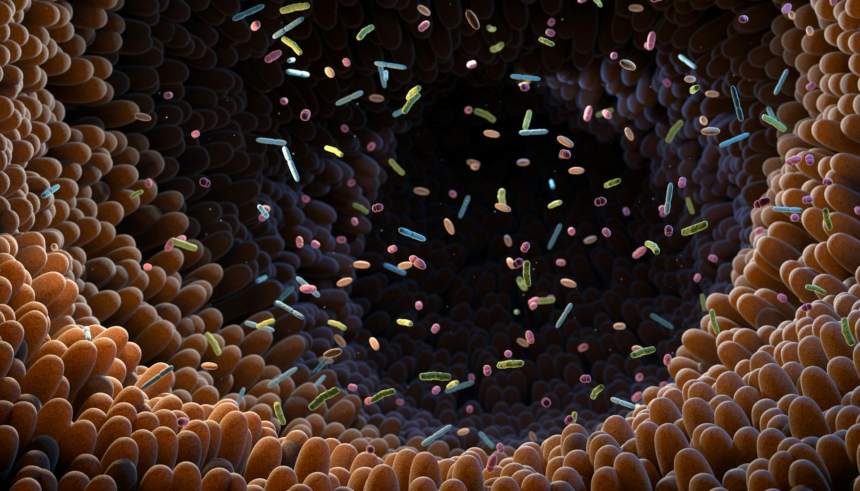
However, light is not the only timekeeper. Your intestines are home to trillions of microbes, called the gut microbiome. They play a key role in shaping your physiology, such as metabolism, immunity and even brain activity.
Intriguingly, the microbiome also influences the daily biological rhythms of hosts. My colleagues and I had previously shown that depleting gut bacteria in mice weakens circadian rhythms in the small intestine and alters them in the colon. These disruptions can affect how well your intestine absorbs and processes fats and other lipids, which may contribute to metabolic disorders such as obesity.
But if gut microbes are never exposed to the light, how do they track time? New research from my team suggests that the answer is feeding time.
We found that the gut microbiota can metabolize phytate – a food component commonly found in grains, beans, nuts and seeds – and convert it into molecules that activate a specific protein in intestinal cells, subsequently turning on genes involved in transporting nutrients. Conversely, when fasting, a decrease in phytate levels leads to reduced microbial activity and a drop in nutrient absorption.
Through this pathway, microbes align intestinal absorption with when you typically eat, which maximizes the efficiency of nutrient absorption.
Our findings suggest that, like light, food provides time-of-day signals that gut microbes read to determine how your body functions.
People have co-evolved with their gut microbiota for millennia, implying this microbe-controlled time system carries benefits.
For most of human history, food was scarce. We hypothesized that this microbial pathway might help people survive and grow under starvation conditions. To test this idea, we fed mice a nutrient-poor diet and gave some of them either a common gut microbe or a molecule it produces that is linked to circadian regulation. We found that undernourished young mice who were given this bacterium or the microbial molecule grew taller and healthier than mice that weren’t, suggesting that this microbial pathway promotes growth and metabolic health when nutrients are limited.
However, many people today have constant access to abundant calories. Rather than nutrient scarcity, obesity has become the dominant dietary challenge. We found that for mice under high-calorie conditions, this microbial pathway promotes excess fat uptake in the body and worsens diet-induced obesity.
Therefore, the same gut microbiome mechanism that helped people thrive can become a liability when it encounters an environment it was never designed for. This is an example of evolutionary mismatch.
Associate Professor of Biological Sciences, Carnegie Mellon University
Zheng Kuang receives funding from National Institutes of Health and Shurl and Kay Curci Foundation. 
Carnegie Mellon University provides funding as a member of The Conversation US.
View all partners
https://doi.org/10.64628/AAI.phmmdrmw4
Copyright © 2010–2026, The Conversation Media Group Ltd
Your gut bacteria helps your body keep track of time, and when you eat influences how much nutrition you get from food – The Conversation


Leave a Comment

