




The 74
America's Education News Source
Copyright 2026 The 74 Media, Inc
Sign up for The 74 newsletter.
Get stories like this delivered straight to your inbox. Sign up for The 74 Newsletter
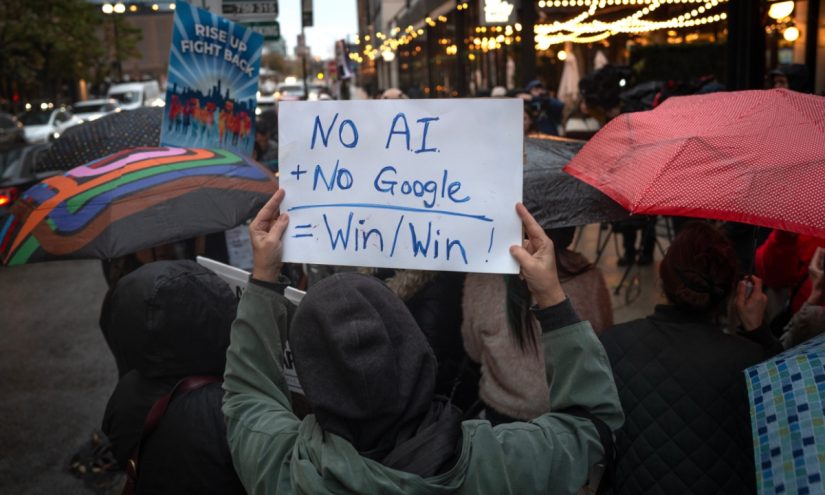
The signs of the blowback against technology — and its effects on kids — are all around. Pushback against artificial intelligence data centers was a key part of successful insurgent campaigns from Democratic governors-elect in Texas and Ohio. While Americans see some potential in certain uses of AI, concern is now far outpacing optimism. In education, high-profile districts like New York and Los Angeles have passed sweeping bans on AI in schools, as well as limits on screen time. Nearly all children now attend schools with restrictions on how they use cell phones.
These restrictions are more than reasonable in response to serious concerns about the impacts of digital technologies on children. Studies have found, for instance, that the rollout of broadband internet led to declines in student mental health and their achievement in school. Experts are especially concerned about AI in education, emphasizing the likely negative effects on student development from a technology that allows them to offload almost all the hard work of learning. Teens are already using AI way more than parents think they are, despite their own worries about it.
Big technology companies are seemingly unfazed by policy and parent concerns. The most recent example is Google’s Nov. 3 announcement that it will not offer an AI-free version of their search functions to children, even if school districts have prohibited AI for kids. In The New York Times, I described this decision as a “particularly clear example of the tech industry going out of its way to force AI on us all — even if we have said we don’t want it.” In the New York Post, I spelled out how AI feels to many instructors: that these technologies have been “shoved down all our throats and we’re all just dealing with the fallout.”
The blowback to Google’s tone-deaf announcement was so swift and widespread that the company felt forced to issue a clarification on X. Still, for now, its decision stands — children in schools will be unable to use an AI-free search function, no matter their district’s or state’s policy. I hope districts can find alternatives, and I lament that they’ll have to spend precious instructional time teaching kids how to navigate AI on the internet. And I hope Google relents.
But this Google tempest is just one example of a much broader push for artificial intelligence to be rapidly and aggressively inserted into schools. For the AI evangelists in tech companies and the government, new programs offer limitless possibilities. In 2023, Sal Khan rhapsodized about the revolution in learning that was forthcoming from AI (before acknowledging just three years later that it hadn’t happened yet). The Bill and Melinda Gates Foundation is spending almost half a billion dollars to work on AI integration in education — though at least it is supporting meaningful evaluation of such efforts. (Disclosure: I receive funding from the Gates Foundation for my research on mathematics curriculum). Even the Trump White House has aggressively pushed AI integration in schools through an executive order trumpeting its potential to “spark curiosity” and “empower educators.”
But the history of education is littered with similar breathless claims about how technology would transform teaching and learning. Almost always, these reforms have turned out to be a failure — rarely improving student outcomes, and often leading to unintended consequences and a widening of gaps between the wealthy and the poor.
As I write in my forthcoming book, “Miseducated: How We Can Fight Bad Ideas and Improve Schools Through Better Education Policy,” American schools have seen wave after wave of failed ed tech prognostications. Just in the 20 years I’ve been involved in education, we’ve all seen the rise and flop of MOOCs — massive open online courses — in higher education and of one-to-one devices in K-12 (which are now being rapidly extracted from classrooms because they mostly don’t improve outcomes).
These reforms haven’t worked because they haven’t been designed to solve problems that educators actually have. And that’s the issue — too often in ed tech, the solution arrives in search of an issue. The result is that ed tech solutions cost tons of money, don’t get used and result in (at best) null outcomes for kids.
This doesn’t mean I think AI might not be useful for some purposes in education. But the key is that these should be uses where there is a real problem that students, parents or educators need to solve — and the solution is designed to address that problem. There are plenty of such examples in education, like improving the quality of state standardized tests and scoring them more quickly or helping teachers tailor lessons based on student needs. These are specific uses where practitioners need help and where AI is well suited to pitch in.
But other than the pressure to make a profit off America’s schoolchildren, there is simply no need to be rushing AI into schools. Google should just let kids do AI-free searches. It’s likely that, down the road, there will be some extremely productive uses for AI in education. But being more deliberate, and being more responsive to what parents and teachers actually say they want, will show that tech companies care about — and are trying to minimize — their products’ potential harms to children. If those businesses can’t pass this test, I predict the backlash will only grow wider and more intense.
Disclosure: The Gates Foundation provides financial support to The 74.
Did you use this article in your work?
We’d love to hear how The 74’s reporting is helping educators, researchers, and policymakers. Tell us how
Morgan Polikoff is a professor of education at the USC Rossier School of Education, a faculty director of the USC EdPolicy Hub, and a FutureEd senior fellow.
We want our stories to be shared as widely as possible — for free.
Please view The 74’s republishing terms.
By Morgan Polikoff
This story first appeared at The 74, a nonprofit news site covering education. Sign up for free newsletters from The 74 to get more like this in your inbox.
The signs of the blowback against technology — and its effects on kids — are all around. Pushback against artificial intelligence data centers was a key part of successful insurgent campaigns from Democratic governors-elect in Texas and Ohio. While Americans see some potential in certain uses of AI, concern is now far outpacing optimism. In education, high-profile districts like New York and Los Angeles have passed sweeping bans on AI in schools, as well as limits on screen time. Nearly all children now attend schools with restrictions on how they use cell phones.
These restrictions are more than reasonable in response to serious concerns about the impacts of digital technologies on children. Studies have found, for instance, that the rollout of broadband internet led to declines in student mental health and their achievement in school. Experts are especially concerned about AI in education, emphasizing the likely negative effects on student development from a technology that allows them to offload almost all the hard work of learning. Teens are already using AI way more than parents think they are, despite their own worries about it.
Big technology companies are seemingly unfazed by policy and parent concerns. The most recent example is Google’s Nov. 3 announcement that it will not offer an AI-free version of their search functions to children, even if school districts have prohibited AI for kids. In The New York Times, I described this decision as a “particularly clear example of the tech industry going out of its way to force AI on us all — even if we have said we don’t want it.” In the New York Post, I spelled out how AI feels to many instructors: that these technologies have been “shoved down all our throats and we’re all just dealing with the fallout.”
The blowback to Google’s tone-deaf announcement was so swift and widespread that the company felt forced to issue a clarification on X. Still, for now, its decision stands — children in schools will be unable to use an AI-free search function, no matter their district’s or state’s policy. I hope districts can find alternatives, and I lament that they’ll have to spend precious instructional time teaching kids how to navigate AI on the internet. And I hope Google relents.
But this Google tempest is just one example of a much broader push for artificial intelligence to be rapidly and aggressively inserted into schools. For the AI evangelists in tech companies and the government, new programs offer limitless possibilities. In 2023, Sal Khan rhapsodized about the revolution in learning that was forthcoming from AI (before acknowledging just three years later that it hadn’t happened yet). The Bill and Melinda Gates Foundation is spending almost half a billion dollars to work on AI integration in education — though at least it is supporting meaningful evaluation of such efforts. (Disclosure: I receive funding from the Gates Foundation for my research on mathematics curriculum). Even the Trump White House has aggressively pushed AI integration in schools through an executive order trumpeting its potential to “spark curiosity” and “empower educators.”
But the history of education is littered with similar breathless claims about how technology would transform teaching and learning. Almost always, these reforms have turned out to be a failure — rarely improving student outcomes, and often leading to unintended consequences and a widening of gaps between the wealthy and the poor.
As I write in my forthcoming book, “Miseducated: How We Can Fight Bad Ideas and Improve Schools Through Better Education Policy,” American schools have seen wave after wave of failed ed tech prognostications. Just in the 20 years I’ve been involved in education, we’ve all seen the rise and flop of MOOCs — massive open online courses — in higher education and of one-to-one devices in K-12 (which are now being rapidly extracted from classrooms because they mostly don’t improve outcomes).
These reforms haven’t worked because they haven’t been designed to solve problems that educators actually have. And that’s the issue — too often in ed tech, the solution arrives in search of an issue. The result is that ed tech solutions cost tons of money, don’t get used and result in (at best) null outcomes for kids.
This doesn’t mean I think AI might not be useful for some purposes in education. But the key is that these should be uses where there is a real problem that students, parents or educators need to solve — and the solution is designed to address that problem. There are plenty of such examples in education, like improving the quality of state standardized tests and scoring them more quickly or helping teachers tailor lessons based on student needs. These are specific uses where practitioners need help and where AI is well suited to pitch in.
But other than the pressure to make a profit off America’s schoolchildren, there is simply no need to be rushing AI into schools. Google should just let kids do AI-free searches. It’s likely that, down the road, there will be some extremely productive uses for AI in education. But being more deliberate, and being more responsive to what parents and teachers actually say they want, will show that tech companies care about — and are trying to minimize — their products’ potential harms to children. If those businesses can’t pass this test, I predict the backlash will only grow wider and more intense.
Disclosure: The Gates Foundation provides financial support to The 74.
Copyright 2026 The 74 Media, Inc
Google and Other Ed Tech Companies Ignore Pushback at Their Own Peril – The 74



Leave a Comment

