Tribal Business News
Business, economy, and community news from Indian Country
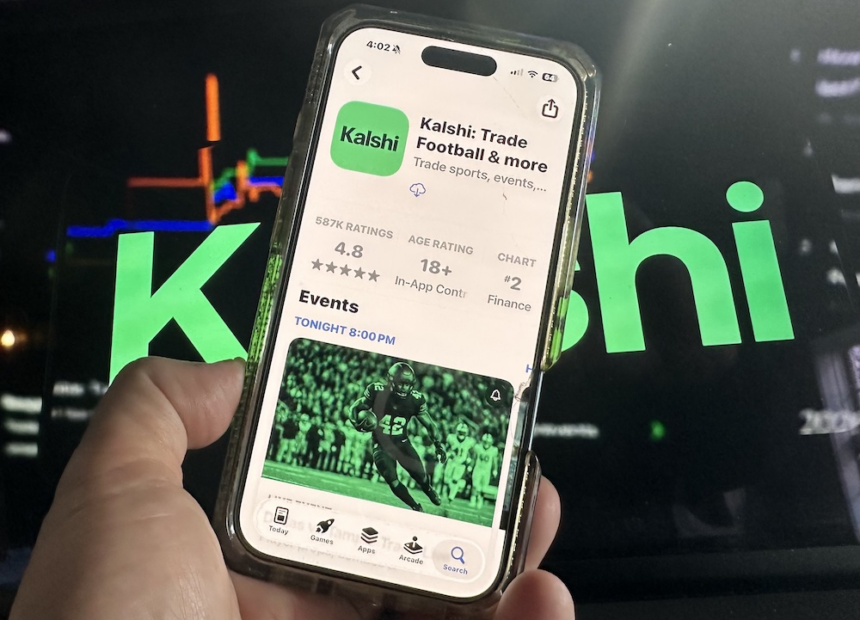
Two California tribes secured a federal court order barring Kalshi’s sports event contracts on their lands, a victory tribal gaming leaders say is threatened by new federal guidance against geographic trading restrictions.
On Nov. 4, U.S. District Judge Jacqueline Scott Corley granted a preliminary injunction sought by Blue Lake Rancheria and Chicken Ranch Rancheria of Me-Wuk Indians, prohibiting Kalshi from offering sports-related event contracts on the tribes’ lands while litigation continues. The order followed a September ruling by the 9th U.S. Circuit Court of Appeals finding the tribes were likely to succeed on claims that Kalshi’s contracts constitute Class III gaming under the Indian Gaming Regulatory Act when entered into from tribal lands.
One day later, the Commodity Futures Trading Commission issued guidance saying federally regulated exchanges generally cannot restrict eligible traders’ access based on their location within the United States. The agency gave exchanges 30 days to either eliminate domestic geographic restrictions — known as geofencing — that violate its impartial-access requirements or explain why compliance is not feasible.
“Derivatives markets must operate on a uniform basis at a national scale in order to achieve the purposes set out in the Commodity Exchange Act,” CFTC Chairman Michael S. Selig said in a statement. “Geographic access restrictions are inconsistent with those purposes and the Act’s impartial access requirements.”
The CFTC said it would consider the circumstances of individual cases before deciding whether to take action.
The move prompted sharp criticism from tribal gaming leaders, who argue that prediction market operators are attempting to bypass tribal and state gaming laws by characterizing sports wagers as federally regulated financial products.
“Tribes went to court to enforce the law and won an order stopping Kalshi’s unlawful sports betting on their lands,” James Siva, chairman of the California Nations Indian Gaming Association, said in a statement. “This vindictive assault against Indian Country erases any pretense that CFTC Chairman Selig will uphold his public and tribal trust responsibilities.”
Siva said the dispute ultimately concerns tribes’ authority under IGRA to determine what gaming activities may occur on tribal lands.
“The CFTC cannot erase tribal sovereignty or give companies permission to ignore a federal court,” Siva said. He called on the CFTC to withdraw the directive and Congress to close what he described as a “gambling loophole.”
Sen. Adam Schiff, D-Calif., echoed those concerns.
“Sports prediction markets are sports bets. By effectively requiring prediction markets to offer contracts in all 50 states, even on tribal lands, the CFTC is once again violating state law and tribal sovereignty,” Schiff said in a Nov. 6 statement.
“Despite ongoing litigation and court orders to cease offering contracts in several states and tribal lands as recently as today, the CFTC and its rogue chairman now appear to be encouraging platforms to continue offering gambling products in contempt of these court orders,” Schiff said.
The legal dispute stems from a lawsuit filed by Blue Lake Rancheria and Chicken Ranch Rancheria against Kalshi and related entities.
In September, a unanimous 9th Circuit panel held that Kalshi’s sports event contracts constitute Class III gaming under IGRA, that the contracts are “located on Indian lands” when entered into from tribal territory and that the tribes were likely to succeed in showing the products violate tribal gaming ordinances incorporated into federal gaming procedures.
Kalshi has argued in court that its event contracts are federally regulated derivatives subject to the Commodity Exchange Act and CFTC oversight. Following the 9th Circuit’s September ruling, company spokesperson Elisabeth Diana told Reuters that the decision was difficult to reconcile with federal laws that place regulation of on-exchange derivatives under the CFTC.
Under the injunction, the tribes must provide maps identifying the boundaries of their lands by Nov. 13, while Kalshi must report to the court on steps taken to comply within 21 days of the Nov 4 ruling.
Siva told Tribal Business News the injunction was a signal that courts were receptive to tribes’ arguments.
“This is illegal sports betting being condoned at the federal level in violation of tribal law, tribal
sovereignty, state law, state sovereignty,” Siva said. “I think the courts are starting to understand that, and they’re calling a spade a spade.”
Never miss the biggest stories and breaking news about the tribal economy. Sign up to get our reporting sent straight to your inbox every Monday morning.
Chez Oxendine (Lumbee-Cheraw) is a staff writer for Tribal Business News covering Native agriculture, tribal broadband, energy and real estate. More by Chez Oxendine
A bipartisan bill to speed federal approval of energy and infrastructure projects faces tribal opposition over protections for sacred and historic sites,…
Three Native community development financial institutions in Washington have been awarded $1.1 million in state grants to expand business financing and technical…
George Washington University’s International Institute of Tourism Studies has been selected for a $1.5 million federal cooperative agreement to help tribal nations,…
Navajo Technical University and Chippewa Sustainable Solutions Inc. secured $9.5 million in Small Business Administration awards to train manufacturing workers and help…
Sign in by entering the code we sent to , or clicking the magic link in the email.
This site is protected by reCAPTCHA and the Google Privacy Policy and Terms of Service apply.
We'll send a verification code to %EMAIL%.
Join a community of passionate readers and never miss a story.
Get 3 free articles every month with a free account.
Success! Your account was created and you’re signed in.
Please visit My Account to manage your account.
Support our journalism and get unlimited access to our full archive.
On a campus or library network? Check for access.