


Sabrina Stone ’28 went to Wellesley College Health Services for a routine blood draw on March 24, 2026. When she arrived, the staff told her they lacked the appropriate tubes for blood work and to come back in a week.
On her second visit, the phlebotomist — the professional who draws blood samples — was out sick. Again, Health Services told her to return next week.
On her third visit, her lab order was missing, and the staff was unsure whether they had the right tube. After the staff called the hospital to confirm the tubes were correct, Stone finally got her blood drawn on April 14.
“This is crazy, ” Stone said. “Why am I doing so much?”
Stone is not the only student who has faced difficulties seeking care at Health Services. Several students have reported challenges with contacting Health Services, delays in completing tests, unexplained charges and difficulties with insurance coverage, raising concerns about the accessibility, reliability and transparency of campus healthcare.
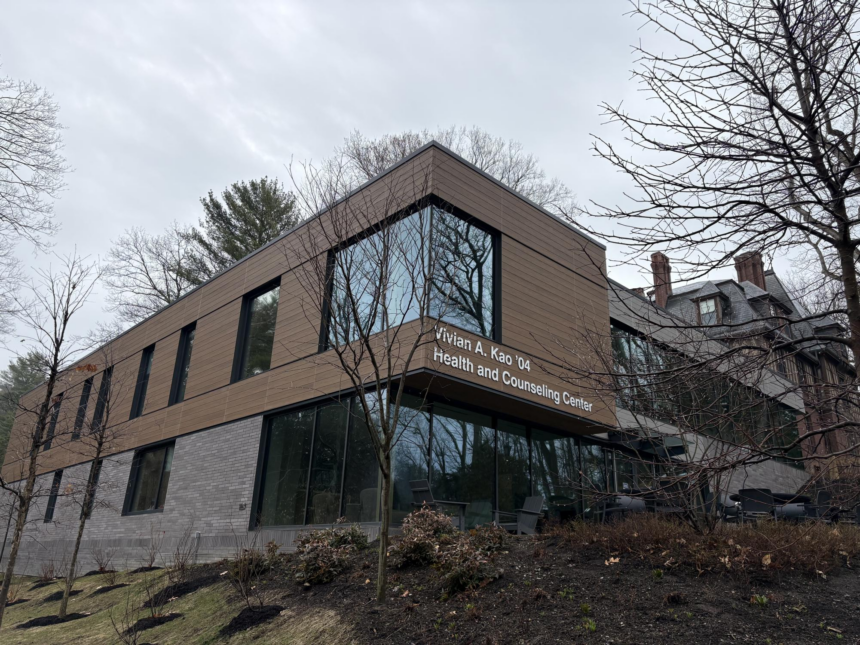
The Newton-Wellesley Medical Group, part of Mass General Brigham, operates Health Services, which relocated to the Vivian A. Kao ’04 Health and Counseling Center in March 2025. Health Services is open to all Wellesley students, according to Dr. Malina Milan, director of Health Services.
In an Oct. 23 email to The Wellesley News, Milan said they are “currently experiencing a shortage of staff to assist with blood draws,” so the service is “temporarily being provided off-campus.”
Students can have bloodwork done at the Newton-Wellesley Mass General Brigham hospital or a satellite lab in Natick.
Milan wrote that all students are “provided with the above information when labs are ordered.” She added that Health Services expects to have phlebotomy available by the end of this week, on Nov. 6.
In addition to bloodwork difficulties, students also described communication gaps during visits and difficulty getting help before an appointment, including uncertainty about what services are available without a scheduled visit.
Aleine Liu ’30 said she faced issues accessing resources without an appointment. When she was sick in late September, Liu went to Health Services for a mask, but staff refused to give her one, telling her that masks were only for students with appointments.
“I thought basic health equipment, like masks, are available to every Wellesley student when they go to the Health Services,” Liu said. “This is pretty unexpected for me.”
For Melody Chen ’29, who transferred to Columbia University after her first year, her experiences inspired her to write an op-ed in April 2026. She argued that Health Services needed clearer guidelines, particularly for international students, like Chen, who are unfamiliar with the American healthcare and insurance systems.
When Chen injured her foot one weekend, she called the Health Services number on the back of her OneCard and received no answer. A friend helped her find an off-campus urgent care to receive treatment.
“At that time, I didn’t even know what urgent care was. I had no understanding of U.S. health services except knowing it’s pretty expensive,” Chen said.
At urgent care, Chen said the staff could not confirm how much her insurance would cover for medical equipment and advised her to contact her insurer. She later tried to look up what her student health insurance covered but struggled to find the relevant documents on the Health Services Intranet page.
“First, the information is hard to find. Second, you don’t even know what information you need. And even if you do, it’s hard to navigate to the right place. Third, even if you manage to find it, you might not understand it, or you might not have the background knowledge or patience to read the whole thing,” Chen said. “That makes it impossible to protect your own interests. You still end up without the information you need.”
Massachusetts law requires students enrolled in at least 75% of full-time credits to have health insurance. Wellesley automatically enrolls students in its Student Health Insurance Plan, but students with comparable coverage can apply to waive enrollment, according to the College’s student health insurance policy. Alternative plans must meet the College’s requirements, including coverage for both emergency and non-emergency care in the Wellesley area.
Taryn Castro ’27 said she waived the College’s insurance plan because of its cost, but her own insurance only has limited coverage in Massachusetts. She struggled to find services that accepted her insurance. During her sophomore year, she got what she described as a benign tumor in her knee. She said she believed an emergency room visit was her only option for receiving care locally, but she did not want to go because of the anticipated high cost.
Instead, Castro borrowed crutches from the theater’s prop closet with her supervisor’s permission and used them to get around campus during finals.
“At the end of the day, I made the move to spend less money on top of what I’m already spending and that kind of left me in a health desert,” Castro said.
Other students also posed questions about costs. Celina Halasa ’30 said she was charged $25 after a brief referral appointment at Health Services. She had not expected a charge and emailed Health Services three times asking for an explanation, but as of Oct. 28, she still had not received a response.
“It seems like in the policy that we signed up for, there is a charge for it, but it wasn’t made clear to students,” Halasa said. “If you’re going to charge us, you might as well tell us.”
Halasa said the experience left her discouraged from seeking care there in the future.
“How can [Health Services] expect students to trust them if there is no transparency in cost, services and follow-through when we ask questions … it makes me not want to go back,” Halasa said.
For information about Health Services hours, scheduling, insurance and copays, Milan suggested that students visit the Health Services intranet page, she wrote in her email to The News. She further said that students with questions about bills, charges, or medical concerns can contact Health Services by phone or through Patient Gateway.
“General student feedback is also welcome,” Milan wrote. “Either through the link on our Intranet site or through the Dean’s Office and student residential life staff.”
Chen said that clearer communication from Health Services could help students seek care without uncertainty over the cost or where and whom to contact when Health Services cannot be reached. She called for more comprehensive guidance to help students understand Health Services’ policy before they are sick or injured.
“What if I’m worried I can’t afford the ambulance and end up delaying care?” Chen said. “My situation at that time was not that severe, but what if someone has a serious emergency?”
Stone said her own experiences left her feeling that students’ concerns were not being heard.
“I also just feel like they’re very dismissive of students a lot,” Stone said. “They just kind of don’t listen.”
Contact the editors responsible for this story: Josephine Buckley, Dylan Burmeister, Jessica Chen
Your email address will not be published.
Delays, unexpected charges and communication failures with Health Services – The Wellesley News



Leave a Comment