


Facebook Twitter Print Email
A school in Myanmar has been hit in an airstrike, with three children reported killed and five others injured, according to UN Children’s Fund UNICEF.
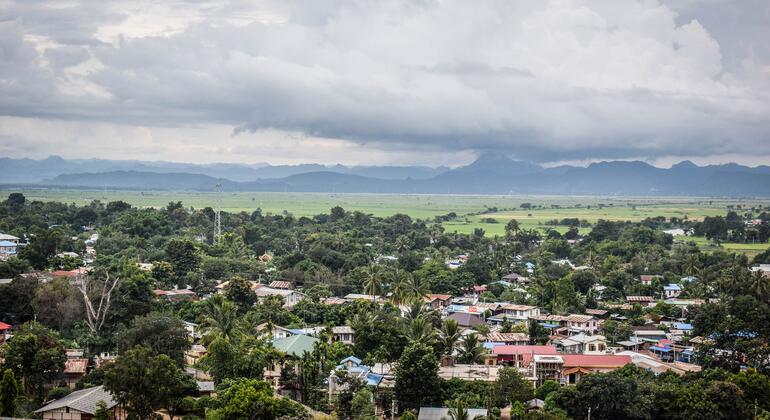
The educational centre in Loikaw Township, Kayah state was being used by displaced families when it came under attack on Saturday, amid an ongoing civil war sparked by a coup in 2021.
Further airstrikes were reported in Rakhine state over the weekend, including one that struck a temporary healthcare facility, reportedly killing a newborn baby and healthcare workers.
“These reports are yet another stark reminder that children are bearing the brunt for the devastating conflict in Myanmar,” UNICEF said.
It added that youngsters “are being killed and injured in the very places where they should be safe and protected.”
The agency issued an appeal to all parties to the conflict to uphold their obligations under international humanitarian law and take all necessary measures to protect children.
More than 7,000 people have fled their homes in northern Mozambique’s Cabo Delgado province since late September, escaping fresh violence and fear of attacks by non-state armed groups, according to new data from the International Organization for Migration (IOM).
Nearly 80 per cent of the latest arrivals are women and children. Many are seeking safety in communities that already host people displaced by years of conflict.
“These communities need help with food, shelter and healthcare,” said Dana Graber Ladek, IOM Chief of Mission in Mozambique.
“Without timely support, life could get much harder for displaced families and the people hosting them.”
Between 21 September and 13 October, 5,794 people were displaced, followed by another 1,235 between 14 and 27 October. Some have had to flee more than once.
In the most recent two weeks, those displaced included 87 pregnant women, 58 older people, 18 people with disabilities and four unaccompanied or separated children. Many men stayed behind to keep earning a living, despite the danger.
Cabo Delgado already hosts more than 205,000 displaced people across 84 sites. More than half of them are children.
Food is the most urgent need, reported by 88 per cent of those assessed, followed by shelter (71 per cent) and healthcare (44 per cent).
The UN migration agency is providing emergency shelter, household items, water, sanitation and hygiene, protection and psychosocial support. But it warned that continued displacement and falling funding are stretching the response just as needs grow.
Mobile internet has become affordable in the world’s landlocked developing countries and small island developing States for the first time, according to new figures released on Tuesday by the UN’s International Telecommunication Union (ITU).
The median price of a basic mobile data plan in both groups has fallen below the internationally agreed target of 2 per cent of average income.
“In the age of AI, being offline means being shut out of countless opportunities, from education to employment,” said ITU Secretary-General Doreen Bogdan-Martin.
Some 6.3 billion people – 76 per cent of the world’s population – are online this year, up from 6.1 billion in 2025, though 2 billion remain unconnected.
Prices remain stubbornly high in the least developed countries, at 6.1 per cent of income, and three in 10 economies meet neither the mobile nor the fixed broadband target.
Connection quality varies too. 5G networks reach 86 per cent of people in high-income countries but just 4 per cent in low-income ones. There, the average mobile user gets through 3.4 GB of data a month – around six times less than in richer nations.
“Now more than ever, we need to expand connectivity and make it meaningful for everyone, everywhere,” Ms. Bogdan-Martin said.
Facebook Twitter Print Email
World News in Brief: Children killed in Myanmar strike, new violence flares in Mozambique, an Internet affordability milestone – UN News



Leave a Comment