


Nick Reece is Lord Mayor of Melbourne, Australia, and co-chair-elect of C40, a global network of nearly 100 major cities working to address climate change. Claudio Castro is Mayor of Renca, Chile. Both are board members of the Global Covenant of Mayors for Climate & Energy.
When we talk about the green economy, we often think nationally: industrial strategies, renewable-energy targets, subsidies and rules for electrification. But much of the investment needed to deliver the green transition will be decided closer to home – in our cities.
City authorities determine where and how buildings are built and renovated, how public transport develops, how land is used, what municipalities buy and what gets built in terms of infrastructure.
Sign up for a free account today. In return, you’ll get a selection of our top reporting in full each week, our Climate Weekly roundup newsletter every Friday, and invites to our webinars and online events.
Nick Reece is Lord Mayor of Melbourne, Australia, and co-chair-elect of C40, a global network of nearly 100 major cities working to address climate change. Claudio Castro is Mayor of Renca, Chile. Both are board members of the Global Covenant of Mayors for Climate & Energy.
When we talk about the green economy, we often think nationally: industrial strategies, renewable-energy targets, subsidies and rules for electrification. But much of the investment needed to deliver the green transition will be decided closer to home – in our cities.
City authorities determine where and how buildings are built and renovated, how public transport develops, how land is used, what municipalities buy and what gets built in terms of infrastructure.
These decisions have the power to go beyond cutting emissions and strengthening resilience. They create new opportunities for businesses and investors.
A new analysis by C40 Cities and the Global Covenant of Mayors for Climate & Energy (GCoM) shows just how large these new markets could become.
Across 151 cities, annual spending on key green products could rise from $293 billion in 2025 to $2.78 trillion by 2050, as cities implement the climate commitments they have made. That figure would place them among the world’s five most valuable companies by market capitalisation.
The supply of these green products will need to increase dramatically to meet booming demand. With Smart City Expo in Barcelona, Spain, and COP31 in Antalya, Türkiye, on the horizon, these projections highlight an unprecedented investment opportunity that decision-makers cannot afford to ignore.
Beyond the global headline figure, it represents millions of local decisions and investments and, crucially, a growing source of market certainty. The analysis shows that fulfilling existing city climate plans could drive demand for key green products to eight times current levels by 2050, creating a reliable pipeline for businesses and investors.
Because these markets are shaped locally, the same national policies can produce very different outcomes from one city to another. But cities determine how quickly markets take off through planning, permitting, procurement, infrastructure and the targets they set.
Over the past decade, GCoM has brought together more than 14,000 cities and local governments across 150 countries under the premise that tackling the climate and energy crises head-on requires municipalities of all shapes and sizes to act – alongside their national governments.
And we have seen firsthand how local climate action can create new investment opportunities. Renca and Melbourne offer two very different examples of this dynamic in practice.
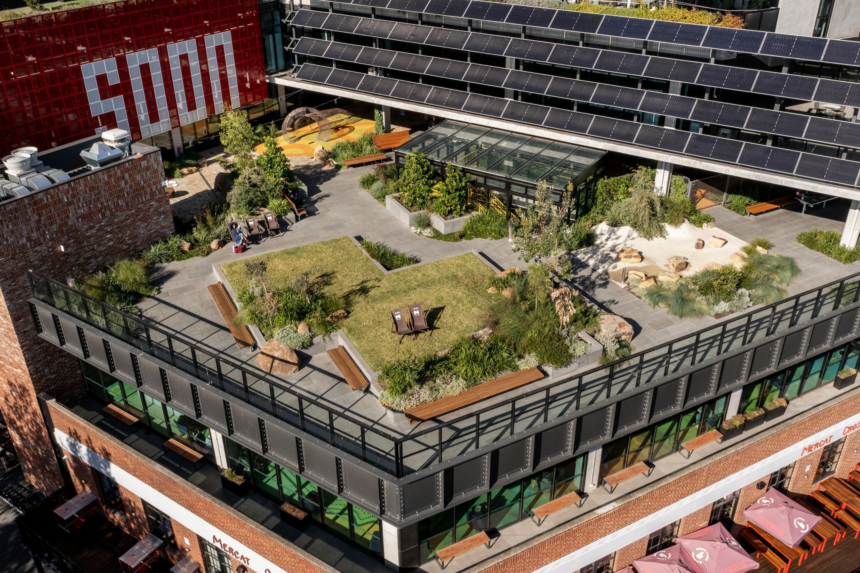
Melbourne is creating a pipeline of green investment across the city. In its 2025-2026 budget, Melbourne committed approximately $31 million to new parks, streetscape improvements and thousands of trees, while planning to electrify 11 municipal sites, including Melbourne Town Hall, and move its buildings towards 100% renewable electricity. Its 4-km Greenline project is also delivering promenades, parks, native planting and environmental renewal along the Yarra River – Birrarung. Together, these investments are creating demand across construction, clean energy, urban design and other green industries.
In Renca, climate investment is tackling local challenges while bringing public and private partners together. Between 2018 and 2025, about $7.6 million in public and private investment funded a reforestation effort that has planted more than 85,000 trees in the Renca Hills Metropolitan Park. An assessment supported by the Development Bank of Latin America and the Caribbean (CAF) now puts a number on what that investment returns: once the park matures, around 2035, its ecosystem services could be worth about $8.9 million a year.
A Water Master Plan, designed to reuse treated industrial water, will help sustain it. Renca has also attracted clean-energy investment through a 1.6-MW solar plant at a site run by manufacturer Tehmco. The project, which involved cooperation with the Japanese city of Toyama, includes more than 3,400 panels and expected annual emissions savings of about 1,000 tonnes of CO2.
For us, as mayors, the lesson is clear: climate resilience is also economic resilience.
This is why the message ahead of COP31 should be straightforward: the world does not need a new market for climate action. It is already emerging in cities across the globe. What we need now is the push to take it to scale and turn local demand into a global investment boom.
COP31 has made implementation central to its Global Climate Action Agenda, with targets including raising the share of final energy demand met by electricity to 35% by 2035 and reducing building energy-consumption intensity by at least 25%. It has also highlighted green industrialisation, circularity and resilient cities.
Comment: Why the transition beyond fossil fuels depends on cities and collective action
These are ambitious targets and delivering them will require investment at a scale that matches the ambition. Cities are already putting projects into motion. The task now is to ensure that national policies and global finance scale up supply to meet demand.
But governments and global institutions cannot do this alone. The private sector must respond, too. The $2.78-trillion opportunity will be built on thousands of local climate and energy projects, like those in Melbourne and Renca. Companies need to look to cities as a source of long-term demand, while markets need products that can reach smaller projects and businesses, not only mega-infrastructure.
As members of C40 and GCoM, we strongly believe city and business leaders must work together to scale solutions faster. We need predictable, affordable finance and the capacity to turn local priorities into investment-ready projects. COP31’s Climate Implementation Bridge can help connect national commitments with these city-level investment pipelines and place local governments where they belong: at the centre of implementation and investment.
The businesses best positioned for the next decade will be those that see local governments not simply as stewards for climate solution deployment, but as the markets driving growth at speed and scale – from villages and towns to cities and metropolises. The opportunity is already there. Now we need to invest in it.
Access to a selection of our in-depth coverage and analysis each week, comment and thought leadership by industry experts, invites to webinars and online events, and our Climate Weekly newsletter.
per year
Unlimited access to our expert coverage and everything published on our site, alongside our Climate Weekly newsletter, invites to webinars and online events, our Bulletin emails sent directly from the Conferences we cover, as well as two subscriber-only newsletters.
per quarter
Unlimited access to our expert coverage and everything published on our site, alongside our Climate Weekly newsletter, invites to webinars and online events, our Bulletin emails sent directly from the Conferences we cover, as well as two subscriber-only newsletters. You can upgrade to an annual subscription at any time.
Create a free account to join the community of readers — diplomats, negotiators, researchers, policy professionals and campaigners — who rely on Climate Home News.
Completely free. Takes 30 seconds.
Already have an account.
Forgot your password?