


Mission Local
Local news for a global city
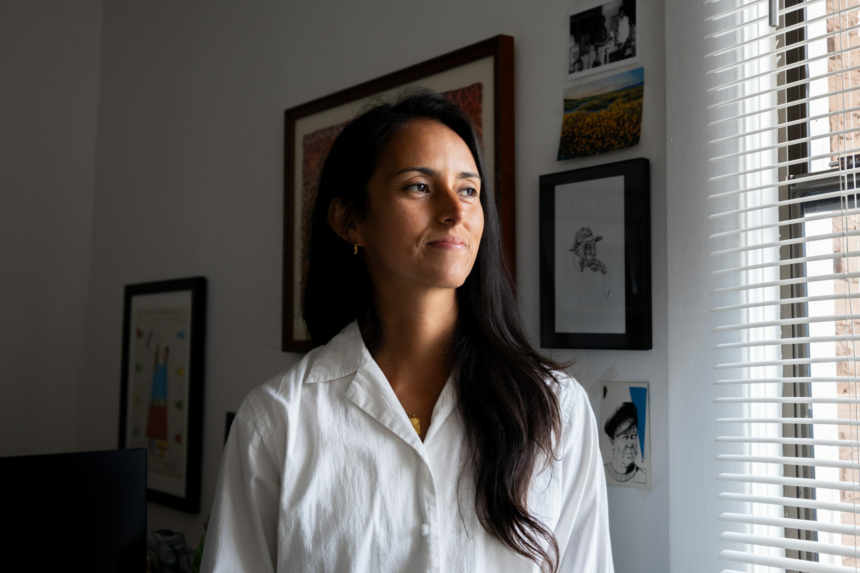
Mission District supervisor Jackie Fielder will be back at San Francisco City Hall next Monday after a three-month leave of absence for mental health issues that, she said, grew gradually in her first year in office until she experienced a collapse and checked herself into a hospital.
From there, on March 27, she called two reporters and Mayor Daniel Lurie to say that she planned to resign.
“I felt a pressure to escape, and that was my emergency escape button,” she told Mission Local in an interview Saturday. “I was just feeling a lot of intense feelings to get out of the role on that one day, when I was having my crisis. That’s when I had called you to talk about me wanting to resign, and inviting you to come to the hospital.”
Want the latest on the Mission and San Francisco? Sign up for our free daily newsletter below.
Fielder subsequently reversed her decision after learning she could take medical leave, she said, and Fielder’s doctor recommended a three-month rest. She had struggled with basics like exercise, sleep and eating regularly, she said.
The city’s political establishment issued an outpouring of well-wishes after the initial news of Fielder’s hospitalization, and Fielder said she is now in the midst of a visiting tour with her colleagues.
“I’ve told the mayor today that I’m coming back,” she said on Saturday. “He was gracious and glad to see me, glad that I was coming back.”
The stress, she said, had been steadily building since she kicked off her bid for District 9 supervisor 25 months ago. “I’ve been running 100 miles an hour since really early 2023, when I started the campaign,” she said, and had experienced “many, many sleepless nights.”
It accelerated once in office, Fielder said.
“It’s been compounding, especially with the first year in office, where something was coming up every single week,” she said, naming her fight with Mayor Lurie’s administration on family homelessness, and the threat of a federal immigration surge last October.
The District 9 supervisor’s role is especially grueling, she added: The district has two BART stations that “attract thousands of people” and host myriad problems, “a lot of people living on the streets,” a “high immigrant population that has been very afraid of ICE,” and skyrocketing rents, increased evictions, and other “affordability pressures.”
Fielder said that, as the pressure built, she felt “very alone” and as if “everything was on me as the supervisor to handle.”
San Francisco supervisors have previously gone public with their own struggles on the job, though most are drug or alcohol-related: Aaron Peskin checked himself into rehab in 2021 after years of heavy drinking while in political life, and Matt Dorsey has parlayed his series of relapses into a successful public career.
But discussions of mental health among politicians, locally or nationally, are rare.
Asked whether her relationship with Lurie, which had grown strained over the first year, had changed as a result of her crisis, Fielder said the two had “always kept it professional.”
“He’s shown a lot of grace in this time,” she said. “We’ve always worked together to serve constituents,” she added, naming the mayor’s focus on conditions at 16th and Mission. Fielder and Lurie both say the area needs more police foot beats, and support the current interdepartment strategy of using street teams for the area.
“We’re able to still work together and have our teams work together. On a personal level, he’s been very gracious and kind in this.”
Fielder named two immediate legislative priorities now that she’s back:
Fielder said her office would continue its focus on conditions at 16th and Mission, family homelessness, evictions and affordability, and immigrant rights. Asked whether the crisis would spur her to tackle mental health issues legislatively, she said she was not sure.
Fielder has not asked for any accommodations at work, she said, and does not expect to. She will start June 29.
The three-month break, she added, has let her get a handle on the basics. She spent the time “getting a lot of sleep, feeding myself, exercise, walks, jogs, spending time with my family and friends. Just generally taking care of myself.”
“I feel good, I feel ready. I’ve taken the time that I’ve had to do what I need to shore up my mental health,” she said. “I feel prepared and ready and almost brand new.”
When a San Francisco neighborhood has a Mission Local reporter, it means someone is there. We’re following new housing projects proposed on your block, keeping tabs on what your district supervisor is up to at City Hall, and letting you know when longtime businesses close (and new ones open). When big news breaks, we already know the context.
Most neighborhoods don’t have that. Yours could.
That’s what Mission Local is building. Our reporters don’t parachute in — they write consistently on San Francisco, so you’re never reading about your neighborhood from someone who just looked it up.
So far we are in five of San Francisco’s neighborhoods. But we know all San Franciscans deserve our kind of coverage. Will you join us?
Joe is the executive editor at Mission Local. He is an award-winning journalist whose coverage focuses on politics, campaign finance, Silicon Valley, and criminal justice. He received a B.A. at Stanford University for political science in 2014. He was born in Sweden, grew up in Chile, and moved to Oakland when he was eight. You can reach him on Signal @jrivanob.99.
Your email address will not be published.
Mission Local produces enterprise reporting on San Francisco’s most critical issues: police reform, corruption, public health, housing and homelessness. Learn more about us, and donate below keep us reporting.
Sign in by entering the code we sent to , or clicking the magic link in the email.
By signing up, you agree to our Terms and Conditions. This site is protected by reCAPTCHA and the Google Privacy Policy and Terms of Service apply.
We'll send a verification code to %EMAIL%.