


Negotiations between the US and Iran over a long-term peace agreement have begun, but a foreign policy expert and former senior Australian diplomat has raised serious questions over the “red flags” in the tenuous deal which halted the conflict.
Negotiations between the United States and Iran over a long-term peace agreement have begun, but a foreign policy expert and former senior Australian diplomat has raised serious questions over the “fairly flimsy” deal underpinning the talks.
US Vice President JD Vance arrived in Switzerland on Sunday, local time, to head up discussions with officials from Tehran, despite doubts emerging over the future of negotiations due to ongoing fighting in Lebanon.
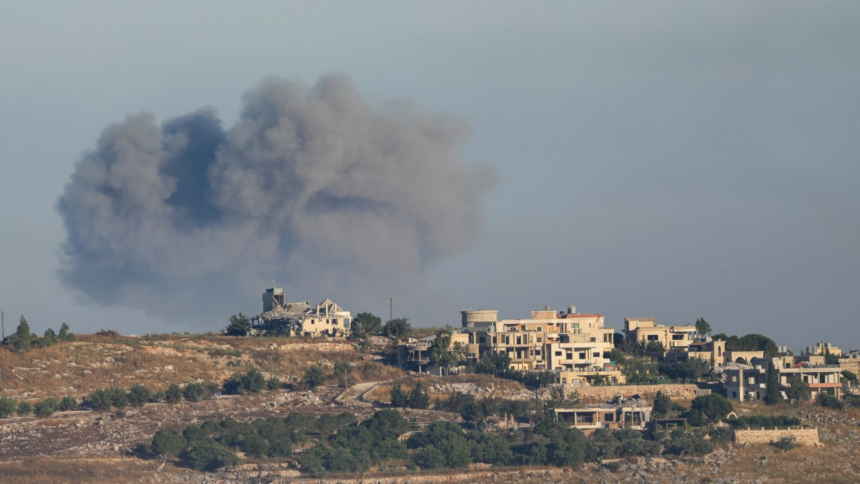
Israel and the Iran-backed militant group Hezbollah exchanged fire over Saturday, leading Iran’s Revolutionary Guard Corps to declare the US had failed to honour a 14-point memorandum of understanding (MOU) underpinning peace talks and announce it was closing the Strait of Hormuz.
Under the terms of the MOU, both sides committed to “the immediate and permanent termination of military operations on all fronts, including in Lebanon” by their own forces and by those of their allies.
However, Israel, which was not involved in negotiations, has insisted its fight against Hezbollah is a separate conflict and not bound by the deal, with Israeli Defence Minister Israel Katz maintaining the nation’s armed forces would remain in southern Lebanon and continue to respond to any attacks.
Jane Hardy, a non-resident senior fellow at the Australian Strategic Policy Institute and former envoy to the US Indo-Pacific Command, suggested Israeli Prime Minister Benjamin Netanyahu would likely continue exploiting the fact Israel was not directly named in the MOU to maintain a “buffer zone” in Lebanon, which could in turn provide Iran an excuse to avoid following through on its commitments.
US President Donald Trump has already attempted to pressure Mr Netanyahu into winding down Israel’s operations, with limited success, although the President on Sunday appeared to lay blame for the latest exchanges on Iran.
Hours after talks on a long-term peace deal begun, the US leader took to social media to warn Iran “must immediately stop their highly paid PROXIES in Lebanon from causing trouble”, adding he would hit the country “very hard” if they failed to do so.
While the conflict in Lebanon appears to present the most immediate risk to negotiations in Switzerland, Ms Hardy explained there were a series of “red flags” which made the MOU a “fairly flimsy” basis for securing a lasting peace.
“As it’s written, it looks pretty sparse to me. It’s 14 points, as you know. It’s really a ceasefire. It’s not even what I’d call a framework,” she told Skynews.com.au.
“The Iranians are glowing, you now, they’re triumphant, which is a bit of a red flag, I’d say. Even Hezbollah, the chief, has said it’s a great victory. They’re all red flags.”
Ms Hardy noted the 60-day timeframe was likely to prove a major challenge, suggesting US negotiators would be “under the pump” to secure meaningful concessions given the MOU appeared heavily weighted in Iran’s favour.
While President Trump and other officials have talked up Tehran’s commitment to “not procure or develop nuclear weapons” – as written in the MOU – the language is notably softer than that contained in the Obama administration’s Joint Comprehensive Plan of Action (JCPOA), which read: “Under no circumstances will Iran ever seek, develop or acquire nuclear weapons”.
So-called “technical talks” on Iran’s nuclear program will also have to establish a mechanism to oversee the downblending of enriched uranium currently buried in the rubble of former processing sites.
Under the MOU, this process is to be overseen by the International Atomic Energy Agency, the United Nations nuclear watchdog, but Iran has ceased cooperation with the body and offered no suggestions on how supervision of the process could work in practice.
In addition, Ms Hardy said there was a risk Iran withheld some of the nuclear material, highlighting the existing stockpile had been enriched to 60 per cent – a short, technical step away from the 90 per cent purity needed for weapons production.
She also noted the MOU did not make clear what level of downblending would be acceptable to both sides, another potentially major sticking point which could drag negotiations beyond the 60-day limit.
Compounding the time-crunch are logistical and diplomatic challenges associated with other US concessions, including the waiving of sanctions, the US$300 billion “reconstruction” fund and the future of the Strait of Hormuz.
Ms Hardy explained the promised sanctions relief, as well as dwarfing that contained in the JCPOA, was a “detailed” task and could drag on for months, or potentially stall altogether should members of US Congress attempt to counteract the plan.
The US$300 billion fund “could be used by either side to stymie negotiations”, she added.
President Trump has insisted the US will not contribute to the fund, but Gulf states, who bore the brunt of Iran’s retaliatory strikes, have so far expressed reluctance to provide funding, creating questions over its feasibility.
Finally, Ms Hardy noted the wording of the MOU suggested shipping in the Strait of Hormuz would only remain toll-free for 60 days despite US officials having repeatedly claimed Iran would be prevented from charging for transit permanently.
“In the future, Iran and its Persian Gulf neighbours, including Oman, will determine a new system that the MOU says will comply with international law,” she said.
“This suggests there could be new fees for Strait of Hormuz traffic in the future, potentially a major concession by the US and a permanent new revenue stream for Iran.”
Tehran’s announcement it had closed the strait on Saturday was immediately disputed by the US, but shipping data showed several vessels turning and sailing away from the strategic waterway in the wake of the claim, underscoring its importance to negotiations.
If traffic fails to pick up Ms Hardy warned there is a “high risk” talks billed as promoting a long-term peace and finally curtailing Iran’s nuclear threat could end without agreement, leaving the situation unchanged from before the MOU’s signing and heightening the chance the region again descends into violence.
To join the conversation, please log in. Don’t have an account? Register
Join the conversation, you are commenting as Logout
Our Apps
Talks begin but questions remain over ‘fairly flimsy’ Iran deal – Sky News Australia



Leave a Comment