Fort Worth Report
Free. Fair. Local.
Enjoy reading the news again. Join over 110,000 neighbors that count on our newsletters for stories happening in your backyard. Sign up for free.
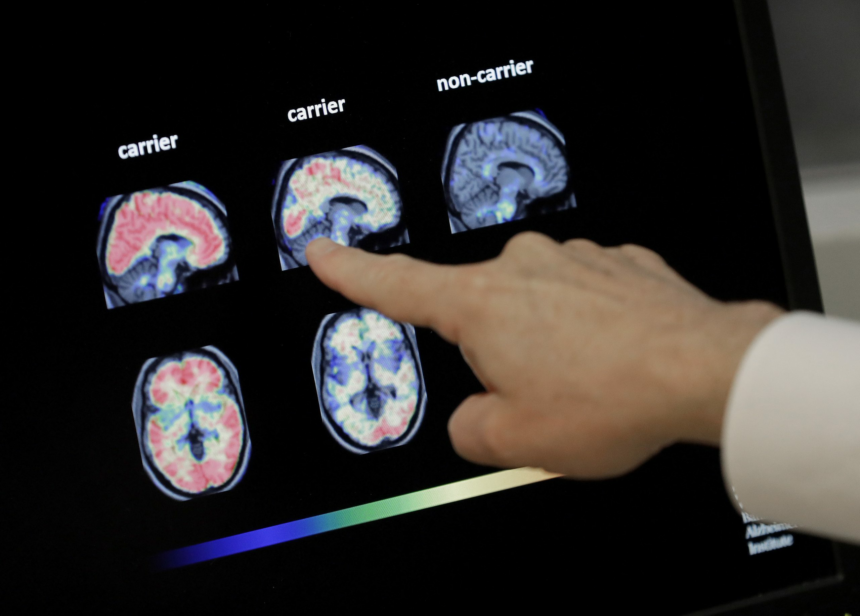
More than 90% of people with Down syndrome will get Alzheimer’s disease by the time they are in their early to mid-60s — and they often get it sooner.
Clinical research at UNT Health Fort Worth will help scientists better understand the disease in people with Down syndrome and what causes it, aiding them in developing treatment options.
“It’s not really if, but kind of when, for this group,” said Melissa Petersen, the associate professor who will lead the research at UNT Health.
People living with Down syndrome have an additional 21st chromosome. Genes within the 21st chromosome tell the body how to produce the amyloid precursor protein, and due to this, production of amyloid protein is increased in individuals with Down syndrome. Buildup of amyloid in the brain, a hallmark of Alzheimer’s, is associated with nerve cell death and resulting memory loss and functional changes.
The clinical research is part of a larger effort funded by the National Institutes of Health, called the Alzheimer’s Biomarker Consortium-Down Syndrome, or ABC-DS, study. UNT Health is one of 11 other clinical sites, or those that work with people as participants. UNT Health is the first clinical site in Texas. The school also participates in ABC-DS through ongoing work studying blood in its laboratories.
✍️ Fort Worth’s future is being written right now.
Fort Worth is growing fast — and the need for trusted local journalism is growing with it. Help us build the newsroom our community needs by 2030.
UNT Health will enroll 45 total participants at its clinical site, Petersen said. The researchers will study the physical characteristics and function of participants’ brains through interviews, medical exams, memory and thinking assessments, PET scans and MRIs. Participants will be asked to bring a family member or caregiver, called a study partner, who will be interviewed about the participant as well.
“It’s often the subtle changes that the caregivers and these study partners are noticing that are really indicative of … change in that adult with Down syndrome as they move through the disease,” Petersen said.
Qualifying participants in the study could also join what is called a trial-ready cohort — a group of people who can be contacted and enroll more quickly in clinical trials for new treatments because information about their health has already been collected. People with Down syndrome have historically been excluded from clinical trials, but that has been challenged as they have been the focus of studies and have advocated for their own participation, Petersen said.
Cohort participants can find out about chances to take part in clinical trials that they may not have been aware of otherwise, she added.
McKinnon Rice is the health reporter for the Fort Worth Report. Her position is supported by a grant from Texas Health Resources. Contact her at mckinnon.rice@fortworthreport.org.
At the Fort Worth Report, news decisions are made independently of our board members and financial supporters. Read more about our editorial independence policy here.
Your free weekly guide to Fort Worth-area K-12 school news and calendars. Sent to your inbox every Tuesday.
Fort Worth Report is certified by the Journalism Trust Initiative for adhering to standards for ethical journalism.
Republishing is free for noncommercial entities. Commercial entities are prohibited without a licensing agreement. Contact us for details.
This work is licensed under a Creative Commons Attribution-NoDerivatives 4.0 International License.
Unless otherwise noted, noncommercial entities may republish most of Fort Worth Report stories for free as long as they follow all of the guidelines below. For commercial licensing, please email hello@fortworthreport.org. For noncommercial digital publications:
- Look for the “Republish This Story” button underneath each story. To republish online, simply click the button, copy the html code and paste into your Content Management System (CMS). Do not copy stories straight from the front-end of our web-site.
- You are required to follow the guidelines and use the republication tool when you share our content. The republication tool generates the appropriate html code.
- You are required to add this language at the top of every republished story, including a link to the story. This story was originally published by the Fort Worth Report. You may read the original version here.
- You can’t edit our stories, except to reflect relative changes in time, location and editorial style.
- You can’t sell or syndicate our stories.
- Any web site our stories appear on must include a contact for your organization.
- If you use our stories in any other medium — for example, newsletters or other email campaigns — you must make it clear that the stories are from the Fort Worth Report. In all emails, link directly to the story at fortworthreport.org and not to your website.
- If you share our stories on social media, please tag us in your posts using @FortWorthReport on Facebook and @FortWorthReport on Twitter.
For noncommercial print publications:
- You have to credit Fort Worth Report. Please use “Author Name, Fort Worth Report” in the byline. If you’re not able to add the byline, please include a line at the top of the story that reads: “This story was originally published by Fort Worth Report” and include our website, fortworthreport.org.
- You can’t edit our stories, except to reflect relative changes in time, location and editorial style.
- Our stories may appear on pages with ads, but not ads specifically sold against our stories.
- You can’t sell or syndicate our stories.
- You can only publish select stories individually — not as a collection.
- Any web site our stories appear on must include a contact for your organization.
- If you share our stories on social media, please tag us in your posts using @FortWorthReport on Facebook and @FortWorthReport on Twitter.
The Fort Worth Report retains the copyright for all of its published content. If you have any other questions, contact us.
by McKinnon Rice, Fort Worth Report
June 14, 2026
McKinnon Rice is the health reporter for the Fort Worth Report. She previously held the role of higher education reporter. She is a graduate of the University of North Texas in Denton, where she received… More by McKinnon Rice
MAILING ADDRESS: P.O. Box 50216, Fort Worth, TX 76105
PHONE: 817.405.9318
EMAIL: hello@fortworthreport.org
NEWSLETTERS
DONATE
Media Kit
Merch shop
Privacy Policy
Our Mission
We pledge to produce high-quality objective local journalism that informs public decision-making, addresses the quality of life of our community’s citizens, holds our policymakers accountable and tells our readers’ stories by listening to them and making sure they are valued and understood. In all that we do, earning the trust and respect of our audience is paramount. Our reporting will be free to all who access our primary digital channels.
This site is protected by reCAPTCHA and the Google Privacy Policy and Terms of Service apply.
Sign in by entering the code we sent to , or clicking the magic link in the email.
Privacy Policy.