




The right to vote in Delaware may be on a path to receive new protections.
A bill introduced by House Majority Leader Kerri Evelyn Harris to ban the participation of corporations, LLCs and artificial entities in elections, cleared committee on June 10 by a vote of 3-1. It now heads to the House of Representatives as the first leg of a proposed constitutional amendment.
The legislation will need a two-thirds majority vote in both the Delaware House and Senate to pass. It also needs to pass through the next General Assembly.
“Voting is an activity reserved for human beings,” Harris told the House Administration Committee. “While corporations deserve a say, this right must be protected for Delawareans.”
After years of participation downstate, the bill aims to ensure anyone other than a “natural person” will be ineligible to participate in any Delaware elections. A natural person would be defined as a living, human being.
Years of debate have simmered over the presence of these “artificial entities” in elections, including a recent lawsuit by the ACLU of Delaware, challenging organizations’ ability to vote in Fenwick Island. The case was dismissed, with Judge Craig Karnwitz expressing the ACLU’s case “did not demonstrate this policy violates the principle of one person/one entity/one vote.”
Despite the controversy, the committee hearing lasted less than 10 minutes.
While the new bill won’t change most areas, several towns in Sussex County could feel its effects during the 2026 election.
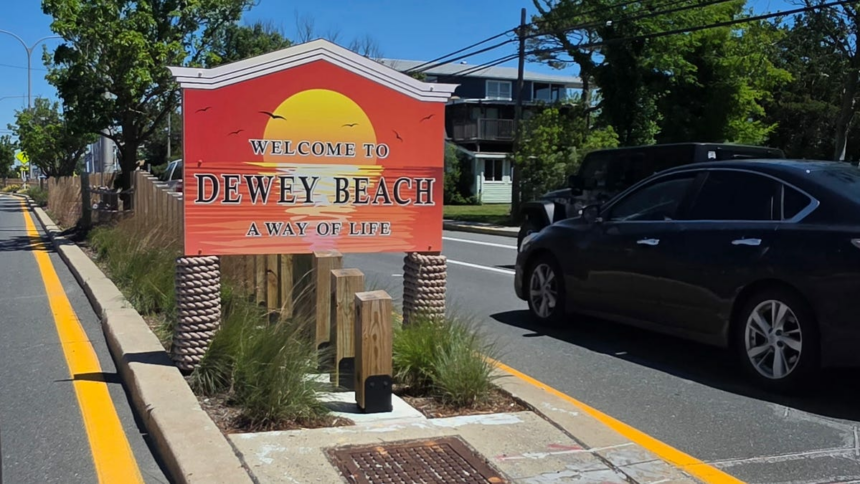
The towns of Fenwick Island, Dagsboro, Henlopen Acres, Bethel and Dewey Beach all allow for corporations or other artificial entities to cast a vote. The prevalence of those ballots likely varies.
But in some towns, corporations were able to have a measurable impact. In the ACLU’s May 2025 lawsuit against Fenwick Island, attorneys revealed that about 23% of the town’s registered voters – or 214 of the 936 residents registered to vote in October 2025 – were artificial entities.
Dagsboro and Dewey Beach officials declined to be interviewed for this story. Officials in Bethel, Henlopen Acres and Fenwick Island were not able to be reached by publication.
Back in Dover, no representative from these areas spoke during public comment, nor were they visible
Harris acknowledged potential concerns of these communities, while speaking in the committee meeting. The Dover Democrat knows local communities may want to control their own “local traditions,” including voting rights. Nevertheless, she held firm in protecting the vote of a “natural person.”
“No municipality has the right to excuse itself from constitutional protections,” Harris said. “Some principles must be applied uniformly across Delaware.”
Limiting corporations’ participation in elections appears to be the main goal of this legislation. But in doing so, the lawmakers will also look to improve election transparency.
Delaware is one of various states that doesn’t require business owners’ or members’ names in filing documents. This means that the actual people behind an entity’s vote could be obscured. Questions emerge about companies having a larger role in local elections than residents, through people voting multiple times.
A case like that occurred in Newark in 2018, leading to a ban on such entities being allowed to vote. A property manager owned 31 LLCs, and ended up voting 31 times.
Nick Wasileski, president of Delaware’s Coalition for Open Government, lived in Newark during the time. He recalled the events as “a dilution” of residents’ voting power.
“With the growing number of LLC-owned properties, it is clear that permitting business-entity votership is misguided,” Wasileski said in committee.
In some towns, discerning whether an entity or a person is voting presents another challenge. In its last commissioner election in 2020, the town of Dewey Beach did not specify the difference between a vote cast by a human or a corporation on their voter rolls, an official told Delaware Online/The News Journal. This makes it impossible to determine the share of corporations that participated.
By restricting the role of these entities in Delaware elections, Harris said she aims to ensure citizens know who is electing public officials in their state.
“Our system of government is designed so that our choices are derived from humans,” Harris said. “This legislation creates a standard for those choices.”
Adam Denn is an intern reporter for Delaware Online/The News Journal. You can reach him at apdenn@delawareonline.com.
Delaware one step closer to ban on corporations voting in elections – Delawareonline.com



Leave a Comment

