


CNS Drug Discovery Market (By Drug Type: Small Molecules, Biologics, Gene Therapies, Cell Therapies; By Indication: Alzheimer’s Disease, Parkinson’s Disease, Epilepsy, Multiple Sclerosis, Schizophrenia, Depression and Anxiety Disorders, Others; By Discovery Stage: Target Identification and Validation, Lead Identification, Lead Optimization, Preclinical Development; By Technology: High Throughput Screening (HTS), Genomics and Proteomics, AI-enabled Drug Discovery, Biomarker-based Discovery, CRISPR and Gene Editing Platforms; By End Use: Pharmaceutical Companies, Biotechnology Companies, Academic and Research Institutes, Contract Research Organizations) – Global Industry Analysis, Size, Trends, Leading Companies, Regional Outlook, and Forecast 2026 to 2035
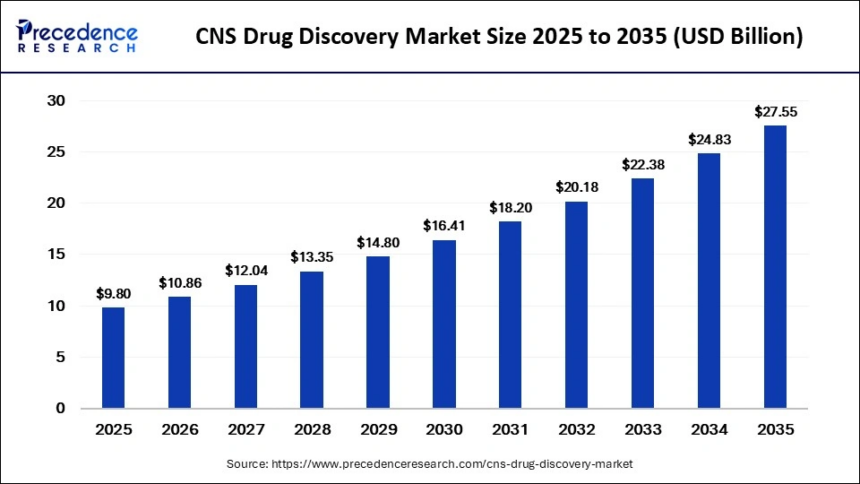
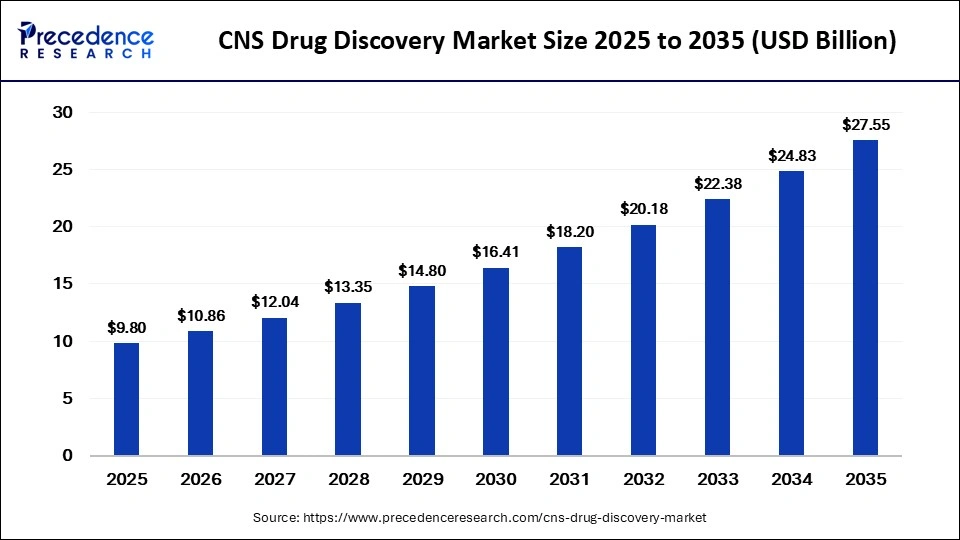
The global CNS drug discovery market size was calculated at USD 9.80 billion in 2025 and is predicted to increase from USD 10.86 billion in 2026 to approximately USD 27.55 billion by 2035, expanding at a CAGR of 10.90% from 2026 to 2035. The rising prevalence of CNS disorders, the integration of AI and ML in drug discovery, and increased government support for clinical trials and funding are significant factors driving market growth.
CNS drug discovery provides researchers and healthcare professionals with critical insights into major areas of drug therapies for the treatment of neurological and psychiatric disorders. Furthermore, drug concentration is influenced by numerous factors, such as the permeability of the blood-brain barrier, the structure of brain tissue, and individual physiological processes. The growing prevalence of neurological disorders and lack of biomarkers are propelling the growth of the market.
Artificial Intelligence (AI) has swiftly transformed the medicinal chemistry workflow. AI-based predictive tools can evaluate pharmacokinetic properties, metabolic stability, and safety issues at early development stages, enabling chemists to discard fewer promising candidates before proceeding to synthesis or in vitro and in vivo testing. In addition, Machine learning algorithms are increasingly used to analyze multiomics data, identify disease modules, and map the complex networks of protein-protein and protein-drug interactions that contribute to neurodegeneration.
Technology-Led Transformation in CNS Therapeutic Development
The rising incidence of neurological disorders, combined with advancements in artificial intelligence, intensive machine learning, and biomarker discovery technologies, is significantly propelling the market. These innovations are enhancing research efficiency, speeding up therapeutic development, and fostering patient-centered treatment solutions.
Clinical Setbacks and Blood-Brain Barrier Challenges
The elevated clinical failure rates of CNS drugs, coupled with the complexities of the blood-brain barrier, continue to hinder effective drug delivery to the brain. This scenario presents considerable scientific, regulatory, and commercialization challenges within the landscape of CNS drug discovery and development.
Personalized and Non-Invasive Therapies
The rise of telemedicine, personalized medicine, and nanoparticle-based targeted drug delivery systems is aiding in the development of safer, non-invasive, and more effective therapies for the central nervous system. This progress is not only expanding treatment options but also drawing significant research investments and spurring innovation in neurological treatment technologies.
The Small Molecules Segment Led the Market with 52% of Market Share in 2025
The small molecules segment led the CNS drug discovery market with a share of 52% in 2025, due to well-established pathways for CNS drug development. These small molecules are important in the treatment of CNS disorders because of their ability to effectively cross the blood-brain barrier and their high oral bioavailability. Its lower manufacturing complexity and strong track record of commercial success also reinforce its market dominance.
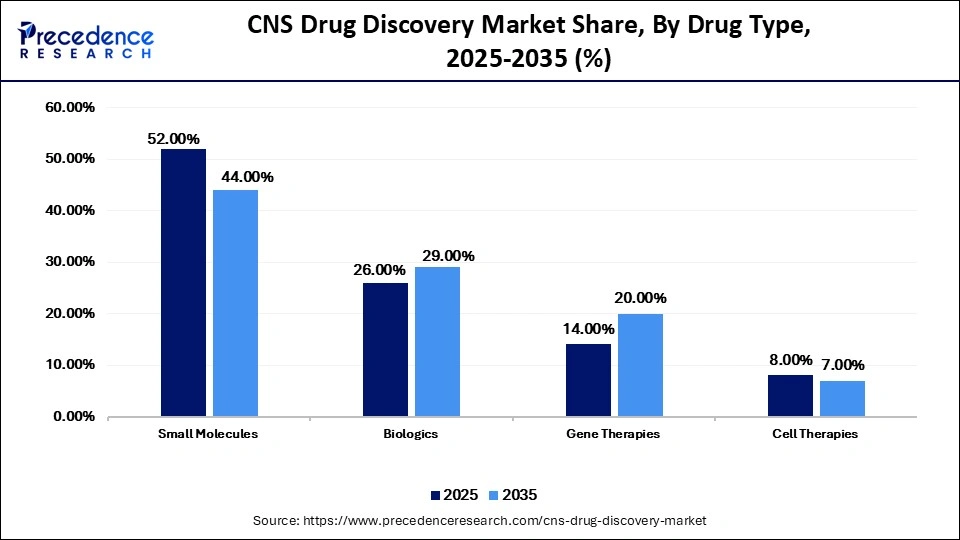
The biologics segment held 26% of the market share in 2025 and is expected to grow at a CAGR of 12.8% during the forecast period, driven by an increasing emphasis on disease-modifying therapies and notable advancements in treating neurodegenerative diseases. Biologics have the potential to repair or modulate dysfunctional neural systems, and innovations in blood-brain barrier technologies, along with enhanced target specificity, are further driving this segment’s growth.
The gene therapies segment held 14% of the market share in 2025 and is expected to be the fastest-growing segment with a CAGR of 16.5% from 2026 to 2035, driven by the rising adoption of precision medicine and advancements in viral vector technologies. Gene therapy is gaining traction for its ability to correct genetic mutations and modulate host protein production for treating CNS diseases. The increasing focus on rare neurological diseases and growing regulatory support are also contributing to the market’s expansion.
The Alzheimer’s Disease Segment Held the Largest Market Share of 24% in 2025
The Alzheimer’s disease segment dominated the CNS drug discovery market with a share of 24% in 2025 and is expected to witness the fastest growth in the market with a CAGR of 13.5% over the forecast period, driven by an aging global population and a significant unmet need for effective therapies. With over 10 million new dementia cases emerging each year, equating to one every 3.2 seconds, there’s a pressing demand for solutions. The increase in biomarker-based research and strong investments in disease-modifying therapies are crucial factors propelling this market forward.
CNS Drug Discovery Market Share, By Indication, 2025-2035 (%)
The Parkinson’s disease segment held nearly 16% of the market share in 2025 and is expected to grow at a CAGR of 12.4% in the forecast period, fuelled by a rising prevalence of the disease. Approximately 90,000 individuals are newly diagnosed each year, and the rates of disability and death related to Parkinson’s disease are escalating. The development of neuroprotective therapies, the expansion of gene therapy programs, and a rise in research collaborations are all contributing to this market’s growth.
The epilepsy segment accounted for 12% of the market share in 2025 and is expected to expand rapidly in the market with a CAGR of 8.7% in the coming years, driven by the ongoing need for innovative anti-seizure medications. With around 50 million people affected globally, epilepsy ranks as one of the most prevalent neurological disorders. The expansion of precision treatment approaches, increased research activity focused on paediatric epilepsy, and heightened awareness of the disease are all supporting the growth of this market.
The Preclinical Development Segment Dominated the Market with 28% of Market Share in 2025
The preclinical development segment dominated the CNS drug discovery market with a share of 28% in 2025 and is expected to grow with the highest CAGR of 12.5% in the market during the studied years, due to the expanding CNS therapeutic pipeline and rising investments in translational research. Preclinical studies are essential for evaluating the safety, efficacy, and potential side effects of a target compound or medical intervention before human trials commence. Additionally, there is an increasing focus on biologics and gene therapy programs, along with a growing reliance on advanced disease models.
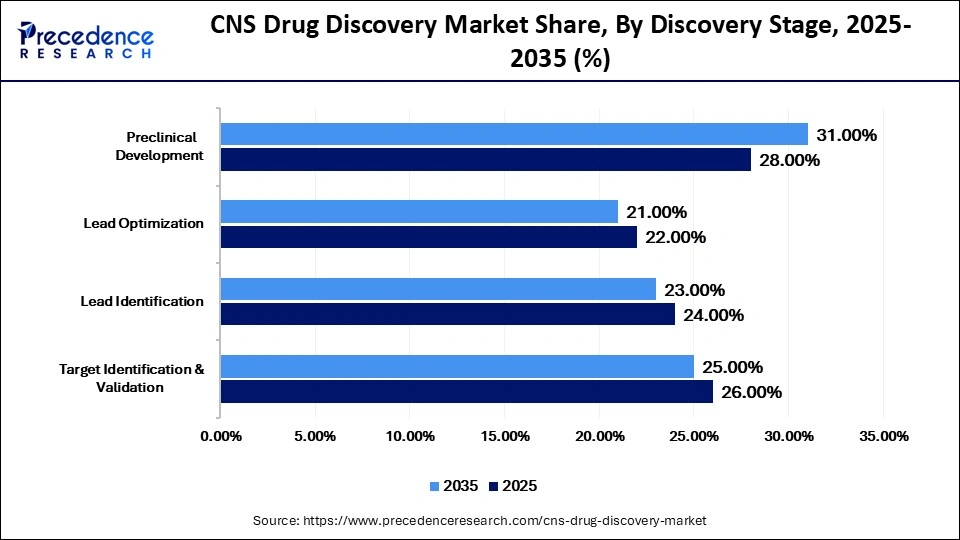
The lead identification segment accounted for approximately 24% of the market share in 2025 and is expected to grow at a robust CAGR of 10.2% in the forecast period, driven by the increasing adoption of high-throughput screening methods and the expansion of compound libraries. In this phase, a lead compound is identified based on its desirable pharmaceutical activity, paving the way for its development into a potential drug. The surge in computational drug discovery and heightened pharmaceutical R&D activities further bolsters this segment.
The target identification and validation segment accounted for 26% of the market share in 2025 and is expected to grow at a CAGR of 10.2% in the coming years, driven by an increase in genomics research and the expansion of biomarker discovery. This initial phase of drug discovery focuses on pinpointing targets, followed by intensified efforts to validate them. The rising adoption of AI platforms and a deeper understanding of CNS pathways are key contributors to this growth.
The High-Throughput Screening (HTS) Segment Led the Market with 29% of Market Share in 2025
The high-throughput screening (HTS) segment led the CNS drug discovery market with a share of 29% in 2025, due to its extensive capabilities for evaluating compounds on a large scale and its well-established discovery workflows. HTS has become a pivotal tool in the realm of pharmaceutical drug discovery, moving away from traditional trial-and-error methods to more effectively identify therapeutic targets and validate biological effects. The rise in automation and the expansion of CNS compound libraries further bolster its dominance.
CNS Drug Discovery Market Share, By Technology, 2025-2035 (%)
The genomics and proteomics segment held 23% of the market share in 2025 and is expected to grow at a CAGR of 10.4% in the coming years, driven by the increasing identification of novel targets and the rising adoption of precision medicine. Genomics plays a crucial role in identifying genetic variants that influence disease risk and treatment responses, while proteomics uncovers protein functions and interactions, paving the way for targeted therapies. The expansion of omics databases and growing research into neurological diseases are also driving this segment’s growth.
The AI-enabled drug discovery segment accounted for approximately 18% of the market share in 2025 and is expected to be the fastest-growing segment with a CAGR of 18.6% in the forecast period, attributed to the accelerated use of artificial intelligence and machine learning in target identification, significantly enhancing prediction accuracy. Algorithms such as Naïve Bayes, Support Vector Machines, Random Forest, and K-nearest neighbours are being employed in CNS drug discovery. The reduction in drug development timelines and increased pharmaceutical investments are further supporting this growth.
The Pharmaceutical Companies Segment Held the Largest Market Share of 48% in 2025
The pharmaceutical companies segment held the largest revenue share of 48% in the CNS drug discovery market in 2025, driven by substantial investments in CNS research and development, along with robust clinical capabilities. Additionally, the expansion of neurodegenerative pipelines and the cultivation of partnerships with biotech firms further enhance their position. The focus on collaborative opportunities with regulatory agencies also paves the way for continued growth.
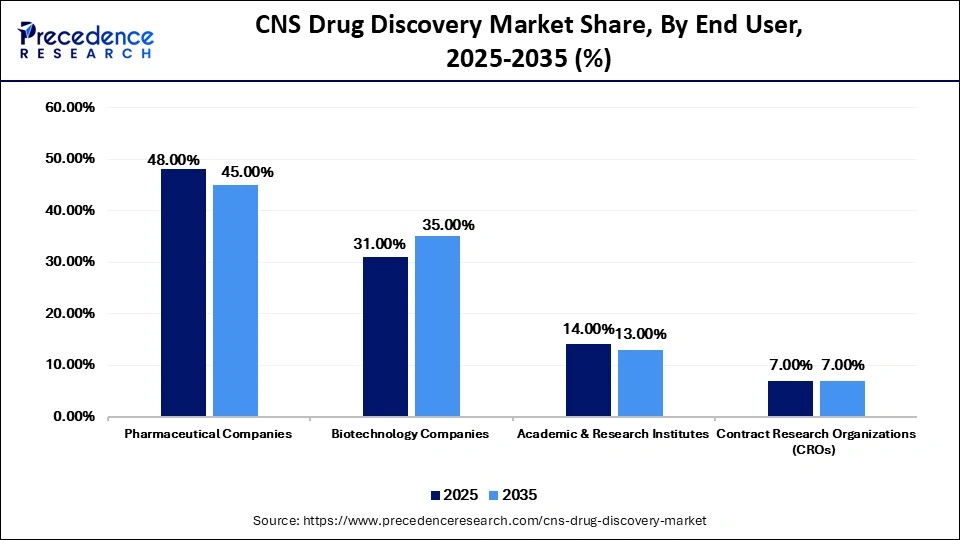
The biotechnology companies segment achieved around 31% of the market share in 2025 and is expected to be the fastest-growing segment with a CAGR of 13.8% from 2026 to 2035, supported by innovative advancements in novel CNS targets and an increase in venture capital funding. A strong emphasis on precision medicine, coupled with the expansion of gene and cell therapy research and strategic collaborations with pharmaceutical companies, supports this upward trend.
The academic and research institutes segment accounted for approximately 14% of the market in 2025 and is expected to grow at a CAGR of 9.6% in the coming years, supported by rising funding for neuroscience research and the expansion of translational medicine programs. Additionally, initiatives focused on biomarker discovery, strong government backing, and partnerships between academia and industry are key factors driving this segment’s expansion.
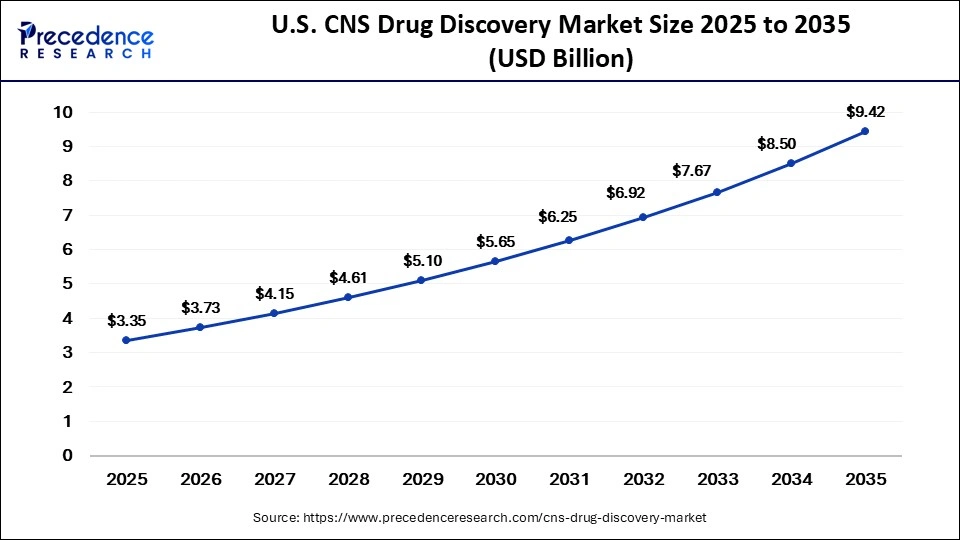
The U.S. CNS drug discovery market size was evaluated at USD 3.35 billion in 2025 and is projected to reach around USD 9.42 billion by 2035, growing at a CAGR of 10.11% from 2026 to 2035.
North America: Dominated with 43% of Market Share in 2025
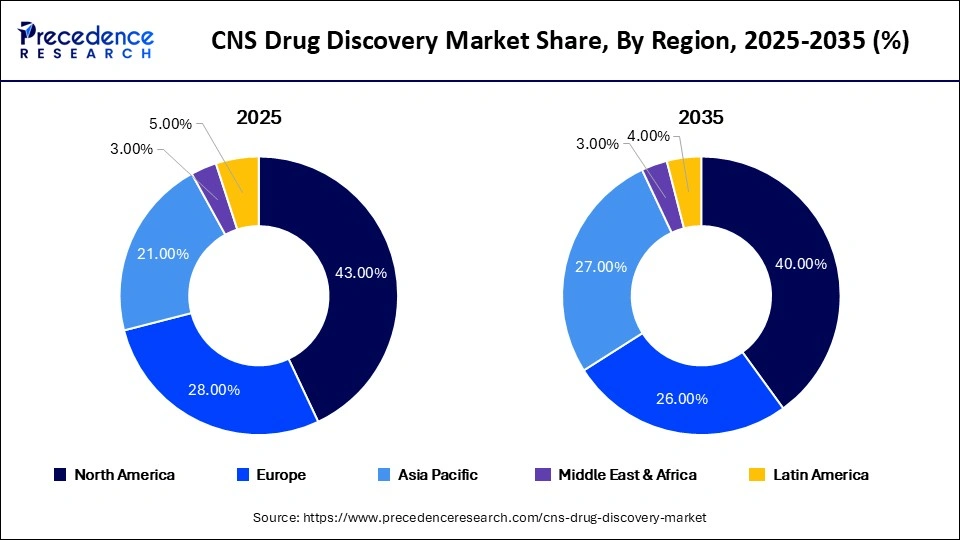
North America held a major revenue share of 43% in the CNS drug discovery market in 2025, driven by a robust pipeline for CNS drug development and significant R&D investments from pharmaceutical companies. Additionally, the rising prevalence of neurological disorders and a sophisticated biotechnology ecosystem further solidify the region’s dominance.
U.S. Market Analysis
The U.S. leads the North American market, supported by substantial investments in drug development that enhance treatment options and expand therapeutic classes. Many novel drugs are being developed by U.S. enterprises, and extensive clinical trials conducted within the country enrich treatment pipelines, fostering growth.
How is Asia-Pacific Growing in the CNS Drug Discovery Market?
Asia-Pacific held 21% of the market share in 2025 and is expected to show the fastest growth with a CAGR of 14% over the forecast period, driven by the increasing prevalence of neurological diseases, particularly the alarming rise of Alzheimer’s among the elderly in China, India, and neighbouring South Asian and Western Pacific countries. The rapid expansion of the biotechnology sector, coupled with rising clinical research investments and the emergence of pharmaceutical innovation hubs, supports this market momentum.
China Market Analysis
China is emerging as the leader in the Asia-Pacific market due to the rising prevalence of neurological disorders. Pharmaceutical companies are making significant investments in drug discovery, and the expansion of specialty drug pipelines targeting neurodegenerative and psychiatric conditions is contributing to revenue growth. Furthermore, increasing healthcare expenditures and improved insurance coverage are enhancing patient access.
Which Factors Drive the CNS Drug Discovery Market in Europe?
Europe held 28% of the market share in 2025 and is expected to expand significantly in the market with a CAGR of 10.2% in the coming years, supported by the increasing burden of neurodegenerative diseases, the expansion of neuroscience research programs, strong academic-industry collaborations, and a supportive regulatory environment.
Germany Market Analysis
Germany stands out in the European market, with its university hospitals serving as key clinical trial sites for CNS drug development programs. Initiatives like the AMNOG health technology assessment framework provide structured pathways for market access to CNS therapies that demonstrate added therapeutic benefits.
Will the Middle East and Africa Grow in the CNS Drug Discovery Market?
The Middle East and Africa held 3% of the market share in 2025 and is expected to grow at a considerable CAGR of 9.6% in the upcoming period, driven by increasing healthcare research investments and a heightened focus on neurological healthcare, further supported by the expansion of biotechnology infrastructure.
UAE Market Analysis
The UAE is experiencing remarkable market growth, propelled by the rising prevalence of neurological disorders, advancements in CNS drug development, increasing healthcare expenditures, and growing awareness of CNS disorders. Urban retail strategies and rural NGO partnerships are improving access, while collaborations with global pharmaceutical companies and enhanced clinical research capabilities continue to support market development.
Latin America: 5% Market Share in 2025
Latin America held 5% of the market share in 2025 and is considered to be a significantly growing area, due to increased participation in clinical research and heightened awareness of neurological diseases, alongside the expansion of pharmaceutical R&D activities that bolster market growth.
Brazil Market Analysis
Brazil is witnessing robust market growth, driven by the rising prevalence of neurological disorders such as Alzheimer’s disease, Parkinson’s disease, depression, and epilepsy among the aging population. Contributing factors include increasing healthcare expenditures, improvements in healthcare infrastructure, and a growing awareness of mental health issues.
The CNS drug discovery market is characterized as semi-consolidated, featuring a range of established global players who are actively involved. Many companies are primarily concentrating on Alzheimer’s disease and neuropsychiatric conditions, while also broadening their efforts toward Parkinson’s disease. Additionally, there is a growing emphasis on gene therapies and advanced molecular targeting for neurodevelopmental disorders.
However, the high investment costs and the lengthy process from drug discovery to commercialization present significant challenges. CNS drugs also encounter difficulties in penetrating the blood-brain barrier, which poses a substantial hurdle in the market. Nevertheless, numerous stakeholders and contract research organizations (CROs) are engaged in research aimed at treating CNS disorders. Furthermore, advancements in blood-brain barrier technologies and the integration of AI-driven diagnostic tools are paving the way for new opportunities in this evolving market.
By Drug Type
By Indication
By Discovery Stage
By Technology
By End Use
By Region
For inquiries regarding discounts, bulk purchases, or customization requests, please contact us at sales@precedenceresearch.com
No cookie-cutter, only authentic analysis – take the 1st step to become a Precedence Research client
Author
Rohan Patil is a leading analyst at Precedence Research, contributing to shaping the future of healthcare market insights with his deep industry expertise and forward-thinking approach. Holding a B.Sc. in Biotechnology and an MBA in Marketing, Rohan combines scientific understanding with strategic business acumen to provide comprehensive, actionable market intelligence. With over five years of experience in the market research industry, he has developed a strong track record of analyzing healthcare trends, regulatory developments, and competitive landscapes, helping clients identify growth opportunities and make informed strategic decisions.
Reviewed By
Aditi brings more than 14 years of experience to Precedence Research, serving as the driving force behind the accuracy, clarity, and relevance of all research content. She reviews every piece of data and insight to ensure it meets the highest quality standards, supporting clients in making informed decisions. Her expertise spans healthcare, ICT, automotive, and diverse cross-industry domains, allowing her to provide nuanced perspectives on complex market trends. Aditi’s commitment to precision and analytical rigor makes her an indispensable leader in the research process.
April 2026
February 2026
June 2026
March 2026
CNS Drug Discovery Market
Unlock industry potential through cutting-edge research, data-driven insights, and strategic guidance. We empower businesses to navigate, innovate, and excel.
Office No. 707, 7th Floor, Nandan Probiz, Laxman Nagar, Balewadi Baner, Pune, MH – 411045 India
USA : +1 804 441 9344
APAC : +61 485 981 310 or +91 87933 22019
+6531051271
Europe : +44 7383 092 044
Email : sales@precedenceresearch.com
©2026 Precedence Research. All Rights Reserved
Powered by – Precedence Research Pvt. Ltd.