




By Dr. Thomas Agrait
Costa Rica is, on a global level, the definitive case study of how a country can transform its biodiversity into its greatest economic asset. While the world competed in the 1990s over concrete mega-resorts, the country bet on ecotourism, sustainability, and the iconic slogan “Pura Vida.”
Today, the traditional model of “providing a good experience” is reaching its peak maturity. The modern traveler is no longer just looking for a beautiful landscape or a sustainable room; they are seeking an internal transformation. To maintain its leadership, the Costa Rican tourism sector needs to evolve from service management to the management of subconscious emotions.
This is where the concept of NeuroTourism becomes the key to consolidating absolute guest loyalty.
1. The Costa Rica Phenomenon: From Ecotourism to Global Leadership
Costa Rica’s success was not an accident, but rather the result of a country-wide strategy sustained by three fundamental pillars:
However, the global market in 2026 is hyper-competitive. Destinations in Southeast Asia, Africa, and the Latin American region itself are replicating the Costa Rican ecological model. Competing solely on green infrastructure is no longer enough.
2. What is NeuroTourism? Beyond the Simple Experience
Traditionally, hospitality and tourism measure success through satisfaction surveys, the Net Promoter Score (NPS), or reviews on digital platforms. These tools measure the customer’s rational and conscious response.
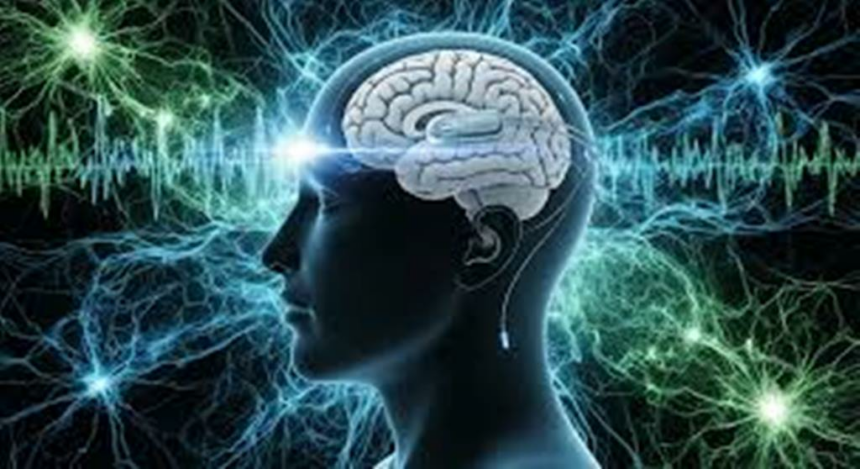
NeuroTourism goes to the root. It is based on applied neurosciences to understand how the brain processes stimuli from the environment, how the limbic system (the brain’s emotional center) is activated, and how long-term memories are consolidated in the hippocampus.
The human brain does not remember itineraries; it remembers emotional peaks and sensory transitions.
When a guest lives an experience that activates the production of dopamine (novelty and reward), oxytocin (human connection and trust), and serotonin (peace and status), that experience is archived in long-term memory as a “somatic marker.” Subconsciously, the brain associates that geographical destination with optimal survival and well-being, generating an irreversible biological impulse: the need to return.
3. The NeuroLean Methodology: Designing Strong Emotions Efficiently
The quantum leap occurs by merging neuroscience with the Lean methodology—an optimization approach that eliminates unnecessary processes (“fat” or waste) to focus all operational energy on what truly adds value. A program focused on NeuroLean for tourism does not seek to add more costs or pack guests’ schedules with more activities; it seeks to make every interaction neuro-efficient.
To take Costa Rica to the next level of execution, this methodology redesigns the Customer Journey under the following neuroscientific principles:
A. Strategic Multisensory Stimulus (Sensory Cortex)
Costa Rican hotels usually have spectacular landscapes, but the brain quickly adapts to the visual (saturation blindness). A design under NeuroLean optimizes the five senses cohesively:
B. Managing Peak Moments and the Closing (Peak-End Rule)
The psychologist and Nobel laureate Daniel Kahneman demonstrated that the brain evaluates experiences based on two moments: the most intense point (the peak) and the end.
C. Authentic Human Connection (Mirror Neurons)
The service staff is the most powerful channel for emotional transmission. If staff members are stressed due to inefficient internal processes, the guest will perceive it subconsciously through mirror neurons. By applying Lean optimization to the hotelier’s daily tasks, time and cognitive load are freed up. An employee free from operational fatigue has the mental availability to make eye contact, smile genuinely, and generate real empathy, activating oxytocin in the customer.
4. The Impact: From Satisfaction to Positive Destination Addiction
By implementing a country or corporate strategy based on NeuroTourism and operational efficiency, the metrics of the hotel business in Costa Rica are radically transformed:
Costa Rica has already proven that it can lead the world while respecting nature. The next evolutionary step is not to further digitalize hotels or build more extravagant facilities; the true future of tourism lies in the deep understanding of human biology.
Adopting methodologies that unite applied neuroscience with operational excellence allows for the creation of hotel ecosystems where the guest not only rests but is chemically transformed. By positively hacking the brain’s memory system, Costa Rica will not just sell nights of accommodation; it will become a necessary mental sanctuary that the traveler’s subconscious will demand to return to time and again. “Pura Vida” will cease to be just a slogan and become the somatic marker of happiness in the mind of the world.
“The secret of Pura Vida optimized by the science of emotions.”
Get all the latest news, events, offers and special announcements.
Contact us: [email protected]
© Copyright 2009-2026 The Costa Rica News / 17 Years of Pura Vida in Costa Rica / Alternative News For Costa Rica /
“The Next Level of Tico Success: How NeuroTourism Will Transform Experience into Biological Memory” – The Costa Rica News


Leave a Comment

