


What if the system designed to heal us is also quietly contributing to what makes us sick? It sounds contradictory, but it’s true.
This is a guest blog by Healthcare Without Harm, a global movement working at the intersection of climate and health, grounded in a simple reality: more people are being made sick by the conditions around them, and while health care contributes to the problem, it holds a powerful responsibility and opportunity to lead change from within.
If the global health care sector were a country, it would be the fifth largest source of pollution that is driving rising temperatures worldwide. Behind that number is a deeper reality: modern healthcare, like much of our economy, is still heavily dependent on fossil fuels. And that dependence comes with a cost that all of us are paying, in our health, in our wallets, and in our daily lives.
From the electricity that powers hospitals, to the production and transport of medicines, to the plastics used in packaging and everyday care, fossil fuels are embedded in nearly every step of the healthcare system. In fact, the vast majority of health care emissions come from fossil fuel use.
Plastics are a key part of this story. Today, around 99 percent of plastics are made from oil and gas. That means everything from gloves and gowns to syringes and packaging is directly tied to fossil fuel extraction and production. And plastics add another layer of harm: from start to finish, they release toxic chemicals and microplastics into the air, water, and even our bodies, linked to serious health risks including cancer, infertility, and respiratory illness.
Plastic is not just waste, it is an ongoing demand for fossil fuels, built into how our hospitals and clinics operate.
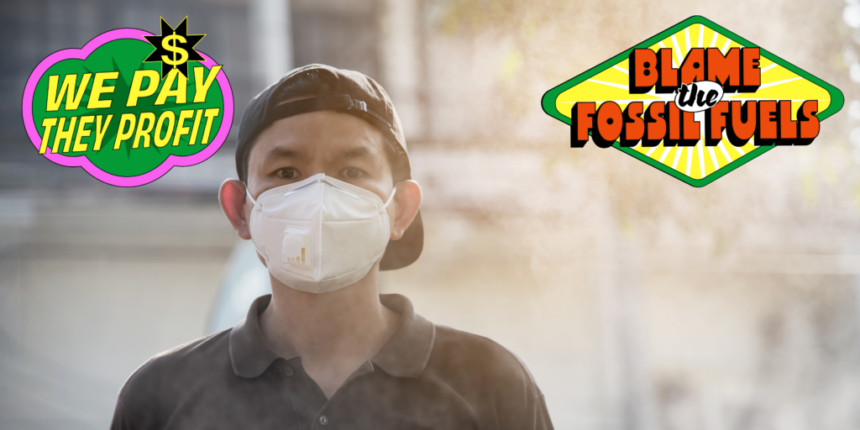
At the same time, burning fossil fuels is driving rising temperatures and extreme weather, and are a major source of air pollution. That pollution is responsible for millions of deaths each year. It contributes to asthma, heart disease, stroke, cancer, and complications during pregnancy. It worsens existing conditions and creates new ones.
In other words, the same fossil fueled system damages the air, water, and land we rely on and is also filling our hospital beds.
A patient with sickness sitting in hospital ward bed, waiting to receive treatment and medical assistance from doctor. Photo: magnific.com
There is a hidden double cost to fossil fuels.
First, we pay through our health. Rising temperatures, extreme weather, polluted air, and unsafe water are already affecting communities around the world. Doctors and nurses are seeing it every day, from respiratory illness to the mental health impacts of disasters. Findings show that in 2024, heat-related mortality for people over 65 has increased by 85% compared to the early 2000s, with over 546,000 heat-related deaths occurring annually. In India alone, air pollution is linked to over 1.72 million deaths annually.
Rising temperatures and polluted air have also made India more vulnerable to disease. Photo: PTI
Then we pay again through the cost of care.
Treating these health problems is putting a growing strain on health systems. The costs are staggering: air pollution alone causes trillions of dollars in damage globally each year, while exposure to plastic-related chemicals adds more than $1.5 trillion annually through cancer, diabetes, respiratory illness, lost lives, and reduced productivity. In the US alone, plastic-related diseases cost $250 billion in a single year.These pressures don’t stop at treatment, they ripple through the system, increasing waste management costs, straining supply chains, and compounding operational and financial stress.
This is the price of a fossil fuel dependent system, and it is a price that is rising and that comes out of all of our pockets. Following India’s example, for 2023/24, Indian insurers collected $12.4 billion in health insurance premiums, an increase of about 20% over the previous year.
As with most crises, the burden is not shared equally. Communities already facing inequality are often the most exposed to pollution, extreme heat, and disasters. They are also the least likely to have access to quality health care when they need it most. Around the world, hundreds of millions of people still lack reliable access to electricity. Many rely on burning charcoal or other fuels at home, exposing families to dangerous indoor air pollution. Women and children are especially affected.
Even within wealthier countries, frontline communities are often the first to feel the impacts and the last to receive support. When disasters hit, it becomes even clearer: health systems can be overwhelmed or disrupted, leaving gaps that communities themselves are forced to fill.
In May last year, for example, a powerful tornado tore through parts of St. Louis in the U.S., causing widespread damage. Homes were destroyed, power was cut, and thousands of people were left without basic support. Many families struggled to access food, clear debris, or get the healthcare they needed. Community groups stepped in quickly, delivering supplies, checking on neighbors, and helping people replace medications and connect to care.
A drone view shows houses damaged after a tornado struck in St. Louis, Missouri, May 17. REUTERS/Lawrence Bryant
But while that response was essential, it also exposed a deeper problem. Communities should not have to carry this burden alone. Disasters like this show the urgent need for stronger systems, better preparedness, and policies that prioritize people’s health and safety before a crisis hits. This means investing in communities ahead of time, ensuring equitable access to care, and building systems that can respond when it matters most.
Healthcare has both the responsibility and the influence to drive change, grounded in a simple principle: do no harm. In a fossil fuel dependent world, that principle is harder to uphold, but it also creates a clear mandate for change.
Health workers, along with tens of thousands of hospitals and leading health ministries, are not only responding to the impacts of rising temperatures, they are actively redesigning the system itself. In practice, this means:
These are not abstract ideas. They are real, working examples of what a just transition away from polluting fossil fuels can look like in practice. They show that it is possible to reduce reliance on fossil fuels while improving care and lowering costs: Renewable energy means cleaner air and fewer illnesses. Stronger systems mean fewer disruptions and more stable prices.
Health systems are both public and private, so leadership needs to come from across the sector – and beyond it. Hospitals and health workers can lead change, but they cannot do it alone. Transforming healthcare also means rethinking how medicines, devices, and supplies are made and delivered, reducing reliance on fossil fuels at every step. Scaling this shift will require political will. Governments and institutions need to align policies, finance, and incentives with a future that protects health rather than undermines it.
The connection between fossil fuels, health, and affordability is visible in our air, our hospitals, our bills and our daily lives.
We can continue to absorb the rising costs of a system that makes us sick, or we can build one that protects health at its core. That means governments putting people before pollution and polluters, accelerating a just transition to renewable energy, rethinking our dependence on plastics, and ending the prioritization of fossil fuel expansion over public health.
For more climate movement news, follow 350 on Twitter, Facebook, Instagram
► Help 350.org build a powerful climate movement.
We believe in a safe climate and a better future — a just, prosperous, and equitable world built with the power of ordinary people. Help us get there!
© 2026 | 350.org is a 501(c)3 non-profit organization registered in the United States. PO Box 843004, Boston, MA 02284-3004, USA
✓ Link copied!
Out of Pocket: the real cost of fossil fuels on our health and healthcare systems – 350.org



Leave a Comment