


Home – Tech – NASA and SpaceX launched a Dragon cargo mission carrying about 6,500 lbs. of supplies and experiments to the ISS, another reminder that station logistics are a steady drumbeat even when big rockets steal the headlines
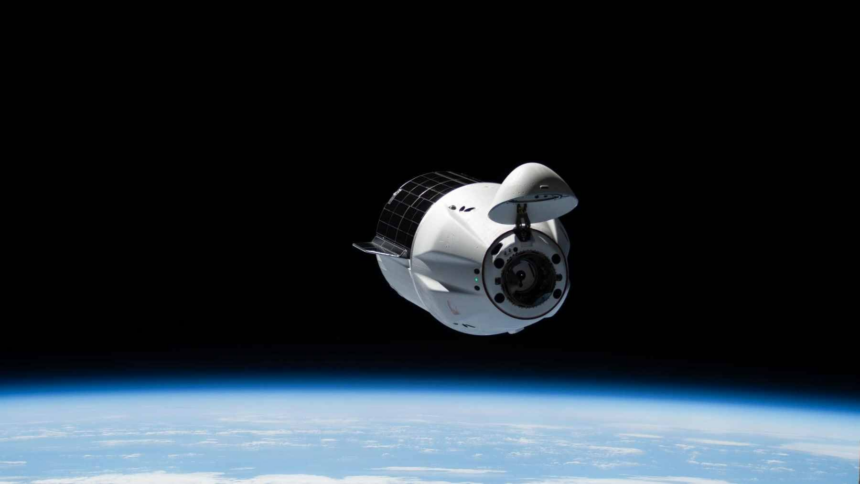
A SpaceX Cargo Dragon capsule just hauled about 6,500 lbs. of science and supplies to the International Space Station, kicking off NASA’s 34th Commercial Resupply Services mission with SpaceX.
The rocket stuck its landing back at Cape Canaveral, and the spacecraft later docked to the station, which is exactly how these “routine” flights are supposed to go.
There’s a bigger story hiding inside the success. Reuse is helping the space sector cut hardware waste and cost, yet the same fast turnaround that makes launches cheaper can also mean more exhaust injected into the upper atmosphere, where pollutants behave very differently than they do down here on the ground.
After two weather scrubs earlier in the week, one of them called at T-28 seconds because of anvil-shaped clouds that can trigger lightning near the pad, SpaceX launched CRS-34 on a Friday evening from Space Launch Complex 40 at Cape Canaveral Space Force Station.
The team had pushed the attempt back to reload “late load” items with short shelf life, and the Falcon 9 first stage returned to Landing Zone 40 in under eight minutes. It was also the 108th land landing across the onshore pads SpaceX has used since 2015.
The mission also leaned hard on hardware reusability. SpaceX flew booster B1096 for a sixth time, and Cargo Dragon C209 also notched its sixth flight, a first for a Cargo Dragon in the Dragon-2 era. Dragon separated from the upper stage about nine and-a-half minutes after liftoff and began an orbital chase of nearly 37 hours before arrival.
It’s easy to forget that the space station is not just a backdrop for cool videos and spacewalk photos. NASA says the ISS has supported more than 4,000 experiments in microgravity involving researchers from more than 110 countries over more than 25 years of continuous operations.
CRS-34’s cargo list also shows how “space science” can loop back to everyday life. NASA says Dragon delivered experiments on how well Earth-based simulators mimic microgravity, a wood-based bone scaffold idea aimed at fragile bone conditions like osteoporosis, and tools to study how red blood cells and the spleen change in space.
NASA also highlighted instruments to monitor charged particles around Earth and to take highly accurate measurements of sunlight reflected by Earth and the Moon, a reminder that climate-relevant data sometimes starts in orbit.
The environmental concern is not just carbon dioxide. A peer-reviewed analysis led by NOAA researchers describes how rockets emit black carbon particles directly into the stratosphere, where they can accumulate, absorb sunlight, and warm surrounding air.
In their model, a 10 gigagram-per-year black carbon scenario increased stratospheric temperatures by as much as 1.5 kelvin and reduced ozone in the Northern Hemisphere by as much as 16 Dobson Units in some months.
Another recent study in npj Climate and Atmospheric Science makes the ozone risk more concrete as launch rates rise. Its “ambitious” scenario of 2,040 launches per year found a 0.29% depletion in near-global total column ozone in 2030, with Antarctic springtime ozone decreasing by 3.9%, and it notes global mean ozone remains about 2% below pre-CFC levels.
CRS-34 is funded through NASA’s Commercial Resupply Services contracts, which is a business model that treats access to orbit as a service to be purchased rather than a vehicle to be owned.
The same launch pad sits on a Space Force base, and the same reusable booster family supports civil missions, commercial constellations, and national security payloads across the broader manifest.
That mix matters because the atmosphere does not care why a rocket is launching. Scientists quoted by Space.com have warned that the rapid growth of satellite megaconstellations could become an “unregulated geoengineering experiment” by adding high-altitude pollution from launches and re-entries, including soot and aluminum oxides that may affect ozone chemistry.
If reusable rockets are the “recycling bin” of spaceflight, then emissions accounting is the missing receipt. Workshops convened by groups like the European Space Agency have highlighted how launches and re-entries can affect air quality, stratospheric ozone, and climate, and also how big the remaining measurement gaps still are.
For now, the practical next steps look pretty unglamorous, but they are doable. Standardized reporting of launch and re-entry emissions, more in situ sampling of plumes, and clearer environmental review rules for both commercial and defense launches would help align the industry’s growth with the atmospheric protections we already depend on.
CRS-34 is a reminder that sustainability in orbit also has to include what we leave in the atmosphere on the way up and on the way down.
The official statement was published on NASA.
Techy44 by okdiario is the space dedicated to technology within okdiario, where we analyze, explain, and anticipate the trends that are transforming the digital world.
© techy44.okdiario.com US • All rights reserved