


“Let the word of Christ dwell in you richly, teaching and admonishing one another in all wisdom, singing psalms and hymns and spiritual songs, with thankfulness in your hearts to God” (Colossians 3:16 NIV).
What drew me to apologetically undertake theomusicology as a critical area of expressive discourse was the profound distaste for contemporary Christian music and pre-fabricated, old, stale worship music. The hours spent trying to find some level of connection to contemporary Christian music only entrenched the already deep-seated disgust for such poor pop-style, embarrassing songform arrangements, and even worse professional and amateur presentations. Serious time and heartfelt consideration were given to this genre without success. The blinding pain was amplified when it came to time-honored, warhorse worship songs. It was not until my divine appointment with Christian Hip Hop that the decades of agony were eased. Following that meeting, other genres of music that are Christian-influenced began to arrive: Alternative Rock, Rock, Punk Rock, Heavy Metal, serious Funk, roots-oriented Gospel and Soul, and even post-Jamaican/urban Reggae. The personal musical epiphany brought to light the importance of the core elements of theomusicology (personal testimony, discipleship, evangelism, bible-centered text/lyrics, community, and activism).
Though contemporary Christian music may invest some of these elements, the tendency of the genre to lean more on mass marketing weakens what theomusical agents are included. Historic worship music rhetorically includes more of the elements of theomusicology. The major lacking agent, personal testimony, continued to objectify the compositions through a cleft between insider and outsider, which privileges the insider. Further, there is an unspoken reality that age-old, time-honored, traditional worship music is expected to be accepted, which establishes a privileged, power paradigm expressed in religious music.
What I sought, and what eventually arrived, was music that sounded like my life; a faith-based musical genre(s) that was more aligned with my life, style, musical aesthetics, and signifying image. Contemporary Christian and traditional worship music were the farthest from what I could acculturate to give an honest, credible, and more accurate representation of my progressing Christian life. This may be the sonus d’ jur for some, but these were the last audio examples of my growing Christian life I wanted to accept or could honestly see being a voice for my faith-based life. One can imagine the joy that overcame my mind and heart knowing that, in this case, I’m not alone; others feel the same and were on the same audio quest to find contemporary faith-based references of multiple secular music genres to help fortify the human necessity to worship through song.
In other capacities, I’ve been tasked with authoring columns akin to “What I’m Listening To.” These are enjoyable as a sharing tool and push the envelope on discovering, studying, and learning about multiple Christian-influenced musics from across a broad range of musical genres. In the past weeks, the dynamic of faith-based and Christian-influenced music I have entertained brought a double-take to my playlist.
Pop Soul, Trap Hip Hop, Gospel Rap, and Afrocentric Judaism Rap is quite the motley crew. To serve the Christian music community in a different way than the “Big Three” Christian music journals, the collected artists in this article function along the “What I’m Listening To” style of presentation. A short analysis of how each involves and expresses the core elements of theomusicology will be provided.
The arrangement of these works holds no preference; there is no hierarchy to the placement. Each work has depth, breadth, critical inquiry, ease for the lay listener, and is content-rich for the aficionado. Certainly, it would not be unexpected that one or more of these selections would be found reviewed by any one of the “Big Three” Christian music journals. The level of critique provided here does what the “Big Three” avoid: question the inclusion of the core elements of theomusicology to see how and why these can be welcomed under the genre of Christian music with the descriptor of the genre at the preface (i.e., Pop Rock Christian Music). Staying true to the theomusicological analysis is a necessary discipline that will give listeners a firm ground from which to start the understanding of a specific work, with the further depth to recognize how a selected work vibrates with the listener’s aesthetics and faith-based identity simultaneously. This is the often secret “behind-the-scenes” mechanics that make a review of a work/artist either credible or one that misses the mark.
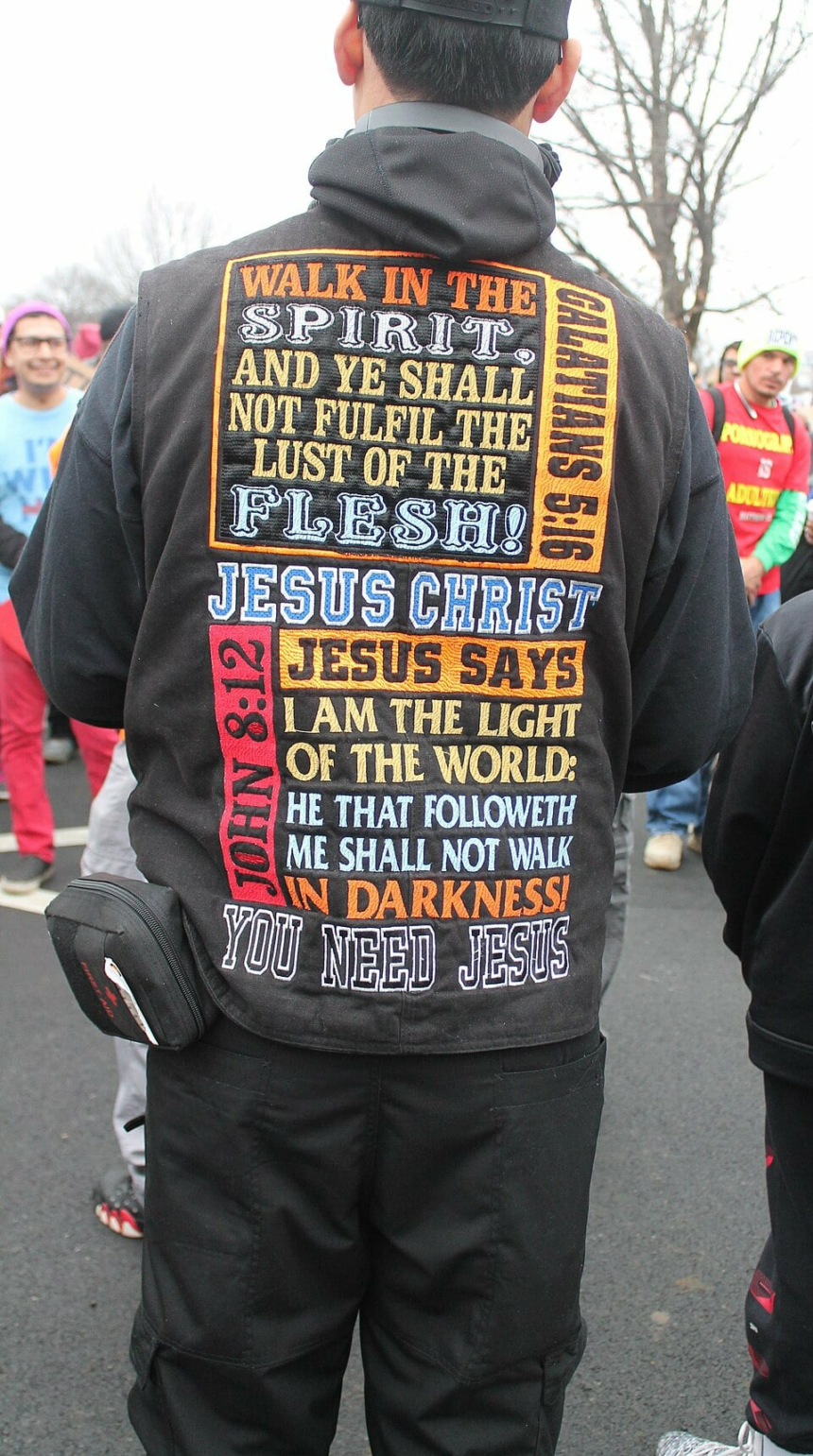
The image of a street preacher, for some, holds a negative stereotype. An elder man or woman, typically holding signs or wearing a sandwich board with “turn or burn” quotes. Loud, in-your-face, unapologetic vocalizations help round out the stereotype. TMT Isaiah (“More Than Money”) provides an alternative to that profile. A street gospel rapper who demonstrates how contemporary theomusicology is and how the elements can be expressed in lived experiences.
MTM ISAIAH Performs ” Chop Cheese” On Testify His Love (Full Video), January 3, 2026,
This track speaks volumes. MTM Isaiah is located in the neighborhood; one is eating a sandwich, and another is holding open a Bible. A microphone is mysteriously hanging in thin air, right in front of Isaiah Ramos. The work speaks to the core elements of theomusicology: discipleship, personal testimony, evangelism, biblically centered lyrics/text, community, and activism. The simplicity of the work is the power of the track. The lyrics have such a strong gravitational pull toward a personal testimony. For Isaiah Ramos, his conversion was so profound that it took him from a challenging lifestyle of a Bronx boxer, focused on gambling, drugs, and a physically explicit addiction to one centred on three words, “relationship with God.” The battle for his life took Isaiah Ramos from “a life of sin” to one of “truth,…a new life.” A meaningful work that comes across as a sleeper cell of theological profundity. Additional tracks and his “Testimony” fully articulate a living example of how theomusicology can be personally expressed.
MTM Isaiah Performs “Evangelist” In Times Square NYC (Mic Drop), June 27, 2025,
Isaiah’s Testimony, March 4, 2024,
Soul music is no stranger to those who enjoy popular contemporary Christian music. A staple genre within the larger Christian/faith-based musical canon, Soul speaks across generations, ethnicities, and cultures. Recently being more commondered toward a mechanical industry-formed style, roots Soul is fast becoming a rarity. It’s not difficult to know when a true Christian Soul artist comes into the fray. The rich musical texture, the heartfelt lyrical style, and an elegant, effortless beat signify Soul. When extended to incorporate the elements of theomusicology, true roots-oriented contemporary Soul is awe-inspiring on multiple levels. Sheena Taylor presents such a style that sacred and secular ears welcome in repetition.
Sheena Taylor, Pick A Side, August 4, 2025,
The track speaks to the biblical knowledge that one cannot serve two masters. Throughout the work, Sheena Taylor notes the major stumbling blocks in modern life while speaking to an invisible Christian audience. In doing so, Sheena Taylor challenges the inclusion and servitude of a Christian to one or more of these cultural counter-religious practices. Bringing into the text is scripture applied with an apologetic discourse. The harmonic tapestry of the work takes the listener captive while deconstructing their application of living for cultural idols while posturing to be a credible Christian. At no time in the work does Sheena Taylor negatively accuse the listener of their self-selected mannerism of trying to serve two masters. Rather, Sheena Taylor allows scripture and biblical knowledge to speak truth, while the sonic landscape maintains the depth and breadth of Soul. This combination is not deadly; it’s specific, pointed, non-judgmental, and loaded with faith-based knowledge and scriptural truth.
“You can’t serve two masters—Matthew 6:24 says it plain. Stop chasing horoscopes—Isaiah 47:13 says the stargazers will fall. Repent from fornication—1 Corinthians 6:18 says FLEE from it! God is not mocked—Galatians 6:7. I sing this with conviction, and if it cuts deep… take it up with GOD!” (YouTube, August 2025).
Stepping forward further, “When You Pray” gives light to the importance of daily prayer in one’s life. There is no doubt about Sheena Taylor’s faith, and this powerful Soul track draws on that security. Illustrating the change agency of prayer, Sheena Taylor intones a suggestive change in life to focus on prayer. The fluidity of her voice, coupled with a velvety Soul orchestration, the theomusicological foundation invested in this track subtly speaks loud.
Sheena Taylor, When You Pray, released March 31, 2026/posted, April 1, 2026,
What stands out from Sheena Taylor is the combination of Soul with theomusicological agency. Holding no punches, Sheena Taylor comes across in an unsuspecting manner. Her biblical-centered lyrics do not sidestep their importance and obvious relevance in her life and work. To the point, a Public Service Announcement posted by Sheena Taylor on her YouTube channel expresses her commitment to faith, her personal journey, and the work which she has been blessed to share.
Afro-Jewish Rap – J. Lutch
An unsuspecting artist, J. Lutch, brings to the conversation the creative work from the Black/African American Jewish community.
J. Lutch feat Lorvins, Torah, May 16, 2026,
According to the Washington Informer (2021), there are around 200,000 African Americans in the U.S. who are Black American Jews. This small community participates in Black Hebrew congregations. Jocelyn Hutchinson published a concise 2024 article on Black American Jewish history.
“In contemporary society, African-American Jews navigate challenges such as racial discrimination both within and outside the Jewish community. Studies indicate that a significant portion of Jewish Americans identify as non-White, with younger generations increasingly embracing diverse identities. Organizations like the Jews of Color Initiative strive to provide support and foster inclusion. Despite facing prejudice, many African-American Jews find meaningful connections between their African heritage and Jewish faith, often incorporating cultural traditions into their practice. Notably, they share a historical bond with Jewish experiences of oppression, aligning them with broader civil rights movements. It is essential to differentiate African-American Jews from Black Hebrew Israelites [often associated with extreme violence and antisemitic vernacular, expressions, and actions], as these groups represent distinct ideologies and community dynamics within the spectrum of Jewish identity” (Ebsco, 2024).
Taking this into account, the work of J. Lutch stands out to those who may not otherwise consider this socio-religious cultural expression. His work is grounded in firm theology. Theomusicological elements are illustrated throughout his works and extend into his short live videos on his YouTube channel. Further, the women in the community are involved equally. This underscores an added layer of the work, showcasing a composite of the community.
J. Lutch’s raps flow with ease. The beats are not forced, the inclusion of scripture is heartfelt, and the arc of personal testimony is not overwhelming. Allowing the videos to be filmed in their home location articulates a posture of discipleship and community, like that of MTM and 1K Phew. J. Lutch does not attest to having his work be bold or separate from other faith-based Hip Hop. The humility is akin to that of the other artists presented. It’s the value and representation of his work that stand out. Investing his Jewish faith in Hip Hop for a global audience ties together the historical connection between Christianity and Judaism. J. Lutch offers deeply approachable work, scripture-rich and secularly narrated.
J. Lutch, Curses and Blessings, July 19, 2019,
Aiming at the dichotomy of contemporary life while trying to balance, or come to a spiritually focused life, is the core narrative of the track. In standard J. Lutch style, the work does not allow victimization to overrule. Rather, the narrative is flipped to focus on what blessings are embedded in the situation. This process allows J. Lutch to have control over the dialogue with a sleight of hand delivery of biblical knowledge.
This example, “Curses and Blessings,” does not go against the grain of Christian Hip Hop discourse. Rather, it contributes to the canon, giving audiences a chance to see another creative angle. An older work, given the others in this review, but one that still holds significance. J. Lutch, along with his fellows Lorvins and Yapah Q, embraces a positive attitude, scripture-founded discourse, evangelism through Judaism, community involvement, physical and digital activism, each underscored with personal testimony. What J. Lutch et al highlight is the dynamics and wideranging value of contemporary theomusicology for multiple faith-based communities and socio-religious mechanics.
“Saying, ‘I will tell of your name to my brothers; in the midst of the congregation, I will sing your praise” (Hebrews 2:12 NIV).
The collected works are provided to demonstrate how theomusicology operates in daily socio-religious lives and is expressed in various musical genres. Experiencing music is a phenomenological operation; we listen historically. Experiencing Christian music adds a layer of theology to the experience. This most important level is often the one most overlooked. If we experience, listen to music historically, given that it is an ephemeral contact point with historic ramifications phenomenologically, this should also apply to scripture and biblical knowledge for Christian music. But is this the first element that comes to mind when one turns to their favorite “Christian music or artist”? Is it their use and expression of scripture and biblical knowledge that is the immediate contact point, or is the aesthetics and musical genre the primary point of contact?
What the included artists here present is how specific, direct, and uncompromising scripture and biblical knowledge are a primary contact point, regardless of the genre. If one is looking for a trap Hip Hop style, a contemporary Soul for a late afternoon pick-me-up, or that one track which just makes you feel good for an unanswerable reason, these artists offer each of these narratives with the starting point being a faith-based expressive agenda. The question to ask is if the knee-jerk response Christian music one reaches for is done for its condensed expression of biblical knowledge, and scripture sound lyrics, or is the immediate activation of prescribed Christian music simplistically aligned with a community prefered opinion, the genre used?
Stating that a particular genre or artist is known for being verifiably “Christian music” is not a credible response. If worship music is to help common life (re)align with scripture knowledge and biblical truth, mechanically subscribing a hierarchy to the music and artist founded on a mass market opinion does not address the point and importance of worship music. Rather, it avoids the issue and gives more emphasis on external impressions rather than personal investment and relationship to how we embrace scripture and biblical knowledge.
Addressing this matter specifically is what the artists included here negotiate. Each comes from a point of personal faith-based relationship, expressed in their testimony that fuels an evangelic narrative to seek discipleship through music, recognized in the community, and unfolds actively. These artists are aware of the genre in which they work, as well as the necessity and responsibility of sharing biblical truth. Yes, this can be seen in other artists who work within the umbrella of Christian music. However, the artists here stand out in the placement of their work, in a direct and specific community. What this seemingly minor point does is subtextually speak to the importance of speaking to, not for, a community.
Giving scriptural knowledge and biblical truth back to a community, your community, is foundational. The artists in this review do not overlook this perspective, albeit instinctive or specifically defined following the “Great Commission” to make disciples (Matthew 28: 16-20).
Community may seem like a simple and obvious point of contact. But if one takes a moment to see, recognize, and understand where their fast, go-to, immediate, opinion-approved, historically assumed to be a definition of Christian music, where these artists place their work, and to which community they speak to, rather than with, but definitely for, the reality of how community is expressed might be eye-opening. This begs the question, “What does the ‘Great Commission’ mean for Christian artists and market genre promotion?”
If the “Great Commission” is not one actively starting with scripture and working to make disciples, in this case through music, then the artist and promoted genre do not credibly employ theomusicological agency; it is a token in the greater Christian music industrial machine. This is what makes these artists included here as a mini case study on how to follow the “Great Commission” musically, founded on and express the core elements of theomusicology without compromising on the aesthetic value of their specific genre nor dismissing, compromising, or reducing scriptural knowledge and biblical truth.
The works of TMT Isaiah, Sheena Taylor, and J. Lutch circumnavigate around a faith-based discourse, grounded in biblical knowledge, building on personal testimony, binding the aesthetics and elements of their chosen musical genre for the purpose of making disciples through the subtle and direct inclusion of the core elements of theomusicology.
Select your answer to see how you score.
Street Preacher Rap, Soul, And A Black Jew: A Musical Survey – Patheos



Leave a Comment