


A new project using Artificial Intelligence (AI) to track the night-time activity of animals could help to catch health issues early, a zoo says.
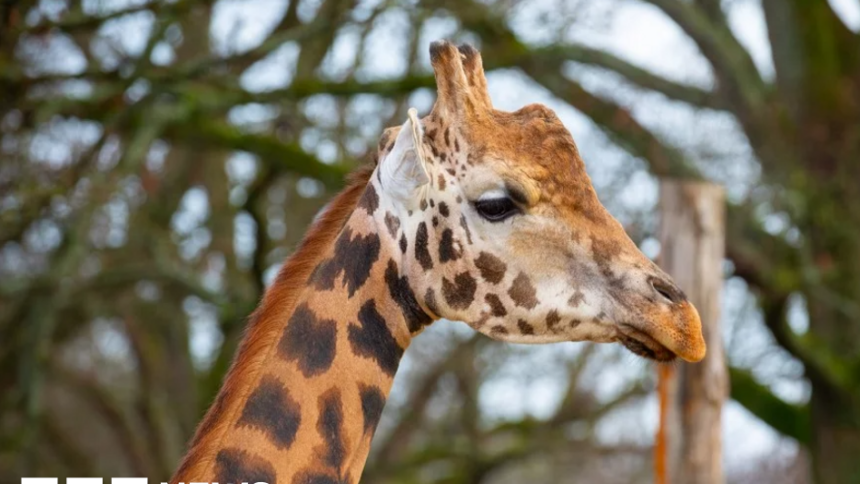
Marwell Zoo, near Colden Common, Hampshire, says it plans to use an AI program, developed by the University of Surrey, to monitor the nocturnal activity of giraffes and red river hogs as part of a three-year project.
It is hoped the software will then be able to help detect welfare problems with the animals earlier, leading to better standards of care, before the system could be rolled out to more species.
Laura Read, the zoo's chief executive, said: "We are really proud to be doing this work."
Read added: "This will allow us to nip things in the bud much quicker and it will provide us with a wealth of information.
"People are really interested in our animals and form quite close bonds with them."
Under the project, which is set to begin in June, scientists from the University of Surrey will work to develop the program, which will track a baseline for the animal's nocturnal activity.
When their normal activity changes, it is hoped the software will be able to recognise this and flag it to veterinary teams.
The program could also be used to inform how the zoo lights and heats the animal's habitats, as well as feeds the animals.
If successful, the software could then be used in other zoos and have potential applications in the wider veterinary world, Read and the university's Prof Kevin Wells said.
Wells, a professor of AI in human and veterinary healthcare, added: "This is my first time working with exotic animals. This is an exciting project."
Follow BBC Surrey on Facebook, on X, and on Instagram and listen to BBC Radio Surrey on Sounds. Send your story ideas to southeasttoday@bbc.co.uk or WhatsApp us on 08081 002250.
A fox found aboard a cargo ship from Southampton has completed treatment at the Bronx Zoo.
The new Humboldt penguin chicks at the Bewdley attraction are named after musical legends.
The RSPCA says cat owners should be aware of the symptoms after the kittens were put down.
The roving reptile was discovered in a field near its home in Cornwall, safe and well.
The critically endangered frog species are now on display after being transported from Ghana.
Copyright 2026 BBC. All rights reserved. The BBC is not responsible for the content of external sites. Read about our approach to external linking.
Marwell Zoo and University of Surrey launch AI camera project – BBC


Leave a Comment