


Crackdown on gangs operating small boats leads to surge in arrests
WATCH: First-of-its-kind exhibition on Britain's nuclear testing opens to the public
GB NEWS
By James Saunders,
Published: 17/05/2026
Experts say the new find should not exist on our planet
Scientists have uncovered a crystal which experts say should not exist on our planet.
The gem was formed in New Mexico almost a century ago during the Trinity test – the world's first nuclear explosion.
Without this atomic blast, triggered by a plutonium device called the Gadget, the mineral could never have come into being on Earth.
A research team headed by University of Florence geologist Professor Luca Bindi said: "Extreme, transient conditions produced by nuclear detonations can generate solid-state phases inaccessible to conventional synthesis.
"We report the discovery of a previously unknown calcium copper silicate type-I clathrate formed during the 1945 Trinity nuclear test; the first crystallographically confirmed clathrate identified among nuclear-explosion products."
The blast on July 16, 1945, released a blast equivalent to 21 kilotons of TNT.
The explosion, as popularised in 2023 biopic Oppenheimer, instantly vaporised the 100ft test tower along with copper equipment used to record the experiment.
A fireball consumed everything nearby, melting the tower and copper together with asphalt and desert sand.
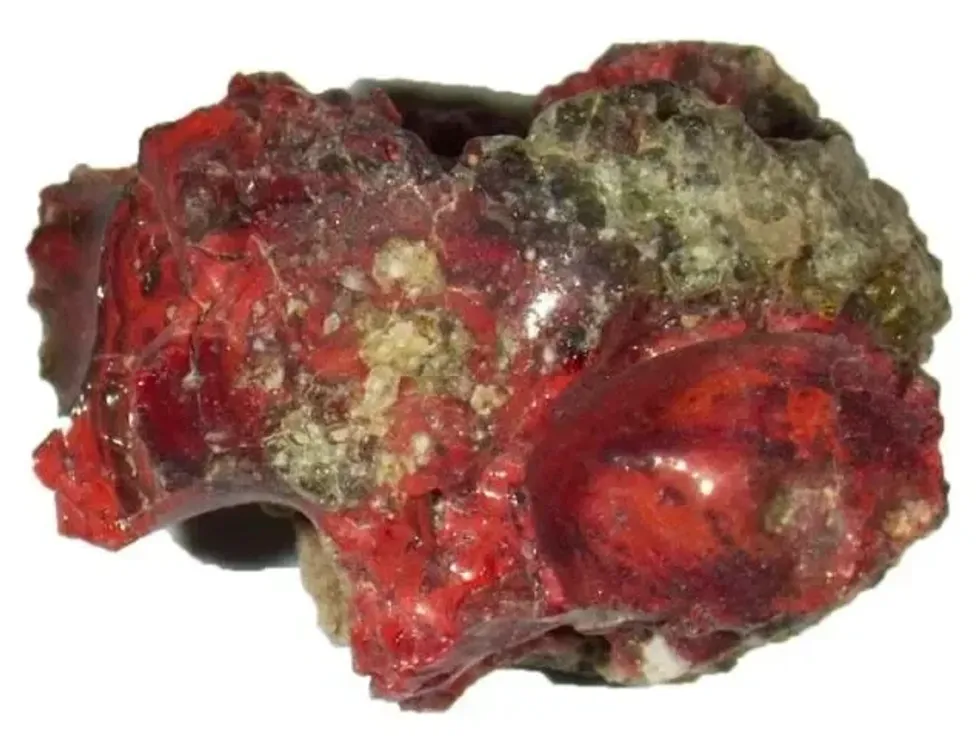
The gem was formed in New Mexico almost a century ago during the Trinity test – the world's first nuclear explosion
|
BINDI ET AL
The mushroom cloud transformed this mixture into a glassy material now called trinitite.
Researchers have discovered strange structures within this unique substance.
In 2021, Prof Bindi and her colleagues identified an unexpected "quasicrystal" in a rare red variety of trinitite containing metal from the tower, cables and recording instruments.
This red trinitite variant contains a clathrate, a crystal with atoms arranged in a cage-like lattice.
SCIENCE BREAKTHROUGHS – READ MORE:
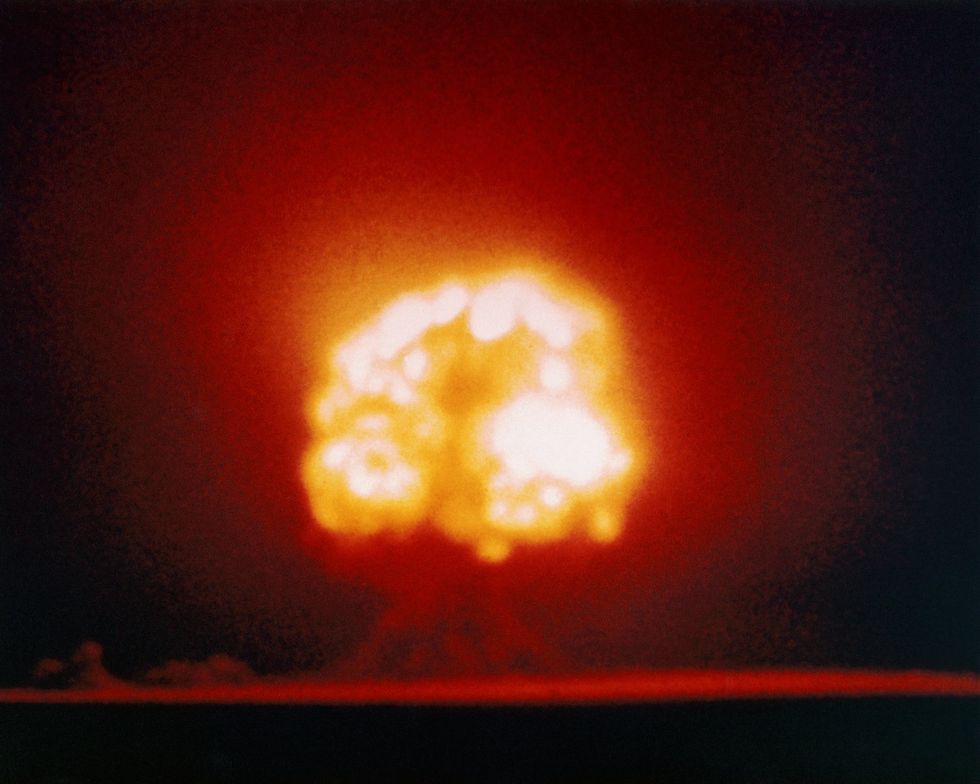
The Trinity fireball consumed everything nearby, melting the tower and copper together with asphalt and desert sand
|
GETTY
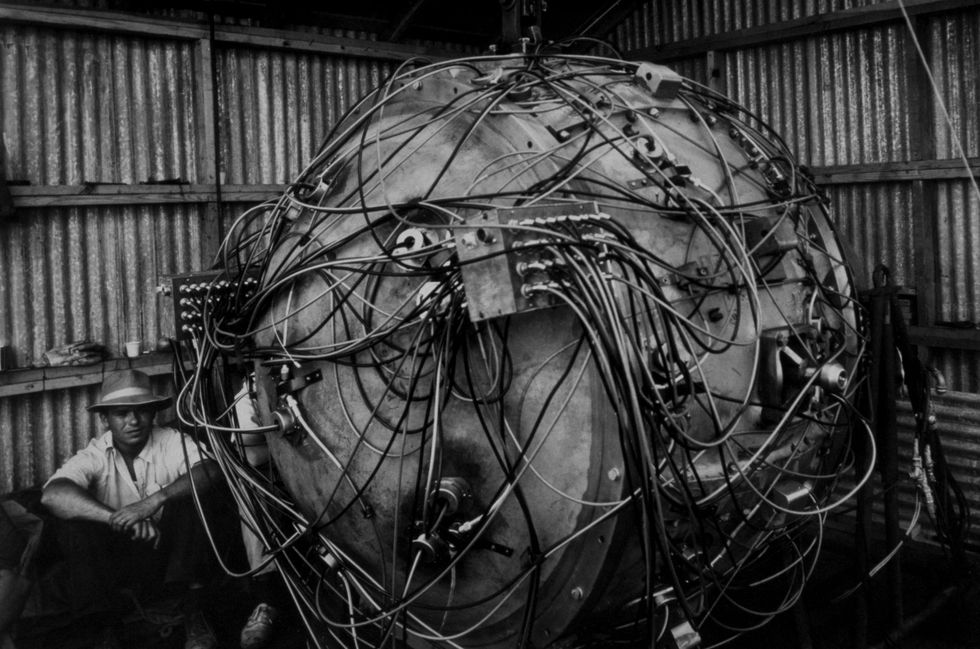
The atomic blast was triggered by a plutonium device called the Gadget
|
GETTY
Such structures can trap other atoms within them.
Crystals typically require stable conditions and lengthy periods to form their neat, repeating atomic patterns.
Inorganic clathrates are exceptionally rare in nature because they demand highly specific conditions.
The Trinity blast briefly produced these extreme circumstances, with temperatures exceeding 1,500C and immense pressures that suddenly collapsed.
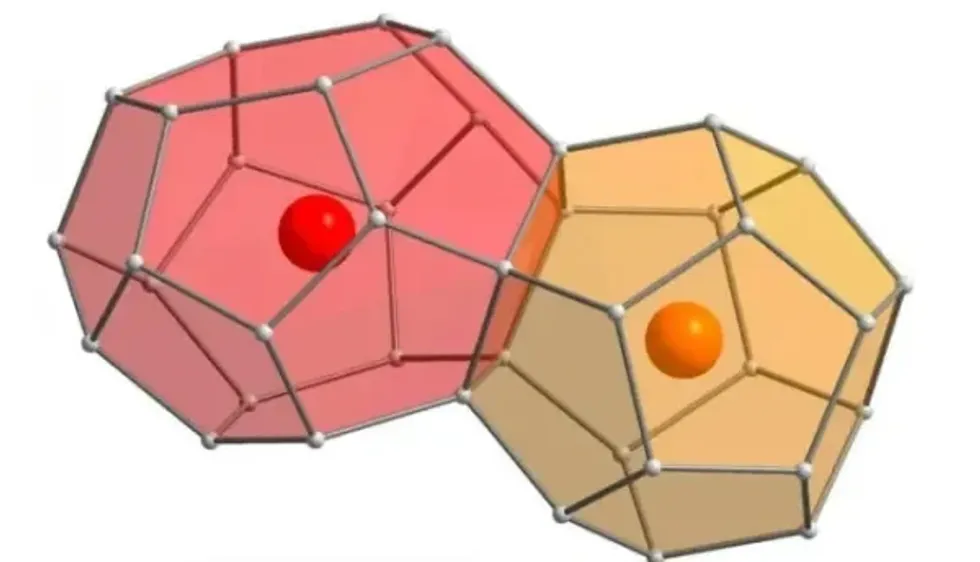
PICTURED: The atomic structure of the clathrate, a crystal with atoms arranged in a cage-like lattice
|
BINDI ET AL
Rapid cooling forced atoms into unusual arrangements, locking them in place.
Scientists describe the material as a frozen moment in time, preserving the blast's intense conditions and offering researchers a unique window into the explosion's state.
Studies of red trinitite have revealed multiple unusual mineral structures, including this newly identified clathrate.
X-ray analysis of a red trinitite sample uncovered a small copper-rich droplet embedded inside.
Closer examination showed an unusual atomic arrangement: a cubic type-1 clathrate.
The structure features silicon atom "cages" that hold individual calcium atoms, with copper and iron traces also present.
This represents the first clathrate ever identified among materials produced by a nuclear explosion.
Our Standards: The GB News Editorial Charter
Without this atomic blast, triggered by a plutonium device called the Gadget, the mineral could never have come into being on Earth.
A research team headed by University of Florence geologist Professor Luca Bindi said: "Extreme, transient conditions produced by nuclear detonations can generate solid-state phases inaccessible to conventional synthesis.
"We report the discovery of a previously unknown calcium copper silicate type-I clathrate formed during the 1945 Trinity nuclear test; the first crystallographically confirmed clathrate identified among nuclear-explosion products."
The blast on July 16, 1945, released a blast equivalent to 21 kilotons of TNT.
The explosion, as popularised in 2023 biopic Oppenheimer, instantly vaporised the 100ft test tower along with copper equipment used to record the experiment.
A fireball consumed everything nearby, melting the tower and copper together with asphalt and desert sand.
The gem was formed in New Mexico almost a century ago during the Trinity test – the world's first nuclear explosion
BINDI ET AL
The mushroom cloud transformed this mixture into a glassy material now called trinitite.
Researchers have discovered strange structures within this unique substance.
In 2021, Prof Bindi and her colleagues identified an unexpected "quasicrystal" in a rare red variety of trinitite containing metal from the tower, cables and recording instruments.
This red trinitite variant contains a clathrate, a crystal with atoms arranged in a cage-like lattice.
The Trinity fireball consumed everything nearby, melting the tower and copper together with asphalt and desert sand
GETTY
The atomic blast was triggered by a plutonium device called the Gadget
GETTY
Such structures can trap other atoms within them.
Crystals typically require stable conditions and lengthy periods to form their neat, repeating atomic patterns.
Inorganic clathrates are exceptionally rare in nature because they demand highly specific conditions.
The Trinity blast briefly produced these extreme circumstances, with temperatures exceeding 1,500C and immense pressures that suddenly collapsed.
PICTURED: The atomic structure of the clathrate, a crystal with atoms arranged in a cage-like lattice
BINDI ET AL
Rapid cooling forced atoms into unusual arrangements, locking them in place.
Scientists describe the material as a frozen moment in time, preserving the blast's intense conditions and offering researchers a unique window into the explosion's state.
Studies of red trinitite have revealed multiple unusual mineral structures, including this newly identified clathrate.
X-ray analysis of a red trinitite sample uncovered a small copper-rich droplet embedded inside.
Closer examination showed an unusual atomic arrangement: a cubic type-1 clathrate.
The structure features silicon atom "cages" that hold individual calcium atoms, with copper and iron traces also present.
This represents the first clathrate ever identified among materials produced by a nuclear explosion.
Our Standards: The GB News Editorial Charter