


Bangor Daily News
Maine news, sports, politics, election results, and obituaries
MILLINOCKET, Maine — U.S. Sen. Susan Collins said Friday that Congress must either formally authorize the Iran war or bring it to a close while the conflict grows increasingly unpopular and the White House sidesteps congressional oversight.
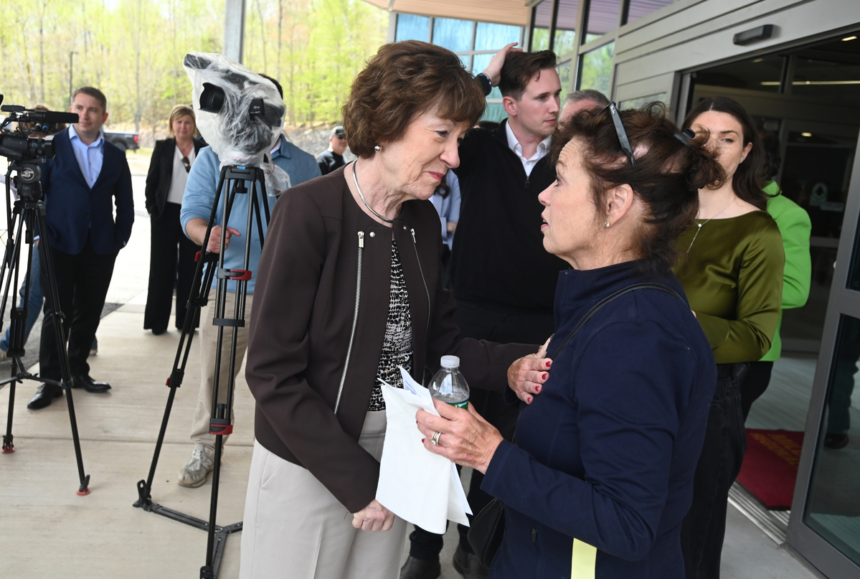
“Congress should either authorize the military action in Iran or it should cease,” the Republican told reporters during an interview at a hospital ceremony in Millinocket.
The stakes for Collins are high entering her 2026 race for a sixth term. Fuel prices are climbing, and the cost of the war is rippling through household budgets. President Donald Trump’s approval on the economy was at 30% in one poll released this week. Her fate is tied to his as Collins tries to hold her seat in a Democratic-leaning state.
Her likely opponent in a nationally watched race, Graham Platner, is making the war one of his major focuses. This week, she questioned a military official on whether the federal government anticipated Iran’s closure of the Strait of Hormuz but didn’t question Defense Secretary Pete Hegseth on the subject, leading Platner to call her “spineless.”
While Collins voted with her party on earlier Iran resolutions, she has joined a growing number of Republicans calling for guardrails on the war that is now 70 days old and is under a partial ceasefire. She was one of only two Republicans to join Democrats on a recent war powers resolution earlier this month.
The vote failed but signaled growing unease in her party. The White House has further complicated matters by claiming a partial ceasefire paused a 60-day clock for the president to pause military operations unauthorized by Collins, an argument legal scholars across the ideological spectrum reject.
Speaking on Friday, Collins said the 60-day deadline was always meant to be a hard limit, not a suggestion.
Her frustration was sharpest on the Strait of Hormuz. Iran’s move to restrict the waterway, through which more than 20 percent of the world’s oil flows, has sent fuel prices surging. Collins called it entirely foreseeable. She said the U.S. needs to be developing alternative oil transit routes now, not scrambling for a new plan each week.
“It’s far too easy, as we learned way back in the Iran-Iraq War, for Iran to close or mine that strait,” she said. “To me, the administration should have seen it coming. That was an obvious action for Iran to take.”
Kasey Turman is a reporter covering Penobscot County. He interned for the Journal-News in his hometown of Hamilton, Ohio, before moving to Maine. He graduated from Miami University in Oxford, Ohio, where… More by Kasey Turman
Michael Shepherd joined the Bangor Daily News in 2015 after time at the Kennebec Journal. He lives in Augusta, graduated from the University of Maine in 2012 and has a master's degree from the University… More by Michael Shepherd
Your email address will not be published.