




Ida Jobe explores how trust and culture are shaping the future of medicine in West Africa
by
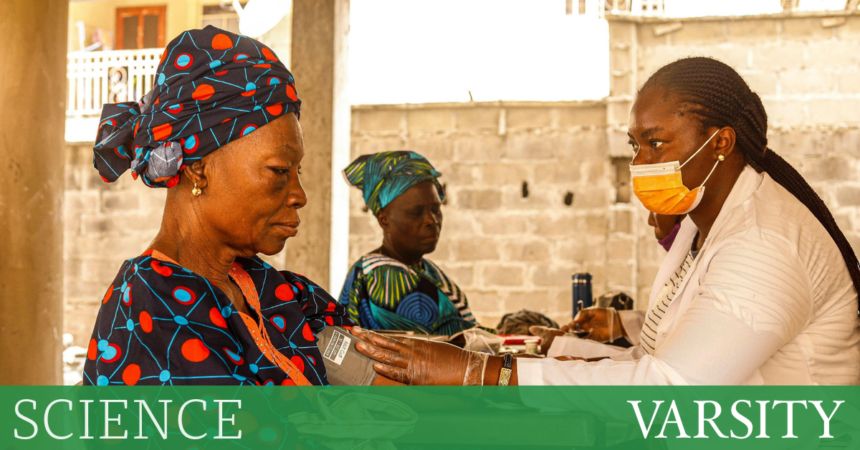
Lagos Food Bank Initiative via Pexels / https://www.pexels.com/license/
Scientific research is often conducted as if within a vacuum, focusing on technical translation – how discoveries move from lab bench to clinic. Far less attention is paid to cultural translation: how therapies are interpreted once they enter real communities. As a first-generation Gambian raised in Nottingham, I have long been aware that science does not operate in isolation. Culture, geopolitics, scientific knowledge, and history tangle inextricably, influencing perceptions of science and medicine.
This question has become particularly relevant as I begin my own research. My PhD is focused on gene-based biologics, a class of advanced therapies that use genetic or molecular tools to influence how the immune system behaves to treat disease. While these treatments represent an exciting frontier in medicine, innovation is never only about whether something works in the lab. It is also about what people already believe about medicine, who they trust, and whether healthcare feels accessible and fair.
Mistrust of biomedical innovation is not confined to any single region. Through personal interactions in the UK and the United States, I have encountered misinformation about vaccines, including narratives describing them as ‘DNA-altering’. Yet distrust cannot be separated from inequality. The uptake and meaning of new therapies are shaped by lived experience of healthcare systems.
“Science is the same everywhere. The scientific method does not change but everything around it can”
From experiences in Gambia, I know that class can determine the level of healthcare someone can afford. I observed similar patterns while living in Dallas, Texas. These realities raise an important question: how will next-generation therapies, including biologics, be understood and implemented across different cultural and economic contexts? To explore this question, I spoke with researchers and practitioners working at the intersection of biomedical science, community experience, and culture.
Dr Haddijatou Mbye is a postdoctoral researcher at the Medical Research Council The Gambia (MRCG), working in fundamental parasite biology. With experience across Ghana, the UK, and Gambia, she offered insight into how scientific work is shaped by institutional context.
“Science is the same everywhere,” she told me. The scientific method does not change. But everything around it can. Here, “you sometimes have to chase things more […] waiting for reagents or following up on procurement […] it’s not always a straight line.” This does not make the science less rigorous, but shapes the pace of research and what is possible within a given system.
Institutional structures also shape scientific careers. Dr Mbye described UK laboratory culture as highly structured and sometimes difficult to reconcile with caregiving responsibilities, whereas she characterised MRCG as more flexible and outcome-focused. Scientific careers are often framed as purely meritocratic, yet institutional design can influence who is able to remain within research environments.
“Communities often place the greatest confidence in frontline health workers, who maintain long-term relationships with families”
Trust in institutions is similarly complex. Founded in 1947, MRCG is one of the longest-standing biomedical research institutions in West Africa. Its longevity has built recognition, yet the institution can still feel socially distant from the communities around it.
“They think we have millions” Dr Mbye joked, reflecting the perception that MRCG holds authority. She described earlier community myths and longstanding suspicion around blood sampling. Although trust has grown substantially over time, institutional legitimacy remains relational, built gradually through sustained interactions and visibility.
Dr Penda Johm’s work as a medical anthropologist focuses on vaccination ethics and implementation science in Gambia. She explains that “communities often place the greatest confidence in frontline health workers, who maintain long-term relationships with families.”
“Technical efficacy alone does not determine impact,” she explained. Vaccines and other biomedical technologies succeed or fail through social processes such as communication, institutional credibility, and community engagement. “Vaccines are generally understood as protective and beneficial […] framed as part of responsible parenthood and good citizenship.” However, she cautioned that acceptance should not be mistaken for passive compliance. “People often interpret vaccines not only in biomedical terms, but through relational lenses: who is delivering it, who is endorsing it, and what it signals about care and responsibility.”
“Concerns about fertility, sexual morality, and future marriageability can shape perceptions about HPV vaccination”
She gave the example of how gender shapes decision-making about HPV vaccination: “While mothers often manage children’s healthcare, final decisions may involve husbands, extended family members, or respected authority figures. When interventions intersect with reproductive health, the gendered dimension is even more pronounced because it targets adolescent girls. Concerns around fertility, sexual morality, and future marriageability can shape perceptions.” Urban-rural differences, education levels, and exposure to health messaging can mediate these dynamics.
Mental health emerged as an unexpectedly central theme in my conversations. Sainabou Drammeh, a maternal mental health PhD researcher and lived-experience advocate, described a policy landscape shaped by colonial-era frameworks. Existing legislation governing psychiatric care in The Gambia includes stigmatising terminology and emphasises detention rather than holistic support. Yet the deeper challenge, she argues, is not only limited by the stigma imposed by society, but that which has been internalised.
Mental health is often framed in binary terms – mentally well or mentally ill, leaving some unable to recognise their own experiences within that framework. At the same time, Gambians already have culturally legible ways of describing distress. People may say in Wolof, ‘my mind is not at ease’, describe persistent fear, or explain that nothing brings joy, but not identify with labels like ‘depression’ or ‘anxiety’. The difficulty lies in the mismatch between biomedical terminology and everyday language.
“Health systems do not operate in sterile policy environments. They operate within living landscapes”
Drammeh highlighted a pharmacological inequality that is rarely discussed. Many individuals experiencing psychotic illness in Gambia will be treated with first-generation antipsychotics. These are older medications, which remain widely available in public health systems, but are associated with significant side effects, including tremors and long-term movement disorders. Newer third-generation antipsychotics, which tend to have improved side-effect profiles, are often available only through private pharmacies, and can be prohibitively expensive for many families. Innovation, in this context, does not fail because it lacks efficacy. It fails because it lacks equitable distribution. This reality complicates conversations about future biomedical technologies. If even newer psychiatric medications remain inaccessible to many, what would highly specialised therapies such as biologics realistically look like within these health systems?
Innovation does not always need to arrive from outside. One compelling example of culturally-grounded intervention is the CHIME trial (Community Health Intervention through Musical Engagement), a multi-country study exploring music-based maternal mental health support. In Gambia, the intervention works with Kanyeleng groups: traditional female communicators who use participatory music and performance in community settings, often singing during ceremonies connected to pregnancy and motherhood. Through humour, music, and performance, Kanyeleng play wider social roles in disseminating information and drawing attention to important issues within communities. Rather than importing entirely external therapeutic models, the trial builds upon existing cultural practices. Music becomes therapeutic because it is already trusted.
Rodrigo Carlos Santos, a Cape Verdean entrepreneur, described this through “djunta mon” (‘joining hands’), where illness is understood collectively and care is expressed through everyday acts. Interventions therefore enter communities through social networks rather than individuals.
READ MORE
How science is being weaponised
Language also shapes legitimacy. Rodrigo noted that health communication delivered in Kriolu, a Creole language, often resonates more strongly than formal Portuguese. Colonial history remains present in West African health landscapes, shaping legal frameworks and institutions. Yet none of the people I spoke with framed their countries as passive inheritances of colonial medicine. The Monument de la Renaissance Africaine in Dakar, Senegal, symbolises post-colonial self-determination and the efforts to define African futures on African terms.
Across Gambia, Senegal, and Cape Verde, I was struck by shared cultural rhythms: music in public spaces, communal beach gatherings, and intergenerational social life. Health systems do not operate in sterile policy environments. They operate within living landscapes.
Advanced therapies may transform medicine in the coming decades. But their success will depend on recognising that trust is relational, care is communal, language confers legitimacy, and inequality shapes access. Science does not translate itself. It is translated through people, institutions, and the cultural landscapes in which it hopes to take root.
First published in 1947, Varsity is the independent student newspaper for the University of Cambridge.
All content © 1996-2026 Varsity Publications Ltd.
Why science doesn’t translate itself – varsity.co.uk



Leave a Comment

