Now
84°
Thu
78°
Fri
71°
by AUSTIN DENEAN | The National News Desk
WASHINGTON (TNND) — The Trump administration says the war with Iran is over but may be stuck in a prolonged standoff with reduced hostilities and little progress on its primary objectives on Tehran’s nuclear program or the Strait of Hormuz.
Reports of progress in a diplomatic off-ramp to the war are being met with the challenging reality of getting a hardline regime in Tehran to make concessions that are suitable to the White House. Several rounds of discussions have already fallen apart at the last minute, highlighting the difficulty of getting the U.S. out of the war.
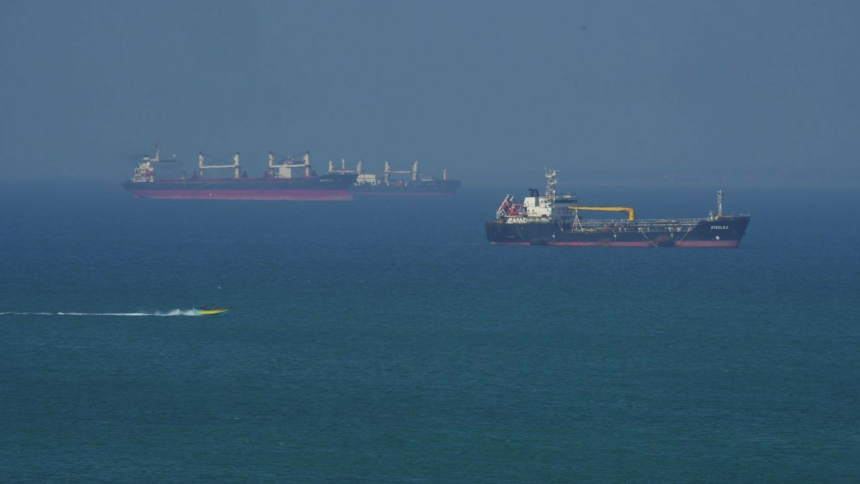
Secretary of State Marco Rubio told reporters at the White House that “Operation Epic Fury,” the White House’s name for the war with Iran, had concluded and its objectives were completed. Continuing efforts to reopen the Strait of Hormuz, a vital waterway where 20% of the world’s oil passes through, were a separate defensive and humanitarian mission, he said.
Trump said later that day he was pausing the operation to guide commercial vessels that have been stuck in the Strait of Hormuz to give more room for peace talks. A tenuous ceasefire has been in place since April 8 despite several claims of violations from the U.S. and Iran.
Gen. Dan Caine, chairman of the Joint Chiefs of Staff, said that since the ceasefire started, Iran has fired on commercial vessels nine times, seized two, and attacked U.S. forces more than 10 times. But he said those outbursts were “all below the threshold of restarting major combat operations, at this point.”
But Trump threatened Iran in a social media post with more bombing on Wednesday if the country doesn’t agree to allow traffic to restart through the strait and accept a peace deal that he did not provide details on.
“If they don’t agree, the bombing starts,” he wrote.
The U.S. believes it’s close to reaching an agreement with Iran that would end the war and create a framework for more detailed discussions over the future of Iran’s nuclear program, Axios reported on Wednesday. Under the proposal, Iran would commit to a moratorium on nuclear enrichment, and the U.S. would lift sanctions and release frozen Iranian funds. Both sides would also lift restrictions on the Strait of Hormuz.
Even if Washington and Tehran agree to the initial terms, they are contingent on a final resolution being reached, risking a continuation of another long standoff where hostilities are paused but the primary issues stay unresolved.
Iranian officials cast doubt on reports of progress, who described it “more a list of American wishes than a reality.”
Both sides still have incentives to reach a deal despite repeated setbacks in negotiations.
“It's in the interest of both sides to make the deal,” said Javed Ali, a former counterterrorism official in the federal government and associate professor of practice at the University of Michigan. “The Iranians can't continue for this thing to drag out for longer, they need time to lick their wounds and figure out what the regime wants to focus on going forward. At the same time, the administration wants to make a deal too, because as we get closer to November, this is all going to have an impact.”
Restoring traffic through the strait has become a primary sticking point between Washington and Tehran. Iran has claimed sovereignty over the strait and said it will charge vessels for safe transit through the waterway, claims that the U.S. and other countries have said cannot stand.
Caine said more than 1,550 commercial ships are waiting to transit the strait. Oil and natural gas exports from the region have essentially stopped since the war started, sending energy prices soaring. Oil prices have been over $100 a barrel for weeks and the cost of gasoline has jumped nearly $1.50 compared to a year ago.
Beyond the strait, Iran’s nuclear program remains a central obstacle. Trump has also repeatedly said that Iran cannot have nuclear weapons. U.S. negotiators have pushed for Tehran to suspend its nuclear program and give up its stockpile of highly enriched uranium.
Iran has rejected that request and proposed suspending enrichment for five years and then allowing for low-grade enrichment. Tehran’s proposal would also include giving half of its highly enriched stockpile to Russia, while the other half would be available to international inspectors. The U.S. rejected the proposal.
Iran has suffered significant losses since the war started, losing a series of high-ranking leaders in the government and military, destruction of many of its ballistic missile facilities, damage to nuclear sites and pressure on an economy that was already struggling. Despite the series of setbacks and continued pressure from the U.S. blockade, Tehran has yielded little ground in negotiations.
“We're going to see how many concessions will Iran make on its nuclear program to make a deal or will the hardliners going to dig in and say, ‘that's a red line for us?’ And if so, then Trump's going to start the military campaign again.
“Each side believes they have more leverage over the other.”
2026 Sinclair, Inc.