A new bipartisan bill in Congress aims to curb what lawmakers say are predatory collection practices by so-called “claim sharks” — companies that charge disabled veterans large sums for help claiming benefits with the Department of Veterans Affairs.
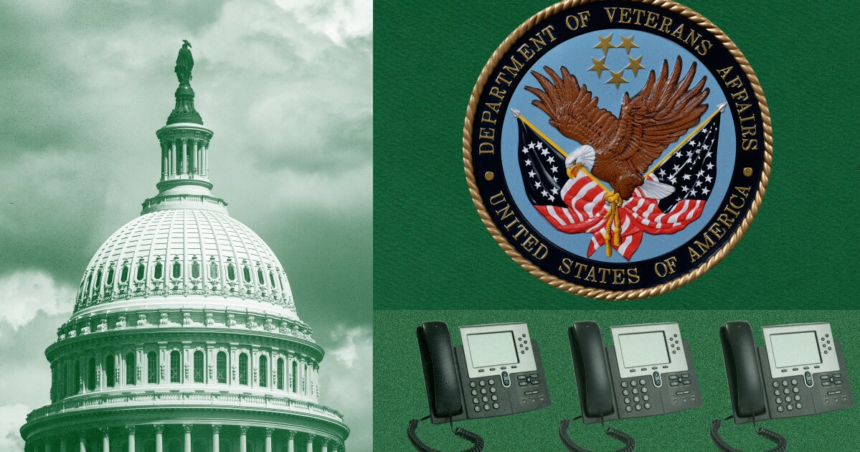
The bill, sponsored by Rep. Chris Pappas, D-N.H., Rep. Don Bacon, R-Neb., and two of their Republican colleagues, would prevent companies from using auto-dialers to call federal agencies.
Pappas said the legislation was prompted by a 2025 NPR investigation of Trajector Medical that revealed how the Florida company used auto-dialer software to access a VA benefits hotline meant for veterans. The company would dial into the system to monitor benefit payments for thousands of its clients, often without their knowledge, and then automatically send the veteran a bill if their payments increased.
“It’s crazy what these guys are trying to get away with,” Pappas told NPR. “To use a robo-dialer to make multiple calls to government lines and then just send veterans a bill whenever their eligibility has changed, it’s just outrageous.”
Trajector and claims companies like it already operate in a legal gray area. Federal law prohibits charging veterans for assistance filing initial disability claims — a service provided for free by the VA and accredited nonprofits. But civil penalties were removed from the law two decades ago, leaving federal regulators with fewer effective remedies to enforce the law or sanction bad actors.
“Our veterans should never be targeted by bad actors trying to profit off their hard-earned benefits,” said Bacon, a retired Air Force brigadier general and member of the House Armed Services Committee. The bill, he said in a press release, “takes a commonsense approach to crack down on predatory practices and protect veterans from exploitation.”
Trajector is downplaying the impact the legislation would have on its business. The company told NPR in a statement it supports the legislation. “We rely on happy clients to self-report their successes due to our medical evidence services,” it said.
Pappas is also the sponsor of a bill to reinstate civil penalties and effectively ban for-profit claims consulting nationwide. The industry views that bill as an existential threat and has lobbied heavily for a competing bill that would legitimize the industry and set a $12,500 cap on their fees. The two bills are stuck in the House Committee on Veterans’ Affairs.
Pappas’ new strategy takes aim at what could be an Achilles’ heel for companies like Trajector by outlawing the auto-dialers they use to bring in revenue. Trajector is not the only claims company to use this technology, according to collaborative reporting between NPR and The War Horse.
Former Trajector employees told NPR the company’s “CallBot” auto-dialer program places tens of thousands of calls monthly to a VA phone hotline intended for veterans to track their claims status and monthly payments. The program responds to the phone line’s automated prompts, inputting vets’ Social Security numbers and birthdays to detect increases in their disability rating and trigger automated billing.
Trajector told NPR that it discloses this practice to veterans, but many vets told NPR they didn’t understand that the company was monitoring them this way. The ensuing bills can potentially range from hundreds of dollars to more than $20,000.
Without dialing into the VA hotline, Trajector would need veterans to voluntarily disclose their VA rating decision for the company to calculate its fee. Trajector charges a one-time fee equal to five times the increase in monthly pay veterans receive from the VA after filing with the company.
Because it amends telecommunications law, the auto-dialer bill is in the hands of the House Committee on Energy and Commerce.
Following NPR’s reporting in December, 40 members of Congress signed a letter petitioning the VA, Consumer Financial Protection Bureau and Federal Trade Commission to crack down on predatory practices by claims companies. Pappas told NPR the letter has gone unanswered.
In the absence of congressional or executive action, a patchwork of state laws has created a messy regulatory landscape for the industry and veterans. California is the latest state to push back against claims companies. Gov. Gavin Newsom, a Democrat, signed a bill in February that will impose penalties starting next year on any firm charging veterans for help filing initial disability claims.
“We are closing this federal fraud loophole for good,” Newsom said in a press release.
Louisiana had one of the most industry-friendly laws until a federal court struck it down in February. The state’s PLUS Act, in effect since June 2024, allowed companies to charge vets up to $12,500 for claims assistance. U.S. District Judge Brian A. Jackson ruled the law unconstitutional; Louisiana’s attorney general said she intends to appeal.
The courts may continue to litigate the future of the claims consulting industry on other fronts. A federal lawsuit filed this month in California alleges that Trajector failed to obtain knowing consent from veterans or adequately disclose how CallBot uses their personally identifying information.
Trajector said the suit is without merit and that it operates within the law.
Copyright 2026 NPR
Have a tip for the WESA newsroom? Email news@wesa.fm.