


tronomers have discovered TOI-5205 b, a massive ‘forbidden’ alien planet orbiting a tiny star. Using the James Webb Space Telescope, researchers revealed its bizarre, heavy-element-depleted atmosphere that is challenging our understanding of planetary formation.Untitled Summary
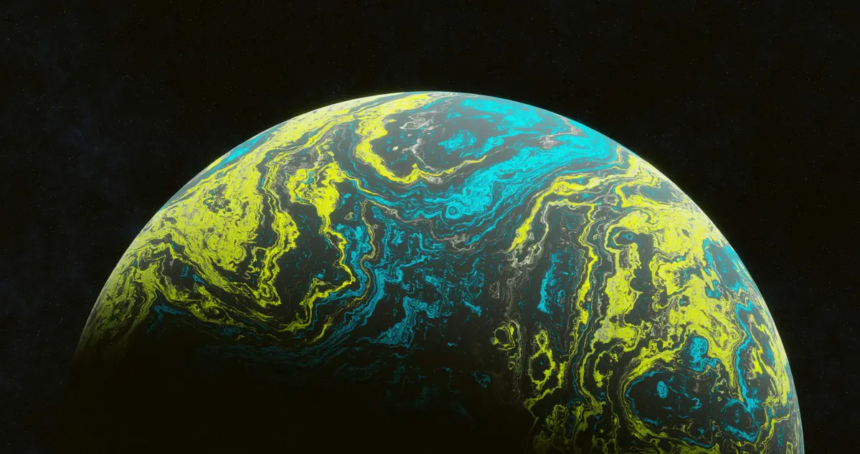
A massive exoplanet designated TOI-5205 b is baffling astronomers. It’s a Jupiter-sized gas giant, but it orbits a tiny M-dwarf star that is only 40 percent the mass of our Sun. According to conventional models of planetary formation, this pairing is ‘forbidden’ and shouldn’t exist.
To solve this cosmic mystery, an international research team, including experts from the University of Birmingham, turned to the powerful James Webb Space Telescope (JWST). They analyzed the planet as it transited across its host star, blocking about six percent of the star’s light.
The findings, published in The Astronomical Journal, revealed something shocking: the planet’s atmosphere is incredibly poor in heavy elements like carbon and oxygen. In fact, it possesses a lower ‘metallicity’ (abundance of elements heavier than hydrogen and helium) than its own host star.
“The planet having a lower metallicity than its own host star makes it stand out among all the giant planets studied to date,” explained astrophysicist Anjali Piette. Spectrographs detected methane and hydrogen sulphide, but an overall carbon-rich, oxygen-poor environment that is rarely observed.
So, where did the heavy elements go? Models suggest TOI-5205 b’s overall internal composition is actually up to 100 times richer in heavy elements than its atmosphere. This means the heavy materials likely sank deep into the planet’s core during formation and stopped mixing with the outer atmospheric layers.
This landmark study is part of the GEMS Survey, a broader initiative focusing on giant planets that orbit small, cool M-dwarf stars. These bizarre star systems are increasingly becoming the ultimate laboratories for testing the absolute limits of planetary science.
To gather this data, researchers also had to overcome the challenge of ‘starspots’—dark patches on the host star that can massively distort observational data. By refining their correction techniques for TOI-5205 b, astronomers have paved the way for more accurate Webb observations in the future.
'100 times richer': NASA's James Webb Telescope reveals 'forbidden' alien planet that shouldn't exist – WION



Leave a Comment