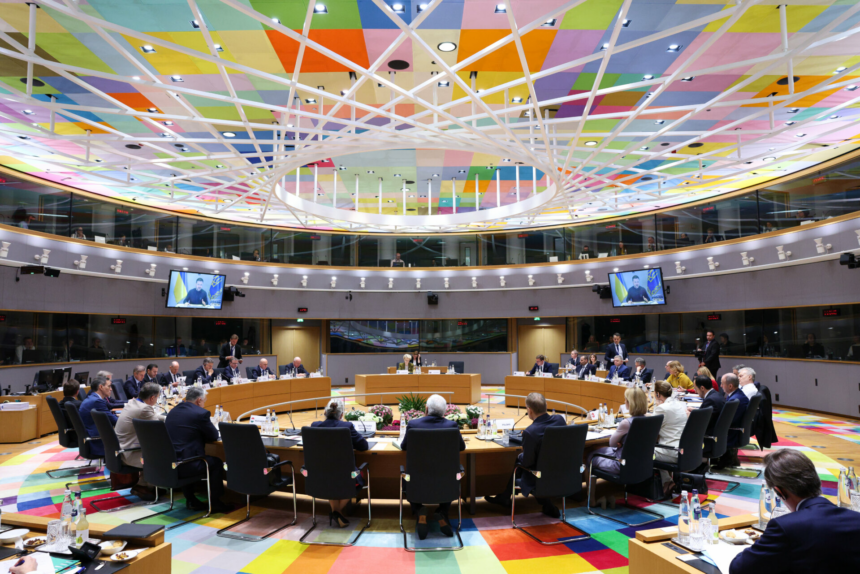
How will EU Foreign Ministers respond to a changing global climate, energy and geopolitical landscape?
Following a year of geopolitical turbulence and strained multilateralism, recent weeks showcased the EUs’ vulnerability arising from dependence on fossil fuels. The Foreign Affairs Council Conclusions on energy and climate diplomacy are expected to confirm the EU’s continued commitment to climate and energy transition as a cornerstone of foreign and security policy.
Diplomacy and external action to advance the global climate and energy transition, as well as resilience and security, are among the EU’s most effective strategic assets for safeguarding core domestic interests such as competitiveness, sovereignty, and security, including energy security and diversified value chains. By embedding climate, energy and resilience more effectively in its foreign and security policy, the EU can strengthen partnerships worldwide, enhance its geopolitical influence and geoeconomic resilience and reduce vulnerabilities such as dependence on fossil fuel imports.
Although COP30 achieved a hard-won consensus, insufficient progress on mitigation and a strained political environment ultimately resulted in widespread disappointment within the EU and its Member States. As a first collective statement of Member States following the conference, and coinciding with major diplomatic moment such as the Petersberg Climate Dialogue and the First Conference on Transitioning Away from Fossil Fuels in Santa Marta, Conclusions have the potential, if done right, to set out the cornerstones of an assertive EU strategy in a moment where the global order is demanding greater leadership from the EU overall, and on the road to COP31, the next Global Stocktake in 2028, and the fourth round of NDCs in 2030.
Richard Smith, Senior Policy Advisor, Global Energy Transition, said:
“Growing frustration in Europe over its perceived powerlessness to influence the unfolding conflict in the Middle East – and the resulting energy shocks at home – does not tell the full story. The EU’s climate and energy diplomacy remains a unique strategic asset. On Tuesday, Foreign Ministers have an opportunity to use the current crisis to accelerate support for partner countries’ energy transitions, in a way that also helps European industry. Ministers should treat this not as crisis firefighting but as a long‑term strategic investment to help shift the global energy system off the fossil‑fuel crisis roller-coaster.”
Anton Jaekel, Policy Advisor, Climate Diplomacy and Geopolitics, said:
“In the face of mounting geopolitical strain, EU Foreign Ministers can reaffirm climate and energy diplomacy as cornerstones of the EU’s foreign and security policy. They are among Europe’s most powerful assets to strengthen strategic autonomy, longterm security, and geopolitical influence, including by positioning the EU as a reliable and predictable global partner as others focus on great power rivalry. Making the international climate regime fit for purpose requires EU to combine a forward-leaning, multi-year strategic approach with a commitment to multilateralism and alliance building.”
Cosima Cassel, Programme Lead, Climate Diplomacy and Geopolitics, said:
“Foreign Ministers are meeting at the same moment as the Petersberg Climate Dialogue takes place in Berlin, bringing together ministers to set direction and support alignment towards COP31. There are clear interconnections, as the conclusions will provide a basis for how the EU approaches international climate diplomacy for 2026 and beyond. Other countries, particularly from the Global South, will be watching closely for signs from Petersberg and EU Foreign Ministers that the EU has the political resolve to drive political momentum behind climate action in a manner fit for the new geopolitical era.”
Manon Dufour, Executive Director, E3G Brussels, (EN/FR), Manon.dufour@e3g.org
Richard Smith, Senior Policy Advisor, Global Energy Transition, (EN/FR), Richard.smith@e3g.org
Anton Jaekel, Policy Advisor, Climate Diplomacy and Geopolitics, (EN/DE), Anton.jaekel@e3g.org