Measles is back in the United States. More than 1,500 cases have already been reported in 2026, putting the country on pace to surpass last year’s total of more than 2,200, the highest in decades. Public health officials warn the nation’s status as “measles free” is now at risk as childhood vaccination rates decline.
Measles may not be the only disease poised for a comeback. Another virus that once infected thousands of American children each year could be heading in the same direction.
A recent study my colleagues and I conducted found that hepatitis B vaccination rates among newborns declined by more than 10% between 2023 and August 2025.
Before routine vaccination began, hepatitis B infected roughly 18,000 children under the age of 10 in the United States every year. About half of those infections were passed from mother to child during birth. The rest occurred through everyday exposure, often through contact with a caregiver or family member who did not know they were infected.
The consequences can be lifelong. As many as 90% of babies infected in their first year of life develop chronic hepatitis B. Over time, chronic infection can lead to cirrhosis, liver cancer and liver failure.
The first major step toward prevention was screening. In 1988, hepatitis B testing during pregnancy was recommended so that infants born to infected mothers could receive protection immediately. The strategy helped identify many high-risk cases, but it did not prevent all infections. Each year, between 50 and 100 infants still developed hepatitis B.
Universal newborn vaccination was recommended in 1991. Over the following decades, hepatitis B infections in children fell to fewer than 20 annually.
That is why many physicians were surprised when, in December, the federal government’s Advisory Committee on Immunization Practices revised its recommendation for newborn hepatitis B vaccination. Under the new guidance, babies born to mothers who test negative for hepatitis B may receive the vaccine based on individual clinical decision-making rather than a universal recommendation.
The idea is straightforward. If a mother tests negative for the virus, the immediate risk to the newborn is extremely low. But history shows why universal protection became necessary in the first place.
Today, an estimated 660,000 Americans still live with chronic hepatitis B, and roughly half are unaware of their infection. Exposure risks have not disappeared. They have been controlled through vaccination and screening.
At the same time, the nation’s vaccine guidance is becoming increasingly confusing. Earlier this year, the Centers for Disease Control and Prevention revised its childhood immunization schedule, moving several vaccines from being universally recommended to being suggested as topics of discussion for parents and providers.
The changes were not supported by new evidence. In response, the American Academy of Pediatrics created its own immunization schedule that largely maintains the previous recommendations.
As a result of a lawsuit against the CDC and the Department of Health and Human Services, a federal judge has temporarily blocked the changes to the federal recommendations and invalidated actions taken by the advisory committee.
The result is growing confusion.
In my clinic, parents have begun asking questions I never heard before. Which vaccine schedule should we follow? Is this the schedule with all the vaccines or only some of them? Vaccination decisions are influenced by science but also by trust and consistency. When parents receive mixed messages, some begin to question whether vaccines are necessary at all. We have already seen the consequences of declining vaccination with measles.
For decades, hepatitis B vaccination protected American children. Because the disease became rare, many parents and younger physicians have never seen its consequences firsthand.
If measles is a warning, hepatitis B could be next.
The lesson from the past is simple. When we stop using vaccines that work, the diseases they prevent come back.
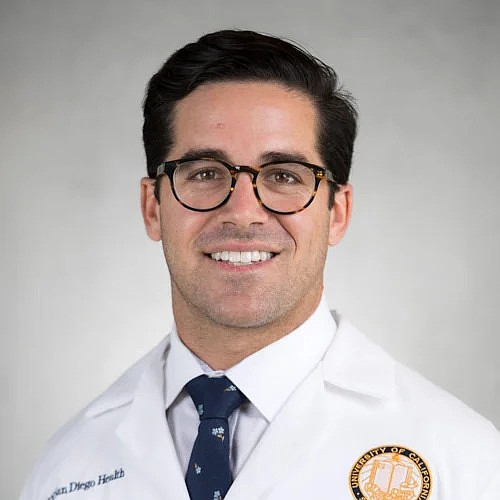
Joshua Rothman is a pediatrician and a clinical assistant professor of pediatrics at the UC San Diego School of Medicine.
LOS ANGELES TIMES
Copyright © 2026, Chattanooga Times Free Press, Inc.
All rights reserved.
This document may not be reprinted without the express written permission of Chattanooga Times Free Press, Inc.
Material from the Associated Press is Copyright © 2026, Associated Press and may not be published, broadcast, rewritten, or redistributed. Associated Press text, photo, graphic, audio and/or video material shall not be published, broadcast, rewritten for broadcast or publication or redistributed directly or indirectly in any medium. Neither these AP materials nor any portion thereof may be stored in a computer except for personal and noncommercial use. The AP will not be held liable for any delays, inaccuracies, errors or omissions therefrom or in the transmission or delivery of all or any part thereof or for any damages arising from any of the foregoing. All rights reserved.