




Spanish Medical Students Rate GPT-4 Virtual Patient Usable in Pilot Study
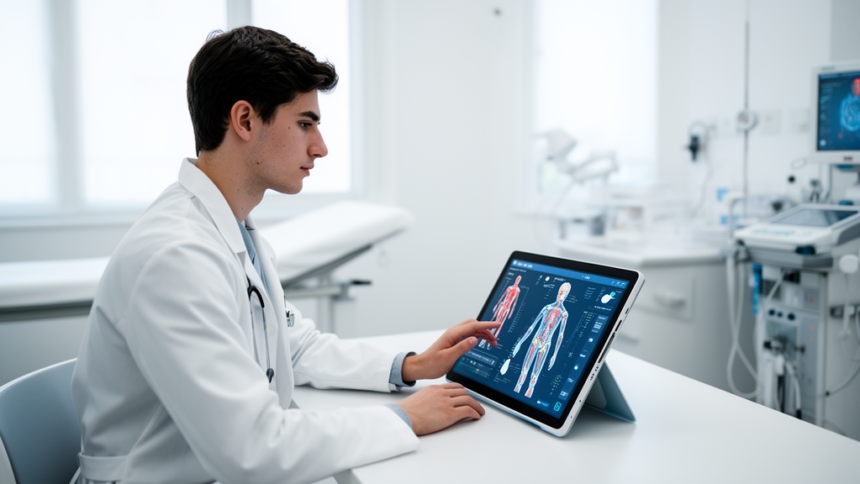
A cross-sectional pilot study conducted at the University of Málaga found that medical students reported high usability and perceived educational value when completing simulated clinical interviews with an artificial intelligence-driven virtual patient. Out of 102 participating medical students who conducted two Spanish-language history-taking encounters powered by GPT-4, 86.3 percent, representing 88 participants, rated the digital tool as easy or very easy to use. The investigation, published as a brief research report in Frontiers in Medicine, evaluated how large language models function as interactive conversational training tools outside of English-language environments.
Effective communication represents a core competency in medical education, yet traditional training approaches remain resource-intensive and difficult to scale across clinical cohorts. While conversational agents based on large language models have emerged as potential instructional aids, empirical evidence assessing their practical usability and perceived educational utility has remained limited in non-English medical curricula. The researchers sought to examine student acceptance of an automated conversational simulation designed specifically for Spanish-language medical history collection and real-time structured debriefing.
The study protocol required participating students to complete two independent clinical encounters with the GPT-4-based virtual patient, followed immediately by automated feedback generated by the system. Upon concluding the simulated consultations, participants evaluated their experience through an anonymous, self-developed questionnaire that incorporated numerical rating scales ranging from 0 to 10 alongside open-ended qualitative prompts. The research team analyzed the questionnaire data using descriptive statistics and conducted an exploratory logistic regression to examine associations between participant gender and perceived training requirements.
The participant sample consisted predominantly of women, who comprised 73.5 percent of the cohort, and fourth-year medical students, who represented 85.3 percent of the total group. When asked about preparatory requirements, 60.8 percent of the respondents, or 62 out of 102 students, reported that they did not require prior training to navigate the virtual patient interface. The exploratory logistic regression indicated that female students were significantly less likely than male students to report needing prior instruction before engaging with the system, with an odds ratio of 0.29 and a 95 percent confidence interval spanning 0.11 to 0.73, which authors characterized as hypothesis-generating.
Student evaluations of the automated feedback mechanisms were generally favorable, with most feedback-related statements receiving mean scores of 7.4 or higher on the 10-point scale. The highest average score was 8.3, awarded for the tool’s usefulness in guiding students to explore the patient’s primary reason for consultation and detailed medical history. Meanwhile, student agreement with the statement that artificial intelligence feedback does not replace human clinical tutors registered a moderate mean score of 6.14, reflecting nuanced views regarding the boundaries of automated instructional support.
Qualitative analysis of 33 optional free-text comments revealed that students positively valued the conversational realism, interactive responsiveness, and analytical depth of the feedback provided by the large language model. However, respondents also identified technical and pedagogical constraints, noting a limited variety of clinical scenarios within the pilot module and pointing out the complete absence of nonverbal communication cues, such as physical body language and facial expressions, during the text-based conversational encounters.
The authors emphasized that the findings reflect initial user acceptability and perceived educational value rather than demonstrated pedagogical or clinical effectiveness. Significant methodological limitations include the cross-sectional design, a single academic site, reliance on non-validated self-report questionnaires, and the absence of an active comparison group. Furthermore, co-first authors declared an institutional affiliation with MetaMedics VR, the developer of the tool. The research team concluded that future controlled investigations utilizing validated instruments and objective, observer-rated clinical performance measures are necessary to determine whether artificial intelligence virtual patients can demonstrably enhance clinical communication competencies.
Subject of Research: Artificial intelligence virtual patients for medical communication training
Article Title: An artificial intelligence-driven virtual patient for communication skills training in medical education: an exploratory pilot study of usability and perceived educational value
Article References: Zambrano Serrano, B., Cueto-Galán, R., Escamilla-Sánchez, A., Ramírez Rodríguez, M. D. R., Sánchez Corrales, N., & Fontalba-Navas, A. (2026). An artificial intelligence-driven virtual patient for communication skills training in medical education: an exploratory pilot study of usability and perceived educational value. Frontiers in Medicine, 13, Article 2032087. https://doi.org/10.3389/fmed.2026.2032087
Image Credits: AI Generated
DOI: 10.3389/fmed.2026.2032087
Keywords: medical education, virtual patients, large language models, GPT-4, communication skills training, history-taking encounters, automated feedback, University of Málaga, Spanish-language clinical simulation, pilot study, healthcare professions education, usability assessment, educational value, cross-sectional study, MetaMedics VR, self-developed questionnaire
News Source: Ophelia Keating. (November 20, 2026). Spanish Medical Students Rate GPT-4 Virtual Patient Usable in Pilot Study. Scienmag.
We bring you the latest biotechnology news from best research centers and universities around the world. Check our website.
Enter your email address to subscribe to this blog and receive notifications of new posts by email.
Bioengineer.org © Copyright 2023 All Rights Reserved.
Login to your account below
Please enter your username or email address to reset your password.
Bioengineer.org © Copyright 2023 All Rights Reserved.
Spanish Medical Students Rate GPT-4 Virtual Patient Usable in Pilot Study – Bioengineer.org



Leave a Comment

