




Microsoft Defender offers free, built-in Windows protection, while McAfee provides additional security features like VPN, identity protection, and multi-device coverage.
Sam Altman, Elon Musk, and other AI leaders are raising concerns about rapid AI development. Discover why controlling advanced AI is becoming a priority.
A Meta AI agent reportedly sent a Facebook Marketplace buyer to a seller’s home without warning. See what this incident reveals about AI autonomy risks.
Walmart faces allegations of creating biometric voiceprints from customer calls using AI. Learn what the lawsuit reveals about voice privacy and consent risks.
Microsoft patched Defender, but some security risks remain unresolved. Watch to understand why the update may not fully protect affected systems.
Will AI replace cybersecurity professionals or change how they work? Explore how automation is reshaping security jobs and why human expertise still matters.
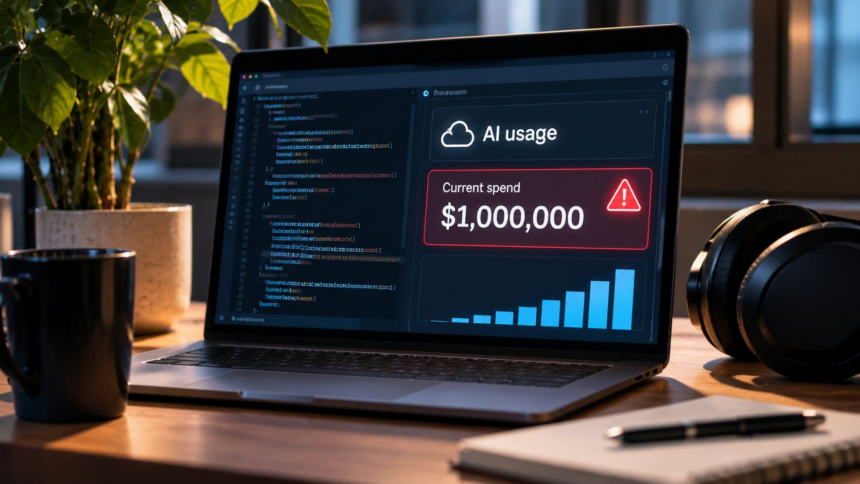
Google and Mandiant report LLMjacking incidents with daily fraudulent charges above $100,000 and cumulative resource abuse reaching $1 million, alongside growing use of offensive AI agents.
Stolen AI credentials are becoming a costly security problem. Google’s latest threat intelligence report describes LLMjacking attacks that generated more than $100,000 in fraudulent charges in a single day, with cumulative resource abuse reaching $1 million in the most severe cases.
The findings come from Mandiant investigations throughout 2026. Attackers compromised cloud environments, used victims’ AI services and computing resources, and in some cases built infrastructure to resell access to commercial AI models.
In a Nov. 16 report, Google also documented attackers using AI agents to accelerate vulnerability research and automate stages of intrusions. Together, the findings reveal two risks for organizations: faster exploitation of exposed systems and the misuse of legitimate AI resources after credentials are stolen.
According to the Google Threat Intelligence Group’s report, financially motivated attackers are increasingly stealing credentials that provide access to cloud-hosted AI services.
LLMjacking involves using another organization’s AI accounts, API quotas, or computing resources without authorization.
Attackers can consume those resources directly or resell access through underground proxy services, sometimes called LLM Mixers.
Mandiant observed incidents affecting organizations in financial services, retail, transportation, and technology across North America, South America, and Asia-Pacific.
The attacks used several established techniques:
One actor repeatedly created and deleted short-lived service accounts to work around usage restrictions.
In another investigation, Mandiant observed separate attackers using the same legitimate credentials to access an organization. A suspected botnet or proxy service generated millions of LLM API calls in approximately 24 hours before the credentials were revoked.
Google says some incidents produced more than $100,000 in fraudulent charges in one day. In its most severe cases, cumulative resource abuse reached $1 million before remediation.
Those figures describe observed incidents, not the average cost of LLMjacking or the amount organizations ultimately paid.
The threat extends beyond direct AI API charges. Compromised cloud identities can also expose internal systems and sensitive information.
Previous investigations have documented the risks of leaked AWS credentials, including keys that remained active long after they appeared in publicly accessible data.
AI coding assistants, model gateways, and automation frameworks often hold access to source code, cloud identities, and connected applications.
Recorded Future’s 2026 threat research examined 103 malicious incidents involving AI between July 31, 2025, and July 31, 2026.
The researchers found that attackers frequently targeted AI development tools because of their access to credentials and downstream systems.
That risk was demonstrated in the LiteLLM supply chain compromise, in which malicious packages were used to steal credentials and establish persistence.
Recorded Future found that AI generally accelerated familiar attack methods during its study period. Fully autonomous offensive campaigns remained uncommon.
Google’s Nov. 16 report describes a separate development: threat actors are increasingly using agentic penetration-testing frameworks to automate selected stages of intrusions.
The company identified activity involving ARTEX, CAIRN, CyberStrikeAI, and PentAGI.
Between late August and early October 2026, Google tracked an actor using a modified PentAGI framework for reconnaissance and vulnerability scanning against organizations across Asia.
The researchers also discovered an exposed server hosting a framework called exploit_agent, designed to compare software before and after security patches, identify potential vulnerabilities, generate exploits, and execute them automatically.
The discovery demonstrates an operational capability. It does not establish that every automated exploit produced by the framework was successful or that fully autonomous intrusions have become widespread.
Google also cited the August PaperCut vulnerabilities as an example of rapid exploitation. Researchers generated working exploits within a day of disclosure, and GreyNoise later documented a campaign targeting hundreds of organizations.
Earlier reporting on the PaperCut attacks detailed how automation enabled attackers to compromise vulnerable servers and move rapidly toward higher privileges.
These findings place additional pressure on organizations that leave internet-facing systems unpatched.
The two attack patterns require different controls, but both depend heavily on weaknesses that defenders already understand.
For LLMjacking, security teams should:
For agent-assisted exploitation, prioritize patches for exposed systems and monitor for suspicious scanning, authentication attempts, and post-compromise activity.
Organizations should also review the security of AI tools connected to developer environments. A compromised AI dependency can provide access well beyond the application in which it was installed.
Google’s findings establish that attackers are already using automation to shorten some intrusion stages and stolen AI access to generate substantial financial losses. They do not establish that fully autonomous cyberattacks have replaced human operators.
For defenders, the immediate priorities remain concrete: reduce exposed credentials, restrict access, monitor resource consumption, and address exploitable vulnerabilities before attackers reach them.
Also read: Google’s latest threat intelligence findings document an AI framework designed to turn security patches into working exploits.
Get a free daily email covering breaches, threats, and security priorities fast.
Google warns that hackers are using AI agents to automate attack stages, harvest credentials, and accelerate cyberattacks with less human direction.
A ThreatDown report warns that AI is making cyberattacks faster, smarter, and more accessible to threat actors.
Google says China-linked hackers are running AI inside compromised cloud environments, using victims’ computing power while reducing outside monitoring.
Google’s 2026 forecast warns that AI has become both the hacker’s greatest weapon and cybersecurity’s most vital defense.
eSecurity Planet is a leading resource for IT professionals at large enterprises who are actively researching cybersecurity vendors and latest trends. eSecurity Planet focuses on providing instruction for how to approach common security challenges, as well as informational deep-dives about advanced cybersecurity topics.
Property of TechnologyAdvice. © 2026 TechnologyAdvice. All Rights Reserved
Advertiser Disclosure: Some of the products that appear on this site are from companies from which TechnologyAdvice receives compensation. This compensation may impact how and where products appear on this site including, for example, the order in which they appear. TechnologyAdvice does not include all companies or all types of products available in the marketplace.
Google Warns LLMjacking Attacks Are Driving AI Cloud Costs Up to $1 Million – eSecurity Planet



Leave a Comment

