


Every print subscription comes with full digital access
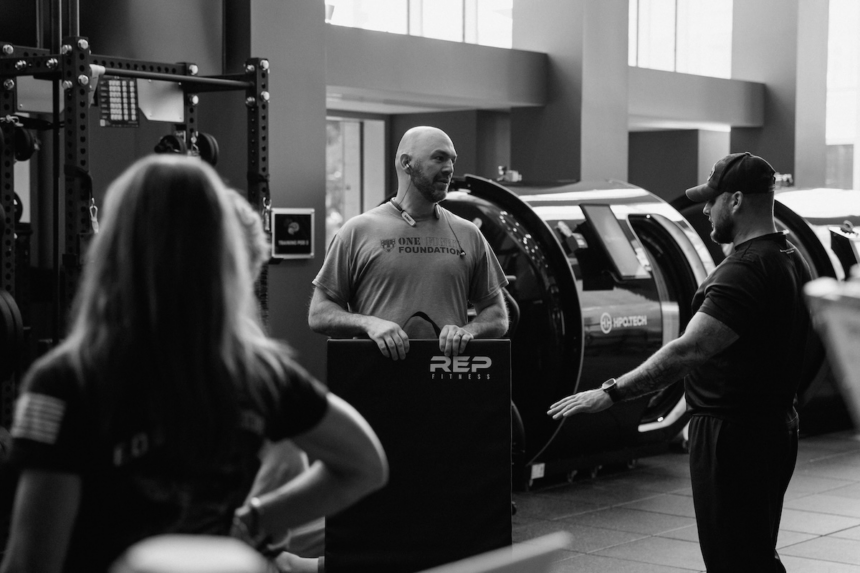
HPO.TECH chambers in use at Aurelius.
Paige Kowal Photography
From
Aurelius Brain Health and Human Performance Program pairs pressurized oxygen with magnetic brain stimulation and physical training in a 19-day protocol, using chambers built by HPO.TECH
The program, called Aurelius, treats chronic traumatic brain injury, post-traumatic stress, depression and anxiety. It is one of several clinical efforts to apply hyperbaric oxygen therapy, long used for diving injuries and non-healing wounds, to brain injuries that conventional psychiatry and neurology have struggled to treat.
For 19 days, each cohort of military veterans at Harrisburg University of Science and Technology in Pennsylvania follows the same routine. Participants spend their days on three treatments: hyperbaric oxygen, transcranial magnetic stimulation and structured physical training. They live on site between sessions, and the care costs them nothing. Since the first cohort arrived on January 20, 2025, more than 60 veterans and special operators from 25 states and two countries have completed the protocol.
Hyperbaric oxygen therapy, or HBOT, involves breathing oxygen at or near 100 percent concentration inside a chamber pressurized above sea level. Under pressure, far more oxygen dissolves directly into blood plasma, raising oxygen levels in tissues well beyond what normal breathing achieves. The U.S. Food and Drug Administration has cleared hyperbaric chambers for a defined set of conditions, including decompression sickness, carbon monoxide poisoning, certain non-healing wounds and radiation injury. Researchers have since asked whether the same physiological effects, more oxygen reaching damaged tissue and changes in inflammatory signaling, might also help the injured brain.
A 2024 review in Frontiers in Neurology by Bin-Alamer and colleagues cataloged the cellular and molecular pathways through which HBOT appears to act on the central nervous system. The authors describe effects on mitochondrial biogenesis, neurogenesis, synaptogenesis and anti-inflammatory signaling, and review clinical data suggesting potential benefit in traumatic brain injury, post-traumatic stress disorder, post-concussion syndrome and post-stroke depression. The review calls for further work to refine dosing protocols and confirm mechanisms, and presents HBOT as a candidate neuromodulatory technique that merits further investigation.
A 2022 systematic review in the same journal, by Paul Harch, a clinical professor of medicine at Louisiana State University Health Sciences Center, looked specifically at persistent post-concussion syndrome following mild TBI. Across six randomized trials and several smaller studies, Harch found that 40 sessions of oxygen at 1.5 atmospheres absolute, or ATA, produced statistically significant symptomatic and cognitive improvements compared with controls. The effect was larger in patients who also met criteria for PTSD, and improvements appeared in subjects whose injuries came from both blast and blunt impact. Harch graded the evidence as meeting Centre for Evidence-Based Medicine Level 1 criteria for that specific dose and protocol.
The most direct evidence on PTSD comes from work led by Keren Doenyas-Barak and Shai Efrati at Israel’s Shamir Medical Center. A 2022 randomized controlled trial in PLOS ONE reported that veterans with treatment-resistant PTSD who completed one HBOT session per day for 60 days at 2 ATA showed significant improvements on the Clinician-Administered PTSD Scale, the Beck Depression Inventory and functional MRI measures of brain activity. A 2023 follow-up study in Military Medicine tracked the same participants more than a year out and found that the clinical improvements had persisted.
The evidence base is still young. Trials have been small, and dosing protocols vary from study to study. Alongside that research, clinical programs have begun building HBOT into broader treatment protocols for veterans. Aurelius is one of them.
The Aurelius Brain Health and Human Performance Program is a nonprofit clinic hosted at Harrisburg University. It offers confidential, donor-funded care to veterans, active-duty service members, special operations forces and members of the intelligence community. Its patent-pending protocol combines daily HBOT sessions with transcranial magnetic stimulation, a non-invasive technique that uses magnetic pulses to stimulate targeted brain regions, and a structured physical training regimen. Participants move through the program together as a cohort.
Aurelius was co-founded by Anson Flake, previously a co-founder of HydroWorx, a sports-medicine and healthcare equipment manufacturer serving athletic and military clients, and Robert Ortenzio, co-founder and chairman of Select Medical Corporation, a national rehabilitation provider. Ryan Wakim, MD, serves as medical director, and Bethany Martinelli, CRNP, as clinic director and nurse practitioner. Martinelli’s team of human performance specialists and TMS technicians includes Mark Kingsboro and Sabir Bacon, both combat-deployed Army veterans.
“We founded Aurelius on a simple belief: those who have sacrificed the most for our country deserve access to the most innovative and holistic care available,” says Flake.
The program has drawn the attention of lawmakers. U.S. Senator Dave McCormick of Pennsylvania, a West Point graduate and Gulf War veteran, visited the site in late 2025. McCormick is the sponsor of S.3130, the Veterans TBI Adaptive Care Opportunities Nationwide Act, introduced in November 2025 with Democratic Senator Jacky Rosen of Nevada. The bill would direct the Department of Veterans Affairs to fund grants for randomized controlled trials of neurorehabilitation treatments for chronic mild TBI. In Pennsylvania, the state Senate’s Veterans Affairs and Emergency Preparedness Committee advanced Senate Bill 1355 in June 2026. It would establish a pilot program awarding grants to nonprofits, academic institutions and health care providers to develop and evaluate treatments for veterans with PTSD or TBI.
The hyperbaric component runs in chambers manufactured by HPO.TECH, an Istanbul company that designs and builds pressure systems for hyperbaric medicine, hypobaric altitude simulation and research. Two models are in use at Harrisburg: the Atlantis, a two-seat multiplace system, and the Mediterranean, which seats four. At Aurelius, both run at 1.5 to 2.0 ATA, the range covered by the protocols described above, and deliver oxygen at 93 to 96 percent concentration through a built-in breathing system (BIBS) that synchronizes with each user’s respiratory rhythm.
Both designs set out to make a hyperbaric session feel less clinical. Panoramic windows replace the closed steel walls of older chambers. The seats recline, the lighting is adjustable, and operators outside remain in continuous visual contact with the people inside. Because each chamber seats two or four, participants can undergo sessions together, a format suited to a cohort-based program like Aurelius.
Paige Kowal Photography
“Anson, Bob and their team are running a serious chronic TBI and PTSD protocol,” says Alexandru Harbuzaru, Chief Business Development Officer at HPO.TECH. “Our role is to provide the equipment that lets them do that work safely, every session.” The company is also engineering a purpose-built, large-format four-seat chamber for the program, which it is donating in full.
HPO.TECH’s systems carry EU MDR certification, UKCA marking, ASME PVHO and ASME U-Stamp compliance, conformity with the Pressure Equipment Directive 2014/68/EU, and ISO 13485 and ISO 9001 quality-management certification. National approvals include Saudi Arabia’s SFDA, the UAE’s MOH and EDE, Thailand’s FDA, Ghana’s FDA and New Zealand’s Medsafe. Applications for U.S. FDA clearance and for approvals in several Asian and Latin American markets are in progress.
Repeated mild TBI is not exclusively a military injury. Athletes in contact sports, from football and rugby to combat sports, accumulate concussive and sub-concussive impacts over years of play, and the Harch review reported improvements in subjects with blast and blunt injuries alike. The same HPO.TECH chamber architecture is in use at sports recovery and high-performance training facilities, including teams in contact sports where mild TBI is a known occupational risk.
For Aurelius itself, the next step is measurement. A protocol that combines three treatments invites the question of which component contributes what, and answering it will take systematic outcome data and longer follow-up, the kind of work both bills now before lawmakers would help pay for. In the meantime, the chambers at Harrisburg have run daily since January 2025, and a donated large-format chamber is in production.
To learn more about HPO.TECH hyperbaric systems for clinical and research applications, visit www.hpotech.com. More information about the Aurelius program is available at myaurelius.org.
Questions or comments on this article? E-mail us at feedback@sciencenews.org | Reprints FAQ
Science News was founded in 1921 as an independent, nonprofit source of accurate information on the latest news of science, medicine and technology. Today, our mission remains the same: to empower people to evaluate the news and the world around them. It is published by the Society for Science, a nonprofit 501(c)(3) membership organization dedicated to public engagement in scientific research and education (EIN 53-0196483).
© Society for Science & the Public 2000–2026. All rights reserved.
Subscribers, enter your e-mail address for full access to the Science News archives and digital editions.
Not a subscriber?
Become one now.
Building veteran brain injury care around hyperbaric oxygen: can it be done? – Science News



Leave a Comment