




Preston
More in
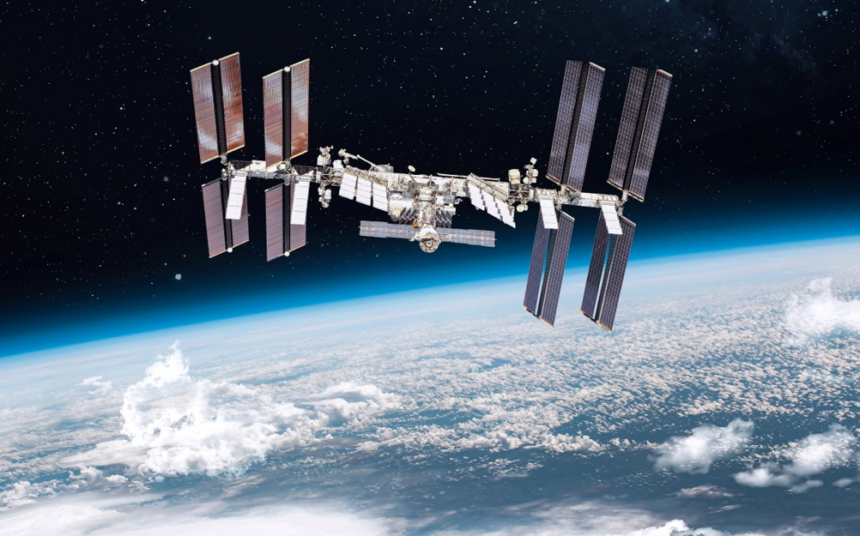
A UK-developed experiment that will study how the space environment impacts worms is due to launch to the International Space Station (ISS) later today (April 8).
Designed to shed light on the effects of long duration space travel, the Fluorescent Deep Space Petri-Pod (FDSPP) is a mini laboratory containing organisms known as called C. elegans nematode worms. The tiny worms measure around 1mm in length and are commonly used in biological experiments on Earth.
After spending an initial period inside the ISS, the shoebox-sized pod will be affixed to the outside of the space station by a robotic arm. There, its 12 experimental chambers will be exposed to the vacuum and radiation of space along with microgravity for up to 15 weeks. Using a combination of fluorescent and white light imaging, the pod will collect data on temperature, pressure and accumulated radiation dose, with the information relayed to Earth.
According to Exeter University’s Dr Tim Etheridge, the FDSPP launch comes at a pertinent time, with the crew of the Artemis II mission currently returning to Earth having become the first astronauts exposed to cislunar space in over 50 years.
“NASA’s Artemis programme marks a new era of human exploration, with astronauts set to live and work on the Moon for extended periods for the first time,” said Dr Etheridge, the principal investigator and science lead for the experiment.
“To do that safely, we need to understand how the body responds to the extreme conditions of deep space. By studying how these worms survive and adapt in space, we can begin to identify the biological mechanisms that will ultimately help protect astronauts during long-duration missions – and bring us one step closer to humans living on the Moon.”
The project builds on an earlier concept funded by the UK Space Agency and has been developed in partnership with Leicester University, which designed and built the hardware, and Voyager Space Technologies, which is managing the mission. It is scheduled to launch from Florida’s Kennedy Space Center at 1.50pm BST.
“Having now delivered the experiment to Voyager Space Technologies, who provide the interface to NASA and its flight on the International Space Station, the project team at Leicester look forward to seeing the first images from orbit,” said Professor Mark Sims, the project lead at Leicester.
“We hope this will contribute to our understanding of the microgravity environment, and we’re excited about the potential to further develop the instrument concept in the future.”
Government, Treasury, Entrepreneurs and associated accountants need to get behind this in view of the developing global insecurity. Investing in our…
The North is still missing out big time. No dual carriageway on A1 to Scotland?
And is there a parallel railway strategy joining up ALL the country (…
It is unclear what is exactly meant by "deep tech". And what or where is the "coherent innovation system" that backs early stage…
UK space worm experiment scheduled for ISS launch – The Engineer – Home


Leave a Comment

