


Thank you for visiting nature.com. You are using a browser version with limited support for CSS. To obtain the best experience, we recommend you use a more up to date browser (or turn off compatibility mode in Internet Explorer). In the meantime, to ensure continued support, we are displaying the site without styles and JavaScript.
Advertisement
Communications Biology volume 9, Article number: 461 (2026)
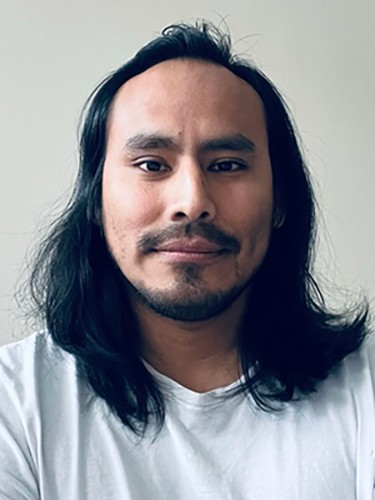
Dr. Victor Borda is a Research Associate at the University of Maryland, School of Medicine, and the Institute for Health Computing. In this Q&A, we discuss his recent publication in Communications Biology on admixture and genetic diversity across Peru, his work with the Peruvian Genome Project, and the relevance of developing genomic resources in Latin America.
Sure. My name is Victor Borda. I’m currently a research associate with affiliations at the Institute of Genome Sciences at the University of Maryland, School of Medicine, and the Institute for Health Computing at the same university. I began working on taxonomy as a biologist in Peru, then transitioned to molecular evolution, and ultimately started my PhD in human genetics, focusing on the Peruvian Genome Project. It had several stages, and after completing my PhD, I moved to the US to continue this research in underrepresented populations.
Sure. This was a national initiative led by the Peruvian Ministry of Health. The project was directed by Dr. Heinner Guio and his team at the Peruvian National Institute of Health, in collaboration with Professor Eduardo Tarazona-Santos and his team at the Federal University of Minas Gerais (Brazil), and Professor Timothy O’Connor and his team at the University of Maryland School of Medicine (United States). The idea was to understand the genetic diversity of the Peruvian population, to identify Native groups and also individuals from urban populations, so they performed genotyping or sequencing analyses to characterize the genetic diversity of the Peruvian population through the lens of human genome diversity. This project started in 2011, and focused on Native American communities, then included urban populations to understand relationships, diversity, and how different or how similar Peruvians are to other worldwide populations.
That’s a good question. First, we need to put in context some of the features of Peruvians. Peru is one of the Latin American countries with a big number of native communities, and you can find several native community groups currently living and speaking in their own language. Cities are also characterized by a lot of migration from these community groups, from these native groups. Early studies characterizing Peruvian individuals from urban areas showed that the average Peruvian individual carries roughly 60-70% Native American ancestry, making this population one of the groups with the highest proportion of Native American ancestry in South America. This feature provides a unique opportunity to identify any particular trend, any particular feature of Native American groups, or any related Native American ancestry that we can associate with complex phenotypes like BMI [body mass index], diabetes, et cetera.
That’s a good question. In that case, I need to contextualize the other studies. So the first idea in the project was to understand diversity. Our first study, published in 2018, which was led by Daniel Harris, explored the diversity and divergence between Native communities in the Andean and Amazonian region. This work identified a deep genetic split between these groups, dating back approximately 12,000 years ago. Then we moved to an article in 2020, which I led, that focused on native communities. So for that specific article, we identified that most of the differentiation in Native American groups was not restricted just to the Andes and Amazon regions, but also to the North and the South. And in that context, in this new article, since we observed several features for Native communities, the question was, are we expecting the same patterns observed in the urban populations, since they have a huge proportion of Native American ancestry? And indeed, we observed that. We observed that the diversity of these urban populations has these two groups: in the North and in the South.
But we had more questions to answer. Urban populations represent settings in which Native American, European, African, and East Asian ancestries have come into contact through recent admixture. In contrast, the well-described North–South and Andean–Amazon differentiation reflects population structure that predates colonial contact. This led us to ask whether, in the post-colonial admixture context, we would still expect to observe the same patterns of genetic structure and group differentiation, or whether these historical divisions have been reshaped? Indeed, we observed that people are still showing the same pattern, which suggests that the pattern of migration that people had before colonial times is the same one that we are observing in recent generations.
Another important detail, though not necessarily surprising, is the migration that we observe into Lima, the capital. We have a really nice result in which we observe that while the population size in the other cities is keeping stable, or grows gradually, Lima has experienced a huge increase in the population size. This reflects the migration pattern in the last generations, with most people moving from rural sites to this particular capital, and how that affected the genetic diversity of the population.
Yeah, now that we have a better understanding of the genetic history of these populations, I think that we are ready to explore complex phenotypes because one of the confounds that we have when we analyze complex phenotypes is that we need to control for population structure. Now we are ready because we understand the relationship between the population, and the next step will be trying to explore if there are any particular loci that are increasing the risk for any complex diseases like diabetes, which is highly common in Peru. Or we can look at gastric cancer or hypertension that are particularly high in northern Peru. Those are some questions that are on our minds, and asking if maybe if there are some socioeconomic factors vs. ancestry that are affecting disease. Maybe by having a high frequency on a particular variant that is population-specific to the North, and a high frequency in that area that is associated with any of these complex traits.
In that sense, our goal is to leverage this information to help improve public policies. One example is nutrition policy. When I was a student, the government implemented programs that provided milk to support childhood nutrition in schools. However, most people in Peru have a high proportion of Native American ancestry, and Native Americans don’t have the mutations for lactase persistence. As a consequence, milk-based interventions may not have been appropriate for much of the population. I think that our work as geneticists is to provide more support so we can improve all these kinds of public policies at the end of the day, for the good of the people.
That’s a good question. What is the position of the Peruvian Genome Project in the light of other biobanks?
First, to understand genetic diversity and to understand the genetic architecture of a trait, we need datasets that capture as much ancestral diversity as possible. While many important discoveries related to complex diseases came from the analyses of biobanks like UK Biobank or FinnGen, these biobanks only capture a subset of total human variation. This is an important gap addressed by the biobanks in Mexico and Brazil, but even in very large national biobanks, certain variants that contribute to disease risk may be present at low frequency and therefore be difficult to detect with sufficient statistical power. Importantly, those same variants may be more common in other populations due to differences in demographic history and ancestry composition. This does not imply that variants are exclusive to a single population, but rather that their frequencies and detectability vary across groups. And that’s why the Peruvian Genome Project is important, because we have individuals with a higher proportion of Native American ancestry. Ancestry that can serve like a map to say, “Oh. I cannot explore the Native American ancestry in Brazil correctly, but maybe there is something that I can explore in the Peruvian dataset that I can translate into other groups, because they have a higher presence of Native American ancestry that is not represented in other groups.”
Obviously, the Mexico Biobank and the Mexico City Prospective Study have done a really nice job. However, the Native American ancestries are so different between Mexicans and Peruvians that they can complement each other at the end, if we want to explore how this ancestry is contributing to complex traits. And that means that we need to explore other groups. I think that, at some point, it’s never enough just to generate a biobank in just one country. We need some to explore other countries, and it will be important in the future to explore Bolivia, Paraguay, et cetera. Chile is right now with a really nice initiative, Chile Genomico, and it will be nice to see in other countries how they can explore all the diversity, or as much as we can, in South America.
That’s a really good question. Mestizaje is a colonial word that basically means the admixture, let’s say, between someone of European origin and a different group. Most commonly, it’s used for Native Americans, and I was trying to avoid it, but it was inevitable to use mestizaje in my paper. I try not to call these individuals mestizo, not only because of the colonial origin, but also because it implies the admixture between two groups.
There is an interesting social transformation in terms of the word, mestizaje. People who are not mestizo, who are basically Native American, often experience persistent discrimination and social exclusion, and in some cases, when moving from the rural communities to the cities, they start to self-describe as mestizo. An interesting pattern was observed in our study. All participants self-identified as mestizo; yet, when we looked into their genomes, there were many individuals with almost 99% Native American ancestry. So maybe in the past they had this admixture with Europeans, but now it’s almost 100% Native American ancestry. Social research says that some people change their perspective and self-describe as mestizo to not suffer all the discrimination, or other prejudices, that you have be self-declaring as Native American. So it moves like any word, it changes with the time and with the place, with context. It started as a colonial term that basically said there’s European and Native American admixture, and now, due to social prejudices, it’s taking a fluid meaning. This is a really complicated topic.
I would say it depends on the context, you know. For example, in Peru, there are people that suffer discrimination, and they’ll describe as mestizo to avoid this situation. But also, there are people that are proud to be called mestizo because for them, it’s like a word of saying diversity. Like, “I have my Native American identity, but I am not Native American,” you know? They celebrate the mestizo culture in Peru, and it’s so diverse because it’s like a way to celebrate another perspective, right? To celebrate the diversity of the African culture, the Native American culture, and the European culture. So it always depends on the context of who is claiming that status.
No, I think that this was really cool to have this conversation about what it means, this article in the context of other research in Latin America, and what it means to be mestizo. And I think that there is a lot of recent discussion about this, and, well, I really hope that people enjoy this article, and I want to see the impression of the discussion that we have about these results.
This interview was conducted by Deputy Editor, George Inglis.
Open Access This article is licensed under a Creative Commons Attribution-NonCommercial-NoDerivatives 4.0 International License, which permits any non-commercial use, sharing, distribution and reproduction in any medium or format, as long as you give appropriate credit to the original author(s) and the source, provide a link to the Creative Commons licence, and indicate if you modified the licensed material. You do not have permission under this licence to share adapted material derived from this article or parts of it. The images or other third party material in this article are included in the article’s Creative Commons licence, unless indicated otherwise in a credit line to the material. If material is not included in the article’s Creative Commons licence and your intended use is not permitted by statutory regulation or exceeds the permitted use, you will need to obtain permission directly from the copyright holder. To view a copy of this licence, visit http://creativecommons.org/licenses/by-nc-nd/4.0/.
Reprints and permissions
Exploring the genetic heritage of Peru: an interview with Victor Borda. Commun Biol 9, 461 (2026). https://doi.org/10.1038/s42003-026-09686-9
Download citation
Published:
Version of record:
DOI: https://doi.org/10.1038/s42003-026-09686-9
Anyone you share the following link with will be able to read this content:
Sorry, a shareable link is not currently available for this article.
Provided by the Springer Nature SharedIt content-sharing initiative
Advertisement
Communications Biology (Commun Biol)
ISSN 2399-3642 (online)
© 2026 Springer Nature Limited
Sign up for the Nature Briefing newsletter — what matters in science, free to your inbox daily.