


Now
54°
Wed
62°
Thu
65°
President Trump announced that the US and Iran have agreed to a two-week ceasefire.
by MORGAN STEPHENS| Fact Check Team
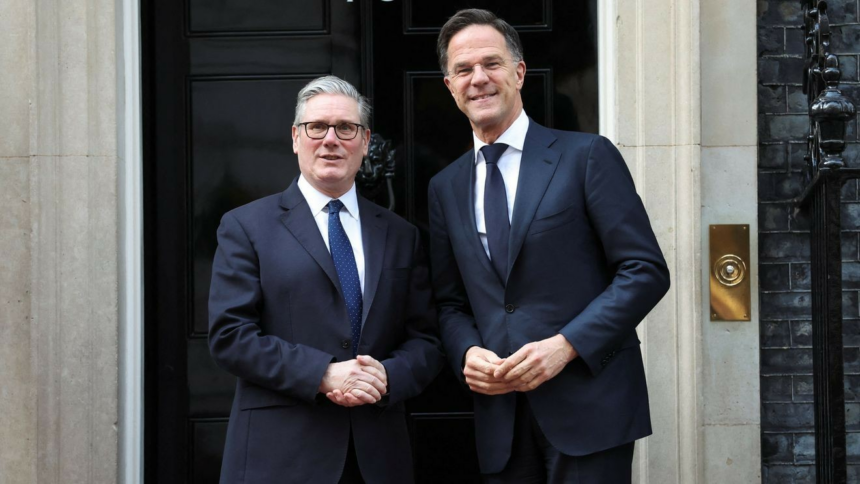
WASHINGTON (TNND) — As the White House prepares to host Mark Rutte, debates over Washington’s leadership in the alliance and Europe’s cooperation regarding the Iran conflict are prompting renewed scrutiny of NATO’s strategic importance in global geopolitics.
NATO, the North Atlantic Treaty Organization, was created in 1949 to counter Soviet aggression after World War II. A U.S. president cannot simply pull the country out of NATO. A law passed in 2023 requires either a two-thirds Senate vote, that's 60 votes, or full congressional approval before withdrawal.

The U.S. contribution to NATO’s annual common budget—which covers operations, staff, and shared infrastructure—is roughly 15.8% of $3.5 billion, or about one-sixth, not two-thirds as some posts claim. The widely cited “2% rule” is separate; it represents each member’s defense spending as a share of GDP, not the money paid into NATO’s common budget. The U.S. accounts for around $850 billion, making up around 60% of NATO's total defense budget. This is largely due to the massive size of the U.S. military versus other member countries.
Tensions with European allies have also emerged over U.S. military operations related to the Iran conflict. Several European countries have restricted access to bases or airspace, reflecting a reluctance to get deeply involved in U.S.-led operations.
These actions have strained relations within NATO, drawn criticism from Washington, and affected U.S. operational logistics in the Middle East, especially at critical hubs like Italy. While they do not indicate a breakdown of NATO, they highlight friction over how far European allies are willing to support U.S. operations.
NATO'S Article 5 is one of the most important parts of the alliance. It enshrines the principle of collective defense: if one member is attacked, it is considered an attack on all members, and the alliance will respond together.
The article reads: “The Parties agree that an armed attack against one or more of them in Europe or North America shall be considered an attack against them all, adding the actions of the military to restore and maintain the security of the North Atlantic.”
This principle has been NATO’s strongest deterrent and the key to its effectiveness for nearly 80 years. Since the alliance’s founding in 1949, Article 5 has been invoked only once, following the terrorist attacks on the U.S. on September 11, 2001.
The key distinction: Article 5 requires NATO members to come to the aid of a member under attack. In the current situation with Iran, Article 5 does not apply because the U.S. initiated action rather than being attacked. Article 5 is designed to protect NATO members, not to automatically justify military operations initiated by one member against another country.
The upcoming White House meeting with Secretary General Rutte could test the alliance’s cohesion, particularly as European countries balance longstanding policies with U.S. expectations for defense and military cooperation.
2026 Sinclair, Inc.