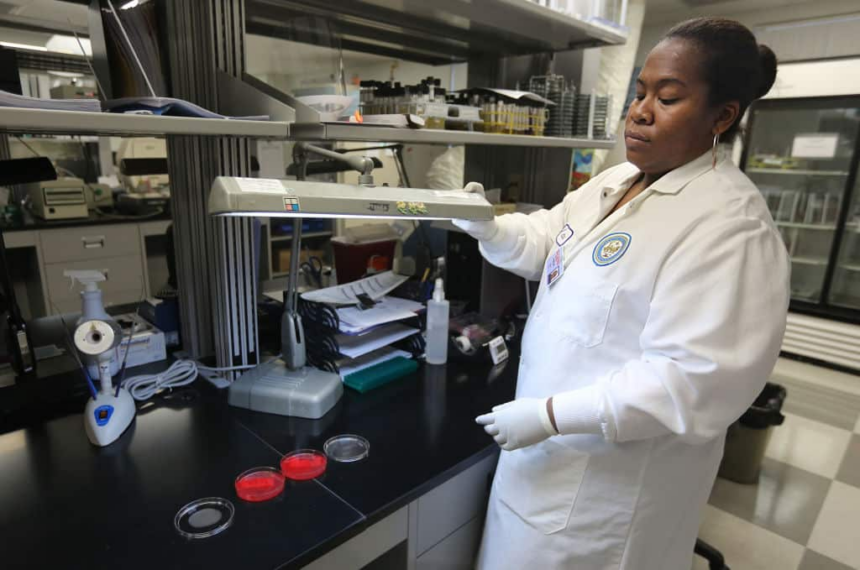
Researchers launched BRILLIANT 011 in early 2026–a milestone marking a shift from the continent being seen as a research site and more as a leader in vaccine science.
In February, the first trial participants received the BRILLIANT 011 experimental HIV vaccine–a first-in-human clinical trial by the BRILLIANT Consortium (BRinging Innovation to cLinical and Laboratory research to end HIV In Africa through New vaccine Technology)–led by the South African Medical Research Council (SAMRC).
However, according to Glenda Gray, pediatrician, HIV researcher and professor at the University of the Witwatersrand, it is more than a scientific milestone; the trial represents a structural shift in Africa’s role in global vaccine development.
“This isn’t just about being first-in-human,” says Gray to FORBES AFRICA. “It’s about leading fundamental vaccine science on the continent.”
HIV is reportedly one of the most complex viruses to target with a vaccine. In Africa, an estimated average of 3.1% of the population live HIV-positive lives, according to 2024 data from the World Health Organization (WHO). In South Africa, prevalence stands at 17.2%, translating to around 7.8 million people living with HIV.
Loading…
A Bold Scientific Strategy
The study tests two experimental vaccine components—BG505 SOSIP.GT1.1 and 426c.Mod.Core-C4b—combined with the SMNP adjuvant to stimulate a broader immune response against HIV.
Unlike traditional vaccine trials that test components sequentially, this trial administers them together to trigger a stronger antibody response.
Rather than progressing cautiously over years, the team aims to “fail fast or progress fast”. Also, early-stage success would not mean a ready-to-deploy vaccine but rather a mapping of immune responses in real time, and then designing the next iteration from African laboratories.
“One immunogen is from a participant in Soweto, the other from Kenya,” Gray explains.
“These are African strains. This matters–our immune responses differ. You cannot simply extrapolate vaccine data generated elsewhere and assume it will work here.”
Scientists and activists say the trial is significant because African laboratories are leading both the clinical testing and the advanced immunology analysis, rather than exporting samples to Europe or the United States, as has often been the case in past studies.
“We used to draw the blood and ship it,” says Gray. “Now we do the immunology here.”
According to her, there are four strategic reasons the first-in-human phase is taking place in South Africa: genetic diversity, viral strain relevance, data sovereignty, and speed and optimization
Beyond ART: Why A Vaccine Still Matters
While antiretroviral therapy (ART) has transformed HIV from a ‘cause of death’ into a manageable condition for many patients, vaccines remain critical.
“A vaccine would induce durable immune responses that could protect for years,” Gray says. “It would be easier to deploy, more affordable [in the] long term, and reduce stigma.”
Human rights activist and Lead at UNITED! Movement South Africa, Munnira‑Afrikana Katongole, stresses that “scientific breakthroughs like vaccines are incredibly important, but they cannot replace the social and structural work that has always been central to the HIV response”.
“Prevention tools such as ART, PrEP, treatment access, education, and stigma reduction must continue alongside vaccine development,” she explains.
Women, Children and the Long View
The study’s long-term ambition is pediatric. Gray states that infant immune systems are uniquely plastic, with research suggesting that they can develop neutralizing antibodies more rapidly and with greater durability than adults.
If the regimen proves safe, future studies could move toward newborns—aiming to prime immunity early in life. For Gray, the vision is generational: grandchildren who receive an HIV vaccine as routinely as measles or polio shots.
A Continental Turning Point
If successful, the implications could extend beyond HIV. Gray believes the approach could also help inform vaccine research for diseases such as tuberculosis (TB) and malaria, signaling a broader shift toward African-led biomedical innovation.
More broadly, the study challenges a historical pattern of extraction—of minerals, labor and even biological samples—without reciprocal leadership.
“What do I hope history will say?” Gray reflects, adding, “…that our gogos [grandmothers] decided to fight. Women have fought for the vote, fought against apartheid, fought against HIV.”
Loading…
Get the best of Forbes Africa sent straight to your inbox with breaking business news, insights and updates from experts across the continent.
Get this delivered to your inbox, and more info about our products and services. By signing up for newsletters, you are agreeing to our Terms of Use and Privacy Policy.
© 2026 Forbes Africa. All Rights Reserved