


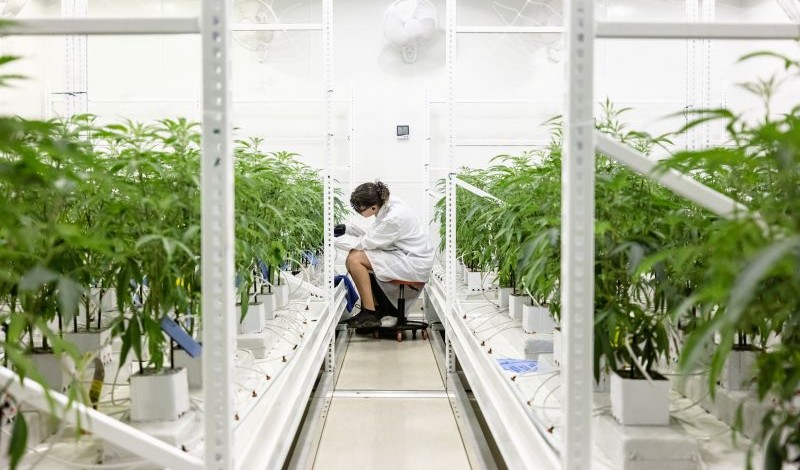
Experts discuss the path to and implications of rescheduling cannabis.
In a recent executive order, President Donald J. Trump directed the Attorney General to complete the process of rescheduling marijuana from Schedule 1 to Schedule III under the Controlled Substances Act (CSA). President Trump emphasized the need for federal support of increased research into medical marijuana and cannabidiol. The announcement follows a recommendation during the Biden Administration by the U.S. Department of Health and Human Services that the Drug Enforcement Agency (DEA) reschedule the drug.
The CSA, which is primarily enforced by the DEA, in collaboration with the U.S. Department of Justice and the U.S. Food and Drug Administration, classifies drugs and other substances into five schedules based on factors including potential for abuse, the state of current scientific knowledge regarding the drug, and what, if any, risk the drug poses to public health. The CSA defines Schedule I substances as having no currently accepted medical use and a high potential for abuse. Schedule III substances, by contrast, have an accepted medical use and less of a potential for abuse than Schedule I drugs, such as Tylenol with codeine, ketamine, and anabolic steroids. The federal government categorized Marijuana as a Schedule I substance upon the passage of the CSA in 1970.
The new marijuana rescheduling executive order comes on the heels of years of scientific and regulatory assessments. In its 2023 recommendation that marijuana be downgraded, the Department of Health and Human Services concluded that medical marijuana has a “currently accepted medical use,” citing a survey of more than 30,000 licensed practitioners. The surveyed practitioners reported recommending marijuana to over 6 million patients in 43 jurisdictions for at least 15 conditions, including pain, anorexia, and chemotherapy‑induced nausea and vomiting. That recommendation, supported by the National Institute on Drug Abuse and the Food and Drug Administration, prompted the Department of Justice to propose moving marijuana to Schedule III in May 2024. The pending rule drew nearly 43,000 public comments, a majority of which supported the move.
The recent executive order, which leaves Congress’s broad grant of authority over federal drug policy intact, would neither decriminalize marijuana nationwide nor override applicable state law. Nor does the order automatically reschedule marijuana—once the Attorney General initiates the rulemaking process, there will be a 30-day public comment period following which experts anticipate litigation from opponents.
Though many have criticized marijuana’s classification among the most dangerous and habit-forming substances, some opponents argue that reclassification would only provide a tax cut to the cannabis industry rather than encouraging increased research. Some drug policy experts emphasize that the move would relieve thousands of state-based cannabis businesses, which historically have paid some of the highest federal taxes of the nation, of much of their federal tax burden. Other experts anticipate a marginal increase of cannabis research contingent on increased federal funding.
In this week’s Saturday Seminar, scholars discuss the impact of rescheduling marijuana on medical research, the cannabis industry, and public health.
Experts discuss the benefits and drawbacks of existing regulatory frameworks for psychedelics.
Scholars critique the regulation of psychedelic substances and propose reforms for medical research and use.
After a long struggle, farmers will soon be able to grow industrial hemp in the United States.