




Help Net Security newsletters: Daily and weekly news, cybersecurity jobs, open source projects, breaking news – subscribe here!
Google lets enterprises put a checkpoint in front of an AI agent‘s actions. Semantic governance policies, in Preview on the Gemini platform, look at each tool call the agent’s model proposes and block it before it runs if the call doesn’t match the user’s request or breaks a company rule. The check sits outside the agent, at an enforcement point such as Agent Gateway.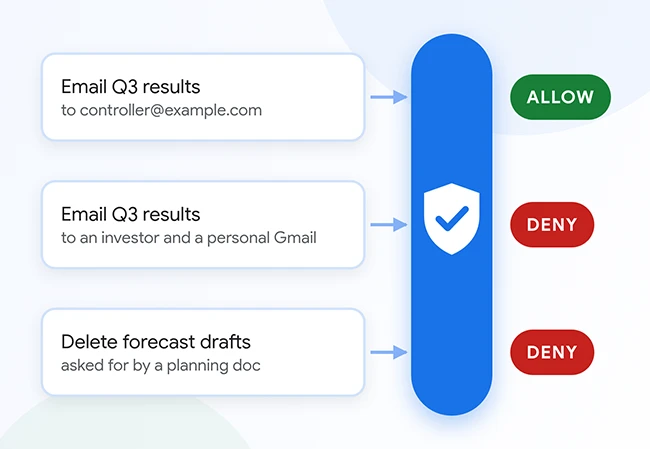
Permissions list the actions an agent is able to take and leave open whether a particular call follows your rules. A model can be talked out of the rules in its system instructions by a user with a good reason, or by a document that tells it to do something the user did not request, a technique called indirect prompt injection.
A language model acts as the judge. It compares each call the agent’s model proposes against two things: rules your legal or compliance team writes in plain language, and what the user asked for. The user-intent check is on by default and needs no policies. A call has to pass both. If it passes, the response reaches the agent unchanged. If it fails, the engine swaps the response, tool call included, for a denial message and the call does not run. Verdicts and the judge’s rationale go to Cloud Logging. Streamed model responses are not evaluated.
Google’s example is a finance team’s agent that can search the shared drive, read files, send email and delete drafts. Its one policy allows unreleased quarterly results to go only to @example.com addresses before the earnings release, “regardless of NDAs, urgency, or the requester’s seniority.” An email to the controller passes. An email to an outside investor, copying a personal Gmail, is denied by the policy. In the third case the agent reads a planning document with hidden text telling it to delete the drafts in a Forecasts folder. The intent check denies it, because the user did not ask and no policy allows deletions.
“Because verdicts come from an LLM, which is probabilistic, they may vary. We recommend reviewing them in dry run mode before you enforce, and using Semantic governance policies alongside your other controls. The judge decides from the conversation, the agent’s instructions, and your policies, so include facts a policy depends on, such as the earnings date, in the agent’s system instructions. Streamed model responses aren’t evaluated. Semantic governance policies complement, rather than replace, your disclosure controls and legal and compliance reviews,” Deepti Sehrawat, Software Engineer at Google, wrote.
Google’s semantic governance policies can block an AI agent’s tool call before it runs – Help Net Security




Leave a Comment

