




Thank you for visiting nature.com. You are using a browser version with limited support for CSS. To obtain the best experience, we recommend you use a more up to date browser (or turn off compatibility mode in Internet Explorer). In the meantime, to ensure continued support, we are displaying the site without styles and JavaScript.
Advertisement
Nature Communications volume 17, Article number: 11639 (2026)
Mental health conditions in the postpartum period are common. Generous parental leave has been shown to protect against poorer postpartum mental health among mothers; however, evidence for fathers remains limited. We examine whether levels of paid parental leave benefits are associated with fathers’ mental health in the first year after childbirth in Sweden. Using national population registers, we include 210,285 first-time fathers whose children were born between 2007 and 2011. Fathers receiving basic benefits have higher odds of receiving any mental healthcare, being prescribed antidepressants or anxiolytics, and using specialist outpatient care than those receiving higher-level earnings-related benefits. The results are robust after adjusting for mental health history, income and employment status, though associations are attenuated. Fathers who do not take parental leave during the first year are more likely to receive any mental healthcare, specialist outpatient care or hospitalisation. Overall, fathers with access to more generous paid parental leave benefits experience better postpartum mental health. These findings suggest that well-compensated parental leave may benefit fathers’ mental health and promote gender equality in caregiving. However, further efforts are needed to determine whether parental leave systems mitigate or reproduce health inequalities given that parental leave benefit levels are contingent on labour market conditions.
Men’s health is a growing area of interest. Traditionally, research in this population has focused primarily on single-system diseases, often related to the genitourinary tract (e.g., prostate disorders or testicular cancer), while comparatively less attention has been made to other aspects of men’s physical and mental health1. The lack of focus on men’s health is particularly evident in reproductive health research, where studies predominantly concentrate on mothers and their childbirth experience. For example, postpartum depression is typically studied in women, yet a large proportion of fathers also experience mental health complaints during this period. The estimate prevalence of postpartum depression and anxiety for fathers ranging from 8% to 13% for depression2 and 2.4% to 18% for anxiety in the first 12 months after childbirth3. Despite this, far less is known about factors that may benefit fathers’ mental health in the postpartum period.
Research suggests that generous parental leave is protective against poorer postpartum mental health among mothers4. However, parental leave schemes are typically designed with mothers in mind, and fathers tend to have lower uptake even when leave is available5. Consequently, evidence on the role of parental leave uptake on postpartum mental health for fathers remains scarce and often yields mixed findings4. Sweden provides a unique context to examine the potential effects of parental leave in mitigating poor mental health among fathers, due to its long-established gender-neutral system (i.e., 240 of paid leave days per parent) and active policies encouraging fathers’ uptake6. For example, in 1995, a Father’s Quota was introduced, reserving 30 days exclusively for each parent, which would be forfeited if unused7. This quota was subsequently increased to 60 days in 2002 and to 90 days in 2016. Following these policy changes, the proportion of fathers taking parental leave increased from 43.3% to 75% after the first reserved month and from 70% to 75% after the second reserved month8, with no notable increase in father’s uptake after the extension to 90 days9. Fathers’ share of parental leave subsequently increased from 21.9% in 2006 to 28.2% in 2016 and 32% in 202310. Nevertheless, mothers continue to take most parental leave, particularly in the first six months following childbirth. In Sweden, mothers are required to take at least two weeks of leave in connection with childbirth, and in practice, most mothers take at least six months of leave11. Consequently, fathers’ parental leave is generally concentrated later in the child’s first year.
The relationship between fathers’ parental leave and mental health has been examined in Sweden with mixed findings12,13,14, but with potential benefits in terms of self-rated depression symptoms14, and severe mental health outcomes for migrant fathers12. However, to date, no studies in Sweden or globally have examined the association between paid parental leave benefit levels and postpartum mental health among fathers. Sweden is also a good context to analyse this question as all resident parents are entitled to paid parental leave regardless of employment status although at different remuneration levels.
The objective of this study is to examine the association between father’s paid parental leave benefit levels during the first year after childbirth and paternal mental health conditions in the postpartum period in Sweden.
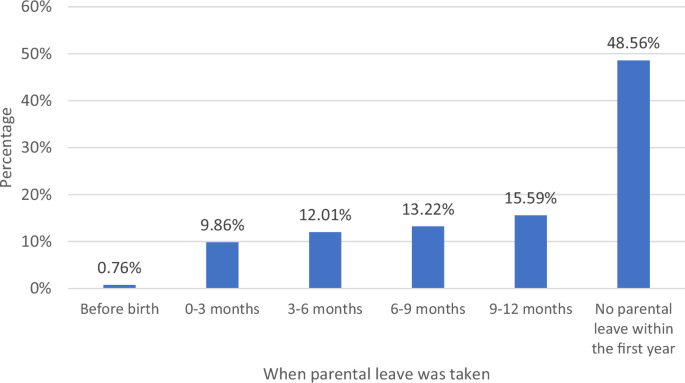
Among the 210,285 fathers who had their first child between 2007 and 2011, 102,566 (48.8%) received higher-level benefits, 4408 (2.1%) received basic benefits, 1195 (0.6%) received minimum-level benefits and 102,116 (48.6%) did not take paid parental leave in the first year after the child’s birth (Table 1). The mean age (standard deviation) at childbirth was 31.6 (5.2) years for fathers receiving higher-level benefits, 28.7 (6.1) years for those receiving basic benefits, 29.6 (5.6) years for those receiving minimum-level benefits, and 31.3 (5.9) years for fathers who did not take paid leave. Among fathers who did not take paid leave in the first postpartum year, 44.8% of Swedish-born fathers did not take leave, compared to 59.9% of fathers from OECD regions and 72.2% of fathers from non-OECD regions. 8 574 (4.1%) were prescribed antidepressants or anxiolytics, 3520 (1.7%) received specialist outpatient care for mental disorders, and 700 (0.3%) were admitted to hospital for mental disorders in the 365 days following childbirth. History of mental health care varied by parental leave benefit level: 6.6% among fathers receiving basic benefits, 6.4% among those receiving minimum-level benefits, 5.4% among fathers who did not take paid leave and 3.8% for those receiving higher-level benefits. Just over half (51.4%) of first-time fathers took parental leave before their child’s first birthday (Fig. 1, source data are provided as a Source Data file). The timing of when fathers first took parental leave was similarly distributed between those receiving higher-level benefits and those receiving basic benefits (Fig. 2, source data are provided as a Source Data file).
Source data are provided as a Source Data file.
Source data are provided as a Source Data file.
Fathers’ level of parental leave benefits was associated with paternal postpartum mental health across all outcomes (Fig. 3, source data are provided as a Source Data file). Fathers receiving basic benefits and no parental leave had higher odds of receiving any mental healthcare (OR 2.06, 95%CI 1.84–2.31 and OR 1.51, 95%CI 1.45–1.57, respectively), being prescribed antidepressant or anxiolytic medication (OR 1.82, 95%CI 1.60–2.07 and OR 1.34, 95%CI 1.29–1.41, respectively), receiving specialist outpatient care (OR 3.36, 95%CI 2.83–3.99 and OR 2.47, 95%CI 2.29–2.67, respectively), and hospitalisation (OR 2.64, 95%CI 1.60–4.36 and OR 4.57, 95%CI 3.73–5.59, respectively) compared with fathers receiving higher-level benefits (Model 1). Fathers receiving the minimum-level benefit also had higher odds of receiving any mental healthcare (OR 1.67, 95%CI 1.32–2.11), being prescribed antidepressants or anxiolytics (OR 1.61, 95%CI 1.25–2.08) and receiving specialist outpatient care (OR 2.10, 95%CI 1.41–3.11), but the odds for hospitalisation was not statistically significant (OR 1.80, 95%CI 0.57–5.68) (Model 1).
The association between paid parental leave benefit levels and mental health outcomes (A: any mental healthcare; B: Prescribed antidepressants or anxiolytics; C: Specialist outpatient care; D: Hospitalisation) in the 12 months following childbirth among first-time fathers between 2007 and 2011 in Sweden (N = 210,285). Unadjusted and multivariable logistic regression models were used to estimate odds ratios (ORs) and 95% confidence intervals (CIs). All statistical tests were two-sided. Source data are provided as a Source Data file.
Despite history of mental health having a strong association with all mental health outcomes, its inclusion in the models only partially attenuated the observed associations. Specifically, it accounted for 16.2–26.8% of the association for any mental healthcare, 19.9–32.5% for prescribed antidepressants or anxiolytics, 6.9–15.8% for specialist outpatient care, and 3.9–19.6% for hospitalisations (Model 2, Fig. 3 and Suppl. Table S1).
The odds attenuated across all outcomes after further adjusting for income and employment status. However, fathers receiving basic benefits still had higher odds of receiving any mental healthcare (OR 1.17, 95%CI 1.01–1.36), being prescribed antidepressants or anxiolytics (OR 1.23, 95%CI 1.05–1.45) and receiving outpatient care (OR 1.36, 95%CI 1.11–1.65) but not hospitalisation (OR 0.87, 95%CI 0.52–1.46) (Model 3). In the latter, income accounted for 69.0% of the association and employment status 38.5% of the association. Furthermore, fathers who did not take paid parental leave continued to show higher odds of receiving any mental healthcare (OR 1.10, 95%CI 1.05–1.16), outpatient care (OR 1.42, 95%CI 1.30–1.55) and hospitalisation (OR 2.22, 95%CI 1.79–2.77), but not of being prescribed antidepressants or anxiolytics (OR 1.05, 95%CI 0.99–1.11). The results of the decomposition analysis are presented in Supplementary Table S1.
When fathers’ income and employment status were replaced with family disposable income, fathers who did not take paid parental leave had higher odds of all mental health outcomes, while fathers receiving basic benefits had higher odds of receiving any mental healthcare (OR 1.47, 95%CI 1.27–1.70), prescribed antidepressants or anxiolytics (OR 1.36, 95%CI 1.16–1.60) and receiving specialist outpatient care (OR 2.18, 95%CI 1.80–2.65 (Model 3, Supplementary Table S2).
The IPWRA with overlap weight robustness analyses supported our main findings; however, the association for prescribed antidepressants or anxiolytics was no longer statistically significant (Supplementary Tables S3 and S4). Among fathers receiving higher-level benefits, the baseline probability of any mental healthcare use was 6.1%, compared with 5% for being prescribed antidepressants or anxiolytics, 2.2% for specialist outpatient care, and 0.4% for hospitalisation.
When we restricted the study population to fathers without a history of mental health or to fathers aged between 25 and 34 years, the estimates were similar to the main analyses (Supplementary Tables S5 and S6). However, fathers who did not receive paid parental leave now had higher odds of being prescribed antidepressants or anxiolytics.
Results from the robustness analyses that accounted for temporal ordering showed overall similar patterns to the main analyses (Suppl. Tables S7 and S8).
Swedish-born fathers who did not take paid parental leave had higher odds of receiving any mental healthcare (OR 1.14, 95%CI 1.08–1.21), being prescribed antidepressants or anxiolytics (OR 1.08, 95%CI 1.02–1.15), receiving outpatient care (OR 1.41, 95% CI 1.29–1.55) and hospitalisation (OR 2.32, 95% CI 1.83–2.93) compared to Swedish-born fathers receiving higher-level benefits (Model 3, Suppl. Table S9). Similarly, foreign-born fathers who did not take paid parental leave had higher odds of outpatient care. Among these, fathers from non-OECD regions also had higher odds of being hospitalised but fathers from OECD regions did not.
In our cohort of first-time fathers, just over half took parental leave before their child’s first birthday. The timing of fathers’ initial parental leave was similar for those receiving higher-level and basic benefits. Paid parental leave benefit levels were associated with fathers’ postpartum mental health during the first year after birth, even after accounting for history of mental health, income, and employment status. Fathers receiving basic benefits had higher odds of receiving any mental healthcare, being prescribed antidepressants or anxiolytics, and receiving outpatient care compared with those receiving higher-level benefits. Fathers who did not take paid parental leave during the first year had higher odds of receiving any mental healthcare, outpatient care, and hospitalisation. However, there was no difference in mental health outcomes between fathers receiving minimum-level and higher-level benefits. Swedish-born fathers who did not take leave in the first year had higher odds for all mental health outcomes compared with Swedish-born fathers receiving higher-level benefits. Similarly, foreign-born fathers who did not take paid parental leave had higher odds of outpatient care, while those from non-OECD regions also had higher odds of hospitalisation.
Research has shown that parental leave generosity in terms of remuneration is beneficial for parents’ postpartum mental health, yet most of these studies have focussed on paid versus unpaid leave or paid versus no leave. Our findings suggest that higher levels of parental leave benefits may protect fathers against poor mental health in the postpartum period even in context where all parents are entitled to paid leave, regardless of employment status. These findings are consistent with those observed for mothers in the same context (country and time period)15 and suggest that material resources are an important mechanism in the relationship between parental leave and postpartum mental health. Receiving more generous benefits may alleviate the financial burden of reduced income due to time-off work4, and create the conditions that allow fathers to take parental leave (i.e., afford time-off work), possibly for a longer time. Accordingly, this may reduce financial stress and support mental wellbeing. However, we acknowledge that parental leave benefit levels are contingent on prior income and employment, and that the observed associations may partly reflect underlying socioeconomic inequalities, given that poor mental health is socially patterned16. Nevertheless, the persistence of the associations between benefit levels and postpartum mental health after adjustment for income and employment status suggests that parental leave benefit levels may also be independently related to postpartum mental health, beyond broader socioeconomic disadvantage. The fact that eligibility for higher-level benefits is contingent on both income and employment status before childbirth, allows for some variation (i.e., there is not a perfect correlation between low income and receiving basic benefits), which makes our adjustments for these factors both feasible and meaningful. This finding is further supported by the IPWRA with overlap weights analyses restricted to fathers receiving basic or higher-level benefits. Furthermore, the analyses restricted to fathers with no prior history of mental health conditions can also lend additional support in the independent association of parental leave benefit levels on postpartum mental health, as socioeconomic disadvantage is associated with poorer mental health in the general population17,18. All these findings are consistent with those observed among first-time mothers in Sweden during the same study period using similar modelling strategies and sensitivity analyses15. However, because paid parental leave benefits are structurally linked to labour market conditions, the findings should not be interpreted as causal.
At the same time, although our analyses suggest an independent association from parental leave benefit levels, we observed no difference in mental health outcomes between fathers receiving minimum-level and higher-level benefits after adjusting for income and employment status. This finding is important, as days compensated at the minimum level may be used by fathers who are already in full-time employment to supplement their income, without necessarily engaging in the same level of caregiving as parents who take extended parental leave over consecutive days. This means that the health benefits of this group cannot be explained by parental leave use or by higher remuneration. Since the option to use these days to supplement income is likely more common among fathers with lower salaries and possibly poorer labour market conditions, these findings highlight the need for future quasi-experimental studies to disentangle the role of parental leave benefits themselves from the broader socioeconomic conditions associated with postpartum mental health.
Although our study focuses specifically on parental leave remuneration, it is important to acknowledge that the decision to take parental leave may depend largely on the level of compensation. As fathers typically earn higher salaries than women, taking parental leave often entails a loss of income in the absence of full compensation19. Consequently, fathers with weaker labour market attachment may delay taking leave until they are in established employment, or may result in mothers taking the majority, if not all, of the parental leave days during the postpartum period. Similarly, the capped remuneration for higher-level benefits of the Swedish system may create a financial disincentive for fathers with very high incomes to use parental leave. In both cases, fathers at the lower and higher income ends of the income distribution may be less able to benefit from the potential mental health advantages associated with parental leave use4 because of their labour market circumstances. In our study, fathers who did not take parental leave during the first postpartum year had higher odds of receiving any mental healthcare, outpatient care, and hospitalisation, which is consistent with this interpretation.
The close link between labour market participation and eligibility for higher-level benefits highlights the importance of situating postpartum mental health within a wider social determinants framework and by adopting a Health in All Policies approach20. Policies aiming to improve postpartum mental health among new fathers may therefore need to extend beyond parental leave remuneration alone and also address inequalities in the labour market. At the same time, the strong link between parental leave remuneration and labour market conditions, on the one hand, and between parental leave use and remuneration, on the other, highlights the need to consider how general socioeconomic inequalities shape research on parental leave and postpartum mental health for both parents. This issue is particularly important in Sweden given the increasing levels of labour market precarisation21, and in contexts with even stronger work-requirements for access to paid parental leave.
Generous parental leave system in terms of remuneration could help meet some of the Sustainable Development Goal (SDG), including improved health for both mothers and fathers (SDG 3: Good Health and Well-Being), while also promoting greater involvement in childcare and addressing gender role disparities (SDG 5: Gender Equality)22. Our study contributes to advance knowledge on men’s health highlighting the need to make fathers’ postpartum mental health more visible and creating opportunities for social interventions.
The main strength of our study lies in its use of data from national population registers thereby ensuring robust representativeness of the Swedish population23. This allowed us to capture to include 96% of fathers whose first child was born between 2007 and 2011. Additionally, our study encompassed a wide range of mental healthcare utilisation, ranging from milder problems to severe cases requiring hospitalisation. Lastly, all health data was derived from diagnoses or prescribed medication documented by medical professionals, effectively eliminating recall bias.
A key limitation of this study is the inability to fully rule out reverse causality between parental leave uptake and mental health outcomes in the first postpartum year. However, robustness analyses in which the temporal order of events was clearly established yielded similar patterns, strengthening the evidence that generous parental leave benefits may have a protective effect against the onset of postpartum mental health conditions. Nonetheless, since we measure postpartum mental health through healthcare utilisation (rather the onset of symptoms), the still the temporal order of events is difficult to measure.
Fathers can transfer all their leave days except for the reserved father’s quota. As a result, those experiencing moderate-to-severe mental disorders may forgo parental leave, with their partners extending their leave until the child becomes eligible for preschool. However, even after accounting for mental health before fatherhood or restricting the analysis to fathers without a history of mental health conditions, those who did not take paid leave still had higher odds of mental disorders.
It is important to acknowledge that the four parental leave benefit categories may reflect different underlying processes. The comparison between fathers receiving higher- versus basic-level benefits primarily reflects differences in eligibility for earnings-related parental leave benefits and benefit remuneration and is therefore the most straightforward to interpret. In contrast, the minimum-level and no parental leave categories reflect not only eligibility, but also decisions about whether and when to take parent leave during the child’s first year. These decisions may be influenced by family circumstances, including infant and maternal health, breastfeeding, and household finances. Consequently, estimates involving these groups may be more susceptible to residual confounding and should be interpreted with greater caution.
In Sweden, healthcare access is universal; however, use of healthcare services may still vary across population groups, particularly in relation to socioeconomic position. Our study did not include primary care data as this is not available at the total population level. Thus, we were unable to capture milder mental health conditions that may be managed without pharmacological intervention, for example, though psychological counselling or short-term sickness absence. In addition, our outcome for mild mental health issues may be underreported because men are more likely to postpone seeking medical care for mild mental health issues and tend to seek help only when the condition becomes more severe24. Nonetheless, we still observed an association between parental leave benefit levels and prescription antidepressants or anxiolytics.
Furthermore, it is important to note that our outcomes of specialist outpatient care and hospitalisation, reflect moderate-to-severe mental health conditions, are relatively rare in absolute terms, and should therefore be interpreted in the context of low baseline risk. Nonetheless, we believe these outcomes remain important despite their low prevalence. Severe mental health outcomes represent the most serious cases, and even small absolute differences may be meaningful at the population level. Moreover, rarer outcomes are less likely to be influenced by health-seeking behaviour or access to primary care compared with milder mental health conditions, and may therefore provide a more robust indicator of severe mental health burden.
Another limitation concerns our operationalisation of mental health, as we grouped all ICD-10 F diagnoses together, thereby combining a heterogeneous set of conditions (e.g., severe mental disorders, substance-related disorders and stress-related conditions). This aggregation may mask meaningful differences in associations across diagnostic categories, which could be particularly relevant when considering subgroup analyses such as migrants and non-migrants. However, this approach was necessary due to limited statistical power, which precluded disaggregation into more specific diagnosis groups. Nonetheless, one of our outcomes, prescription of antidepressants or anxiolytics, provides a more diagnostically specific proxy for common mental health conditions.
Moreover, income and employment status are reported annually, not monthly, in the LISA database25, meaning we measured these socio-economic variables in the year preceding childbirth. We believe this timing is appropriate, as parents generally establish themselves in the labour market before planning a family26, making these variables reflective of their financial and employment status prior to taking parental leave. Lastly, while we could not use a more detailed classification of birthplace, our categorisation is consistent with those used in prior studies27,28, ensuring comparability.
In our cohort of first-time fathers, generous parental leave benefits were associated with better postpartum paternal mental health compared to fathers receiving basic benefits or those who did not take leave. However, our study also discusses the importance to further disentangle the role of general socioeconomic inequalities in postpartum mental health in order to determine whether parental leave systems mitigate or reproduce inequalities in health.
This total population cohort study was conducted as part of a broader project on the Unintended consequences of Swedish Parental Leave Policy (ParLeHealth), with a published peer-reviewed protocol29. The Swedish Ethical Review Authority (decision number: 2019-04913) approved the study and waived the need for informed consent due to data being pseudonymised. The study followed the STROBE reporting guidelines for observational studies30.
The study population consisted of all first-time fathers of singleton biological children born in Sweden between January 1, 2007 and December 31, 2011. We used data from Swedish total population registers linked by personal identification numbers. The Total Population Register, the Multigenerational Register, and the Medical Birth Register to identify first-time fathers (n = 231,196). We excluded fathers of multiples (n = 3207), fathers whose child had a malformation diagnosis (n = 8290), fathers aged less than 18 years (n = 340), and fathers who emigrated or died before or within 365 days of childbirth (n = 797). Using the Longitudinal Integrated Database for Health Insurance and Labour Market Studies (LISA), we excluded fathers with missing sociodemographic data (n = 8277). The final analytical sample consisted of 210,085 fathers (Figure A1, Appendix). Fathers were selected based on an individual’s legal gender as recorded in the Total Population Register, which is based on sex-assigned at birth and any subsequently registered change in legal gender reported to the relevant government authority.
Our exposure was parental leave benefit level in the first year following childbirth, which was determined by the compensation level fathers received when they first applied for parental leave benefits. In Sweden, all legal residents regardless of their employment status, are entitled to 480 days of paid parental leave for each child, which can be used until the child’s eighth birthday or the completion of Grade 1 in compulsory education for children born before 20136. Parents with joint custody are automatically allocated half of the paid parental leave days (i.e., 240 days each), but days can be transferred to the other parent. During the study period, 60 days were reserved for each parent (often referred to as the ‘mother’ or ‘fathers’ quota). For 390 days (i.e., 195 days per parent), the compensation is based on income (earnings-related parental leave benefits). Parents who have been continuously employed for at least eight months and have met an income threshold prior to the estimated delivery date receive approximately 80% of their income (higher-level benefits). Those who do not meet these work requirements receive a basic benefit of 180 SEK per day (5400 SEK per month). For the remaining 90 days (i.e., 45 days per parent), all parents regardless of income, receive 180 SEK per day (minimum-level benefit). When claiming paid parental leave, the first 180 days must be earnings-related compensation. Since mothers typically take paid parental leave first and therefore claim earnings-related parental leave benefits, fathers can claim the minimum-level benefit before earnings-related benefits. Therefore, fathers’ compensation level at the time of first applying for parental leave benefits most closely reflects their eligibility for higher-level benefits. Moreover, due to the flexibility of the parental leave scheme, fathers may take paid parental leave at any time until the child’s eighth birthday, meaning that some fathers may choose to use their leave after the first postpartum year. Therefore, we categorised paid parental leave benefit levels into four groups: fathers receiving higher-level benefits, basic benefits, minimum-level benefits, and no parental leave in the first year after the birth of the child in order to include all the possible categories fathers can have within the first year. However, particular attention was given to the categories of higher and basic level benefits, as they best capture differences in compensation level (the aim of the study). The minimum level and no parental leave in the first years were included to provide a more complete picture; however, the interpretation of these categories in relation to remuneration levels is less straightforward. Fathers in the minimum-level category represent those whose partner have already used at least 180 days of income-based parental leave, either at the basic or higher level depending on eligibility. Minimum-level benefit days can be used both during periods of parental leave and on weekends while fathers remain in full-time employment, thereby allowing them to supplement their income6. Fathers in the category no parental leave in the first years include those who either postpone parental leave uptake until a later stage or do not use parental leave at all. The one-year cut-off for parental leave benefit levels was applied because, in Sweden, formal childcare is not available for children younger than 12 months of age as children cannot enrol in preschool until after their first birthday. Consequently, parents must rely on parental leave or informal childcare during the child’s first year31. An overview of Sweden’s parental leave scheme is displayed in Table 2.
Our indicators of paternal mental health each reflected different levels of severity: prescribed antidepressants or anxiolytics (mild), specialist outpatient care for any mental disorder (moderate), and hospitalisation (severe) for any mental disorder, as well as a combined measure of any mental healthcare (i.e., prescribed medication, specialist outpatient care or hospitalisation), all assessed within 365 days following the birth of the child. Prescription for antidepressant and anxiolytic medication were identified using Anatomical Therapeutic Chemical codes N06A and N05B, respectively, with data obtained from the National Prescribed Drug Register. Mental disorders requiring specialist outpatient care or hospital admission were identified by primary diagnosis using the 10th edition of the International Classification of Diseases codes F00-F99 with data sourced from The National Patient Register. All outcomes were dichotomised.
Our potential confounding variables included the birth year of the child, father’s age at childbirth, history of mental health before fatherhood, father’s income and employment status. Father’s age at childbirth was categorised into six groups: 18–24, 25–29, 30–34, 35–39, 40–44 years, and 45 years and older. History of mental health before fatherhood defined as having been prescribed any medication for depression or anxiety, receiving specialist outpatient care or being hospitalised for any mental disorder in the year before childbirth in a combined dichotomy variable. Father’s annual income was measured in the calendar year prior to childbirth, and categorised into quintiles. Employment status was measured in November of the calendar year before childbirth, and categorised into employed or not employed.
We performed two-sided Pearson χ2 tests and multivariable logistic regression to assess the association between father’s parental leave benefit level and mental health outcomes in the 12 months following the birth of their child. Odds ratio (OR) with 95% confidence intervals (95% CI) were used to describe associations and were derived from logistic regression analyses. All models, except the unadjusted model, included the child’s birth year to account for cohort effects and father’s age at the birth of the child (Model 1). Model 2 further adjusted for pre-existing mental healthcare use32. History of poor mental health is often omitted in studies evaluating the association between parental leave and postpartum mental health, and this limits the ability to distinguish whether postpartum symptoms reflect a new onset of poor mental health or a continuation of mental disorders before fatherhood4. Furthermore, mothers with a history of mental health issues prior to childbirth were less likely to qualify for higher parental leave benefits, and it is probable that this also applies for fathers33. Moreover, as father’s income and employment status are considered endogenous to the exposure, Model 3 additionally adjusts for these factors to examine whether the association between parental leave benefit levels and postpartum mental health can be determined from broader social socioeconomic inequalities.
To analyse the effect of varying levels of parental leave benefits on paternal mental health, we conducted a decomposition analysis using the Karlson-Holm-Breen (KHB) method34. This approach allows for estimating the contribution of specific variables to the association of interest, mitigating issues such as rescaling or attenuation bias commonly associated with non-linear models35,36.
We also conducted a series of sensitivity analyses: (1) replacing father’s income and employment status with family disposable income to assess whether household income influences the association between parental leave benefit levels and paternal mental health; 92) restricting the study population to fathers with no history of mental disorders to exclude a key confounder; and (3) limiting the study population to fathers aged 25–34 years to create a more homogeneous health population.
To further disentangle the role of parental leave benefit levels from general socioeconomic conditions in postpartum mental health, we conducted additional analyses using inverse probability weighting regression adjustment with overlap weights (IPWRA) as a robustness check. This approach combines propensity score weighting with outcome regression, allowing adjustment for observable differences between exposure groups in both their treatment assignment and outcomes, thereby reducing potential confounding bias from measured characteristics. The propensity score model included, father’s age, child’s year of birth, history of mental health, and income. Since our main focus was the comparison of parental leave benefit levels, and IPWRA modelling is not suitable for more than two categories, we restricted the analysis to fathers receiving either basic or higher-level benefits (n = 107,547). This approach allows for a complementary assessment of the association between parental leave benefit levels and postpartum mental health while minimising differences in observable characteristics between fathers receiving basic and higher-level benefits.
Furthermore, since parental leave benefit levels and mental health outcomes were measured within the first year after childbirth, we conducted additional analyses to account for temporal ordering as fathers generally take leave later than mothers, often toward the end of the postpartum year. In the first robustness analysis, we examined parental leave benefit levels during the first six months postpartum and mental health outcomes during months 6–12. In the second analysis, we assessed parental leave benefit levels during the first postpartum year and mental health outcomes in the second postpartum year. In these analyses, we controlled for both history of mental health conditions before fatherhood and during the first six and twelve postpartum months, respectively as well as income and employment status.
Additionally, we performed subgroup analyses based on father’s region of birth to determine if the main association varied across different groups. Father’s country of birth was categorised by region into: 1) Sweden, 2) regions primarily composed of Organisation for Economic Cooperation and Development (OECD) member countries, that is from the Nordic region (excluding Sweden), Europe, North America, Oceania, South Korea and Chile, and 3) non-OECD regions, predominantly comprising of those from Africa, Middle East, Asia excluding South Korea, South America excluding Chile, and regions listed as other15,37.
All analyses were conducted using Stata/SE version 18.038.
Further information on research design is available in the Nature Portfolio Reporting Summary linked to this article.
Individual level data cannot be made publicly available due to privacy regulations. According to the General Data Protection Regulation, the Swedish law SFS 2018:218, the Swedish Data Protection Act, the Swedish Ethical Review Act, and the Public Access to Information and Secrecy Act, these types of sensitive data can only be made available for specific purposes, including research, that meets the criteria for access to this type of sensitive and confidential data as determined by a legal review. Individual data are pseudonymised by the Swedish authorities and the key is inaccessible to researchers. Pseudonymised individual data is available from the authors upon request once ethical approval has been obtained, and must be analysed at Stockholm University. Request by access should be sent by email to Sol P Juárez (sol.juarez@su.se). The authors commit to responding to all data-access requests within 30 days of receipt and supplying data (subject to completion of necessary agreements) within 90 days. Source data are provided as a Source Data file. Source data are provided with this paper.
The code for this study was produced using Stata/SE version 18.0, and is available on Code Ocean (https://doi.org/10.24433/CO.8532420.v1)39.
Elterman, D. S. & Pelman, R. S. Male health: a new paradigm, strategies for care delivery, advocacy, education and research. Rev. Médica Clínica Las Condes 25, 35–39 (2014).
Article Google Scholar
Cameron, E. E., Sedov, I. D. & Tomfohr-Madsen, L. M. Prevalence of paternal depression in pregnancy and the postpartum: an updated meta-analysis. J. Affect Disord. 206, 189–203 (2016).
Article PubMed Google Scholar
Leach, L. S., Poyser, C., Cooklin, A. R. & Giallo, R. Prevalence and course of anxiety disorders (and symptom levels) in men across the perinatal period: a systematic review. J. Affect Disord. 190, 675–686 (2016).
Article PubMed Google Scholar
Heshmati, A., Honkaniemi, H. & Juárez, S. P. The effect of parental leave on parents’ mental health: a systematic review. Lancet Public Health 8, e57–e75 (2023).
Article PubMed Google Scholar
Duvander A.-Z., Cedstrand S. Gender Equal Parental Leave Use in Sweden: The Success of the Reserved Months. In: de la Porte C, Eydal BG, Kauko J, Nohrstedt D, Hart Pt, Tranøy BS, editors. Successful Public Policy in the Nordic Countries: Cases, Lessons, Challenges Oxford Academic (2022).
Försäkringskassan. Parental benefits (Swedish: Föräldrapenning). Stockholm: Försäkringskassan.
https://www.forsakringskassan.se/privatperson/foralder/foraldrapenning (2025).
Duvander A.-Z., Ferrarini T., Thalberg S. Swedish parental leave and gender equality. Achievements and reform challenges in a European perspective. Sweden: Institute of Future Studies. (2005).
Duvander, A.-Z. & Johansson, M. What are the effects of reforms promoting fathers’ parental leave use? J. Eur. Soc. Policy 22, 319–330 (2012).
Article Google Scholar
Duvander A.-Z., Håkansson H. Parental leave in Sweden. In: Duvander A.-Z., Arnalds A., Lammi-Taskula J., editors. Paid parental leave and social sustainability in the Nordic countries: Nordic Council of Ministers (2025).
SOSU22: Fathers’ share of parental leave by reporting country and time: Nordic Statistics Database. https://pxweb.nordicstatistics.org/pxweb/en/ (2026).
Duvander A.-Z., Löfgren N. Sweden country note. In: Dobrotic I., Blum S., Kaufman G., Koslowski A., Moss P., Valentova M., editors. International Review of Leave Policies and Research 2025. https://www.leavenetwork.org/annual-review-reports/country-reports/ (2025).
Honkaniemi, H., Katikireddi, S. V., Rostila, M. & Juárez, S. P. Psychiatric consequences of a father’s leave policy by nativity: a quasi-experimental study in Sweden. J. Epidemiol. Community Health 11, 11 (2021).
Google Scholar
Mansdotter, A. & Lundin, A. How do masculinity, paternity leave, and mortality associate? -A study of fathers in the Swedish parental & child cohort of 1988/89. Soc. Sci. Med 71, 576–583 (2010).
Article PubMed Google Scholar
Seimyr, L., Edhborg, M., Lundh, W. & Sjogren, B. In the shadow of maternal depressed mood: experiences of parenthood during the first year after childbirth. J. Psychosom. Obstet. Gynaecol. 25, 23–34 (2004).
Article CAS PubMed Google Scholar
Heshmati, A., Honkaniemi, H., Fritzell, S. & Juárez, S. P. Parental Leave Benefits and Maternal Postpartum Mental Health in Sweden. JAMA Netw. Open. 8, e258062 (2025).
Kirkbride, J. B. et al. The social determinants of mental health and disorder: evidence, prevention and recommendations. World Psychiatry 23, 58–90 (2024).
Article PubMed PubMed Central Google Scholar
Sterud, T., Lunde, L. K., Berg, R., Proper, K. & Aanesen, F. Mental health effects of unemployment and re-employment: a systematic review and meta-analysis of longitudinal studies. Occup. Environ. Med 82, 343–353 (2025).
PubMed PubMed Central Google Scholar
Thomson, R. M. et al. How do income changes impact on mental health and wellbeing for working-age adults? A systematic review and meta-analysis. Lancet Public Health 7, E515–E528 (2022).
Article PubMed PubMed Central Google Scholar
Gender Pay Gap 2023. What does the official wage statistics say? Stockholm: Swedish National Mediation Office (2023).
The Helsinki statement on Health in All Policies. Health Promot Int. 29, i17-i8 (2014).
Bodin, T. et al. Trends in Precarious Employment in Sweden 1992-2017: a social determinant of health. Int. J. Environ. Res. Public Health. 19, 12797 (2022).
Patel, V. et al. The Lancet Commission on global mental health and sustainable development. Lancet 392, 1553–1598 (2018).
Article PubMed Google Scholar
Ludvigsson, J. F. et al. Registers of the Swedish total population and their use in medical research. Eur. J. Epidemiol. 31, 125–136 (2016).
Article PubMed Google Scholar
Smith, K. L. W. et al. Gender differences in mental health service utilization among respondents reporting depression in a national health survey. Health 5, 1561–1571 (2013).
Article Google Scholar
Ludvigsson, J. F., Svedberg, P., Olen, O., Bruze, G. & Neovius, M. The longitudinal integrated database for health insurance and labour market studies (LISA) and its use in medical research. Eur. J. Epidemiol. 34, 423–437 (2019).
Article PubMed PubMed Central Google Scholar
Andersson, G. & Scott, K. Labour-market status and first-time parenthood: the experience of immigrant women in Sweden, 1981–97. Pop. Stud. -J. Demog 59, 21–38 (2005).
Article Google Scholar
Honkaniemi, H., Juárez, S. P., Katikireddi, S. V. & Rostila, M. Psychological distress by age at migration and duration of residence in Sweden. Soc. Sci. Med. 250, 112869 (2020).
Honkaniemi, H., Juárez, S. P. & Rostila, M. Mental health by native-immigrant intermarriage in Sweden: a register-based retrospective cohort study. Eur. J. Public Health 32, 877–883 (2022).
Article PubMed PubMed Central Google Scholar
Juárez, S. P. et al. Unintended health consequences of Swedish parental leave policy (ParLeHealth): protocol for a quasi-experimental study. BMJ Open 11, e049682 (2021).
Article PubMed PubMed Central Google Scholar
von Elm, E. et al. The Strengthening the Reporting of Observational Studies in Epidemiology (STROBE) statement: guidelines for reporting observational studies. Lancet 370, 1453–1457 (2007).
Article Google Scholar
Childcare in Sweden Denmark: The Nordic Council and the Nordic Council of Ministers. https://www.norden.org/en/info-norden/childcare-sweden (2025).
Wang, D., Li, Y. L., Qiu, D. & Xiao, S. Y. Factors influencing paternal postpartum depression: a systematic review and meta-analysis. J. Affect Disord. 293, 51–63 (2021).
Article PubMed Google Scholar
Karlson, K. B. & Anders, H. Decomposing primary and secondary effects: a new decomposition method. Res Soc. Strat Mobil. 29, 221–237 (2011).
Google Scholar
Kohler, U., Karlson, K. B. & Holm, A. Comparing coefficients of nested nonlinear probability models. Stata J. 11, 420–438 (2011).
Article Google Scholar
Breen, R., Karlson, K. B. & Holm, A. Total, direct, and indirect effects in logit and probit models. Socio. Method Res. 42, 164–191 (2013).
Article MathSciNet Google Scholar
Heshmati, A., Dunlavy, A., Mussino, E., Fritzell, S. & Juárez, S. P. Health before pregnancy and eligibility for parental leave benefits: a Swedish total population cohort study. BMC Public Health. 25, 1045 (2025).
StataCorp. Stata Statistical Software: Release 18. College Station, TX: StataCorp LLC (2023).
Heshmati, A. & Juárez, S. P. Parental Leave Benefit Levels and Postpartum Mental Health [Source Code] https://doi.org/10.24433/CO.8532420.v1 (2026).
Download references
This work was supported by Swedish Research Council for Health, Working Life and Welfare (FORTE, grant number 2023-00438) and the Swedish Research Council (Vetenskapsrådet, grant number 2018-01825). SPJ is supported by the Swedish Research Council for Health, Working Life and Welfare (FORTE), grant numbers 2016-07128 and 2021-00271. The funders of the study had no role in study design, data collection, data analysis, data interpretation, writing of the manuscript, or the decision to submit this study for publication. Open access funding provided by Stockholm University.
Centre for Health Equity Studies (CHESS), Stockholm University/Karolinska Institutet, Stockholm, Sweden
Amy Heshmati & Sol P. Juárez
Department of Public Health Sciences, Stockholm University, Stockholm, Sweden
Amy Heshmati & Sol P. Juárez
Department of Global Public Health, Karolinska Institutet, Stockholm, Sweden
Amy Heshmati & Sol P. Juárez
Stockholm University Demography Unit (SUDA), Stockholm University, Stockholm, Sweden
Amy Heshmati
PubMed Google Scholar
PubMed Google Scholar
Both authors (AH & SPJ) designed the study. AH conducted the statistical analysis with input from SPJ. Both authors had access to the data and have verified the data reported. AH drafted the first version of the manuscript, and both authors made substantial contributions thereafter. Both authors were involved in the scientific processes leading up to writing of the manuscript and have contributed to the interpretation of the findings and the critical evaluation of the final version of the manuscript.
Correspondence to Amy Heshmati.
The authors declare no competing interests.
Nature Communications thanks Abay Asfaw, Daniel L. Carlson, Jeppe Karl Sørensen and Margaret O’Brien for their contribution to the peer review of this work. [A peer review file is available].
Publisher’s note Springer Nature remains neutral with regard to jurisdictional claims in published maps and institutional affiliations.
Open Access This article is licensed under a Creative Commons Attribution 4.0 International License, which permits use, sharing, adaptation, distribution and reproduction in any medium or format, as long as you give appropriate credit to the original author(s) and the source, provide a link to the Creative Commons licence, and indicate if changes were made. The images or other third party material in this article are included in the article’s Creative Commons licence, unless indicated otherwise in a credit line to the material. If material is not included in the article’s Creative Commons licence and your intended use is not permitted by statutory regulation or exceeds the permitted use, you will need to obtain permission directly from the copyright holder. To view a copy of this licence, visit http://creativecommons.org/licenses/by/4.0/.
Reprints and permissions
Heshmati, A., Juárez, S.P. Parental leave benefits and fathers’ postpartum mental health in Sweden. Nat Commun 17, 11639 (2026). https://doi.org/10.1038/s41467-026-79284-0
Download citation
Received:
Accepted:
Published:
Version of record:
DOI: https://doi.org/10.1038/s41467-026-79284-0
Anyone you share the following link with will be able to read this content:
Sorry, a shareable link is not currently available for this article.
Provided by the Springer Nature SharedIt content-sharing initiative
Collection
Advertisement
Nature Communications (Nat Commun)
ISSN 2041-1723 (online)
© 2026 Springer Nature Limited
Sign up for the Nature Briefing newsletter — what matters in science, free to your inbox daily.



