




Perineal Massage in Second-Stage Labor Lowers Episiotomy Rates in Clinical Trial
A prospective randomized controlled trial conducted at a tertiary care referral hospital has demonstrated that performing digital perineal massage during the second stage of labor significantly increases the likelihood of maintaining an intact perineum while reducing the frequency of episiotomies and shortening the overall duration of the expulsive phase. The clinical investigation, led by Dr. Kritika Gupta and colleagues alongside co-authors Shikha Chadha, Sandhya Jain, and Hima C. Kille at the Baba Saheb Ambedkar institution, systematically evaluated 450 nulliparous women undergoing vaginal birth to clarify whether simple manual interventions administered during delivery could mitigate genital tract trauma. While the rate of intact perineum was substantially elevated and surgical cuts were noticeably reduced in the experimental cohort, overall spontaneous perineal laceration rates remained statistically indistinguishable between the study arms. The intervention caused measurable temporary discomfort to the laboring mothers during application, yet more than four-fifths of participants who experienced the massage stated that they would select the exact same supportive procedure during future deliveries.
Perineal injury represents one of the most frequent complications accompanying vaginal childbirth, with mechanical damage resulting from both intentional surgical incisions and spontaneous maternal lacerations. Anatomical trauma during delivery is documented to be particularly common among Asian women and primiparous mothers, whose pelviperineal muscular and connective tissues tend to exhibit greater baseline resistance and reduced physiological elasticity compared to multiparous individuals. In everyday clinical environments, perineal trauma routinely transforms the immediate puerperium into a profoundly painful experience, obstructing early postpartum recovery, impeding maternal ambulation, and interfering with vital early infant bonding and the establishment of breastfeeding. Furthermore, acute pelvic injuries markedly increase the downstream risks of maternal postpartum hemorrhage, local wound infections, persistent perineal pain, and long-term dyspareunia. Extensive medical literature also identifies post-delivery anal and urinary incontinence as persistent morbidities that compromise long-term maternal quality of life well past the formal puerperium period, establishing effective intrapartum prevention as a crucial public health goal.
To explore practical intrapartum measures capable of improving perineal outcomes, the research team designed a two-arm randomized controlled clinical study that spanned an eighteen-month operational period. The research protocol adhered strictly to the Indian Council of Medical Research Ethical Guidelines for Biomedical Research on Human Participants and received formal institutional approval from the hospital scientific and ethical committees under institutional reference codes F. No.5(18)/2022/BSAH/DNB/Scientific Committee and F. No.5(32)/2020/BSAH/DNB/PF 22554-55. Calculating statistical power based on preceding literature by Rodrigues and associates, the authors determined that a minimum sample size of 225 women per arm was required to attain 80 percent statistical power at a 5 percent significance threshold.
Eligible women were excluded if they presented with non-vertex fetal presentations, exhibited a prolonged active stage of labor extending beyond 12 hours, required instrumental or operative delivery, or demonstrated clinical contraindications to vaginal delivery. Allocation was executed through block randomization using predefined blocks of ten, in which a container held five slips designated for Group A and five for Group B, ensuring an unbiased and balanced distribution across both treatment arms. Extensive clinical and demographic documentation was compiled for each subject upon entry, encompassing maternal age, socioeconomic position, antenatal check-up frequency, body mass index, obstetric history, and cervical Bishop scores. Analysis of baseline maternal parameters confirmed that the two cohorts were well matched: the mean maternal age was 24.91 plus or minus 3.11 years in Group A and 24.82 plus or minus 3.45 years in Group B, with an identical median age of 25 years and no statistically significant demographic variance.
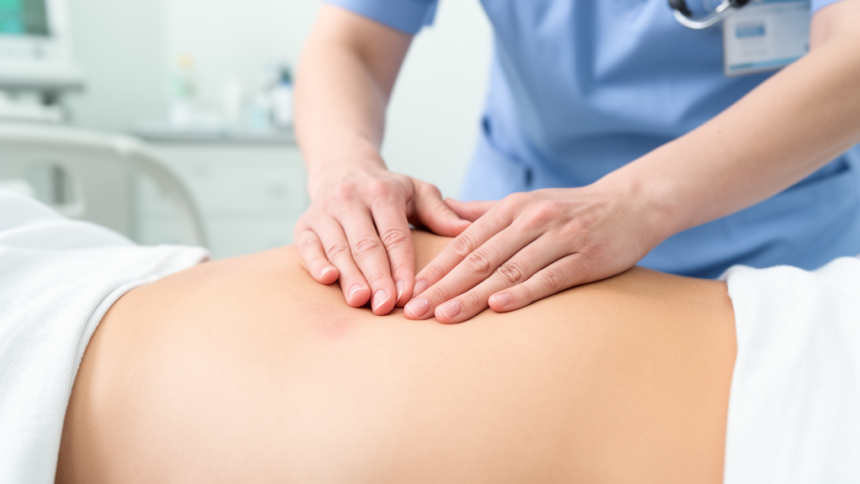
Standardized clinical care was enforced throughout the study, with first-stage labor monitored using the World Health Organization partograph without the administration of epidural anesthesia. Delivery suite management during the expulsive phase was executed by departmental resident physicians who verified bladder emptying and positioned participants in the dorsal delivery position. For the 225 women assigned to Group A, attending physicians applied a sterile lubricant inside the vagina and utilized gloved index and middle fingers to execute gentle, intermittent sweeping motions from the 3 o’clock to the 9 o’clock position while stretching perineal tissues during maternal pushing contractions. Once fetal crowning occurred, physicians applied the modified Ritgen manoeuvre to support the perineum and maintain fetal head flexion. In contrast, the 225 women allocated to Group B received conventional care consisting solely of fetal head flexion and manual perineal support at crowning, with both cohorts adhering to institutional guidelines that mandate a restrictive policy toward surgical episiotomy.
Analysis of immediate post-delivery anatomical outcomes revealed meaningful clinical divergence between the two intrapartum care strategies. The proportion of mothers who completed delivery with an entirely intact perineum was almost twice as high in the perineal massage arm compared to the conventional control cohort, reaching 15.1 percent in Group A versus the control proportion, a finding confirmed to be statistically significant with an evaluated p-value of 0.028. Simultaneously, the experimental protocol achieved a substantial 10 percent absolute reduction in the requirement for surgical episiotomies, with Group A recording a significantly lower episiotomy rate supported by a p-value of 0.036. The investigators observed that the lower rate of episiotomies among massaged participants likely mirrored improved muscular compliance and enhanced tissue distensibility, which allowed attending clinicians to comfortably observe physiological stretching rather than defaulting to elective surgical incisions.
Despite the notable rise in intact perineal anatomy and the diminished resort to surgical cut procedures, the overall cumulative incidence of spontaneous perineal lacerations showed no statistically significant divergence between the two study arms, recording 34.6 percent in Group A and 33.0 percent in Group B with a p-value of 0.94. When lacerations were stratified by clinical severity according to Royal College of Obstetricians and Gynaecologists criteria, first-degree superficial tears were found to be significantly more frequent in the perineal massage cohort, yielding a p-value of 0.035. Conversely, second-degree muscular lacerations trended lower in the massage cohort at 12 percent compared to 16 percent among controls, although this reduction did not achieve statistical significance. Furthermore, combined injuries involving spontaneous tear extensions alongside surgical episiotomies occurred more frequently in the control group, which recorded ten instances compared to only four documented cases in the massage group.
The distribution of documented tears according to location was compared between the two groups. In Group A, spontaneous lacerations appeared at the 3 o’clock position in 37.1 percent of affected cases, at the 6 o’clock posterior midline position in 38.4 percent, and at the 9 o’clock lateral margin in 24.3 percent. Among participants in Group B, the corresponding laceration distribution comprised 35.5 percent at 3 o’clock, 47.3 percent at 6 o’clock, and 17.1 percent at 9 o’clock. Statistical analysis confirmed that there was no statistically significant difference in the location of tears between the two groups.
A critical secondary finding of the clinical trial was the pronounced impact of second-stage perineal massage on labor progression. Objective timing from full cervical dilatation to fetal expulsion established that women in Group A experienced an average second stage that was 15 minutes shorter than the duration recorded in Group B, a difference that proved highly significant with a p-value below 0.001. Obstetric specialists attribute this physiological acceleration to reduced pelvic floor muscular tension, diminished perineal counter-resistance, and improved soft tissue compliance under active bearing-down forces.
Maternal subjective experiences were formally quantified one hour following transfer to the postnatal recovery ward using a standard visual analog scale to assess localized discomfort. Nevertheless, when directly questioned regarding procedure acceptability and future delivery preferences, 184 women representing 81.8 percent of Group A affirmed that they would actively opt to receive intrapartum perineal massage during subsequent childbearing.
Bivariate correlation analyses were carried out to evaluate whether maternal, fetal, or intrapartum risk factors influenced the occurrence and severity of perineal trauma. Within Group A, a statistically significant age variation emerged across tear categories (chi-square 6.330, p-value 0.042), with older nulliparous women demonstrating a higher median age among the rare third- and fourth-degree tears, though Kendall’s tau correlation coefficient of 0.12 revealed low association strength. In Group B, significant correlations linked tear severity with fetal birth weights exceeding three kilograms (chi-square 11.157, p-value 0.004) and baseline maternal hemoglobin levels (chi-square 13.264, p-value 0.005). However, bias-corrected Cramer’s V values of 0.21 and 0.15 confirmed that these relationships possessed limited predictive strength, underscoring that perineal lacerations arise from complex multifactorial interactions involving pelvic morphology, birthweight, maternal age, and tissue elasticity.
Placing their findings within contemporary obstetric evidence, the study authors highlighted that current medical literature reflects ongoing debate regarding physical pelvic interventions during delivery. While systematic reviews, Cochrane meta-analyses, and recommendations from both the World Health Organization and the American College of Obstetricians and Gynecologists endorse intrapartum perineal massage as a reasonable low-cost practice capable of improving tissue distensibility and limiting severe obstetric anal sphincter injuries, individual trials report varying effects on minor laceration rates and immediate pain. In this trial, the higher frequency of superficial first-degree lacerations observed in the massage group appeared as a direct trade-off for reduced episiotomy usage, trading formal surgical incisions for minor mucosal splits that require less extensive suturing and heal rapidly without long-term pelvic floor impairment.
The investigators candidly addressed several methodological limitations that temper the immediate generalizability of their single-center findings. Because the study was conducted exclusively at one referral institution where episiotomy thresholds might differ from community facilities, broader institutional replication remains necessary. Furthermore, the physical nature of manual massage precluded blinding of the attending resident physicians and data collectors, introducing potential observational bias, while the small total number of severe obstetric anal sphincter injuries restricted definitive statistical power regarding high-grade tears. Finally, because maternal follow-up ended during immediate puerperal hospitalization, long-term postpartum recovery, pelvic floor functional restoration, and dyspareunia rates could not be directly established, prompting the authors to recommend future multicenter trials that incorporate extended maternal surveillance and standardized counseling frameworks.
Subject of Research: Evaluation of intrapartum perineal massage efficacy on perineal trauma and labor duration
Article Title: Efficacy of perineal massage in second stage of labour for prevention of perineal trauma: a randomized controlled trial
Article References: Gupta, K., Chadha, S., Jain, S., Kille, H. C., & Baba Saheb Ambedkar (2026). Efficacy of perineal massage in second stage of labour for prevention of perineal trauma: a randomized controlled trial. Maternal Health, Neonatology and Perinatology, 12(1), Article 40. https://doi.org/10.1186/s40748-026-00282-7
Image Credits: AI Generated
DOI: 10.1186/s40748-026-00282-7
Keywords: perineal massage, second stage of labor, perineal trauma, episiotomy reduction, intact perineum, randomized controlled trial, nulliparous women, obstetric care, intrapartum interventions, labor duration, modified Ritgen manoeuvre, first-degree perineal tears, visual analog scale, maternal outcomes, tertiary care obstetrics, obstetric anal sphincter injuries
News Source: Ophelia Keating. (November 19, 2026). Perineal Massage in Second-Stage Labor Lowers Episiotomy Rates in Clinical Trial. Scienmag.
We bring you the latest biotechnology news from best research centers and universities around the world. Check our website.
Enter your email address to subscribe to this blog and receive notifications of new posts by email.
Bioengineer.org © Copyright 2023 All Rights Reserved.
Login to your account below
Please enter your username or email address to reset your password.
Bioengineer.org © Copyright 2023 All Rights Reserved.
Perineal Massage in Second-Stage Labor Lowers Episiotomy Rates in Clinical Trial – Bioengineer.org



Leave a Comment

