




Facebook Twitter Print Email
Ending cholera as a public health threat by 2030 is within reach, as every cholera death can be prevented with tools that already exist, the World Health Organization (WHO) said on Tuesday.
Last year was the deadliest for cholera since 1999, with almost 7,900 deaths, Dr. Lorenzo Pezzoli, WHO lead for epidemic-prone bacterial diseases, told journalists in Geneva.
Most of the deaths happened on a community level, before patients could access healthcare.
Fatalities dipped down in the first nine months of 2026, but more than 3,000 have still died of the preventable and treatable disease – nearly nine in ten of them in Africa.
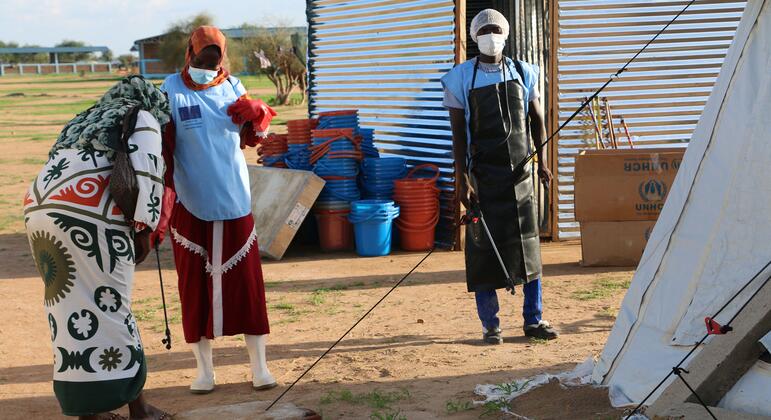
Where there is clean water, basic sanitation and a nearby health centre, patients can recover, Dr. Pezzoli said. But in a crowded camp or a village cut off by conflict, cholera can turn deadly within hours, and El Niño could make matters worse, since both too much and too little water fuel the disease.
Most cases are currently being reported in the Democratic Republic of the Congo, Yemen, Zambia, Nigeria, Somalia and Djibouti. WHO has already provided 71 million doses of cholera vaccine.
Sufficient clean water and sanitation facilities would end cholera for good, Dr. Pezzoli said – but not where conflict is raging.
Armed violence continues to force people from their homes in Haiti’s West Department, UN Deputy Spokesperson Farhan Haq told journalists in New York on Tuesday.
Since late October, attacks in Arcahaie and Cabaret, northwest of Port-au-Prince, have displaced more than 5,900 people, according to the International Organization for Migration (IOM). Some 70 per cent are staying with host families, while the rest are sheltering in makeshift sites.
Meanwhile, hunger continues to deepen. Nearly six million people, more than half the population, face high levels of acute food insecurity, including nearly 1.9 million at emergency levels.
The UN Children’s Fund (UNICEF) estimates that more than a quarter of a million children aged six to 59 months are expected to suffer from acute malnutrition between June this year and May next year, including nearly 94,000 with severe acute malnutrition.
Humanitarians are assessing needs and assisting the hardest-hit families, but insecurity continues to hamper access, Mr. Haq said.
The $880 million humanitarian plan for Haiti is less than half funded, with $424 million received as the year draws to a close.
The UN Human Rights Council on Tuesday expressed regret at the “continued non-cooperation” of the United States with the universal periodic review (UPR) mechanism, after the Government declined to take part in its scheduled review for the second time.
The US review had originally been set for 7 November 2025. After the country did not participate, it was rescheduled for Tuesday but the US failed to comply again.
Under the Universal Periodic Review, every Member State, whatever its size or influence, appears before its peers in Geneva about once every four and a half years.
It presents a report on its human rights record, answers questions and receives recommendations from other countries.
In a decision adopted in Geneva, the council called on the US to “resume its cooperation with the universal periodic review mechanism” and rescheduled the review for its next Working Group session, from 18 to 29 January 2027.
The other States scheduled for review by the UPR Working Group during its current session (2-13 November 2026) are: Suriname, Greece, Samoa, Saint Vincent and the Grenadines, Hungary, Papua New Guinea, Tajikistan, the United Republic of Tanzania, Antigua and Barbuda, Eswatini, Trinidad and Tobago, Thailand and Ireland.
Facebook Twitter Print Email
World News in Brief: Ending cholera by 2030 ‘within reach’, Haiti displacement and hunger, US human rights review rescheduled – UN News


Leave a Comment

