




Generation Public Health is a growing movement of people, organizations and communities working together to create the healthiest nation in one generation.
APHA members can view legislative updates here.
The American Public Health Association is more than a professional association. We’re a community. Our members work in every discipline of public health, in every U.S. state and in countries across the globe. And we’re all united by a common goal: To promote optimal, equitable health and well-being for all.
Join APHA. Together, we really can make a difference.
Public Health Newswire from The Nation’s Health brings you the news you need now
Public Health Newswire
How can public health professionals relay scientific information and data to the public in a way they can understand and trust? Public health workers got a chance to hear advice and answers from established public health communicators and content creators during the Champion Conversation at APHA 2026 “Science, But Make It Viral: Passing the Mic from Public Health Officials to Influencers and Other Trusted Voices.”
Katelyn Jetelina, CEO and founder of the public health newsletter “Your Local Epidemiologist,” said the public needs guidance to understand complex scientific and medical topics. In an oversaturated information ecosystem, people need narrators, navigators and storytellers. And with so many voices and viewpoints coming across their social media feeds every day, it can be difficult to know whom to trust.
“You want someone you can trust, and humans trust humans rather than brick walls,” Jetelina said. “I think one of the biggest mistakes during the pandemic was that you could never see or hear the humans at CDC. You never got to see who was leading the response and how they had questions, concerns and confusion, just like all of us.”
According to Jetelina, trust is not declared, but demonstrated. She said there are three domains that influence trust. One is expertise, which can be in the form of a degree or lived experience. Second is authenticity and seeming relatable and genuine in the audience’s eyes. Finally, trust can be built through consistent messaging.
Not ‘just the facts’
“The way people talk about misinformation, it’s like they think if we can just give people more facts or fact-check more … but that misses the trust component,” said Renee DiResta, associate research professor at Georgetown University.
DiResta and other panelists said the information people receive online is becoming increasingly curated and driven by algorithms and that people tend to see the world through the lens of their personal experiences and how they perceive the world.
Institutions are slow to adapt and are becoming more and more irrelevant to the conversations happening on the ground. Jetelina said there is a need to coach institutions on how to work with content creators and influencers.
“You have to be willing to relinquish control of the words and the message and let the creator take over, and that can be scary,” she said.
Jetelina added that it’s important to coach influencers and institutions alike to understand what is and isn’t appropriate compensation, as well as teaching them about being transparent about funding or sponsored content.
Communication tips
The panelists shared the following actionable communication tips for people working in public health and science:
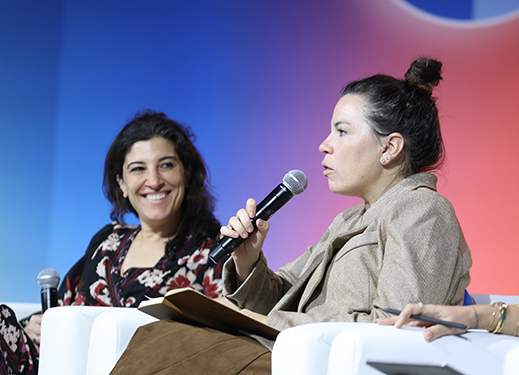
Photos: Renee DiResta and Katelyn Jetelina. Photos courtesy EZ Event Photography.
800 I Street, NW
Washington, DC
20001
Copyright © 2026
Public health field turns to influencers in a changing media landscape – American Public Health Association



Leave a Comment

