


E-Edition
Sign up for email newsletters
Sign up for email newsletters
E-Edition
Trending:
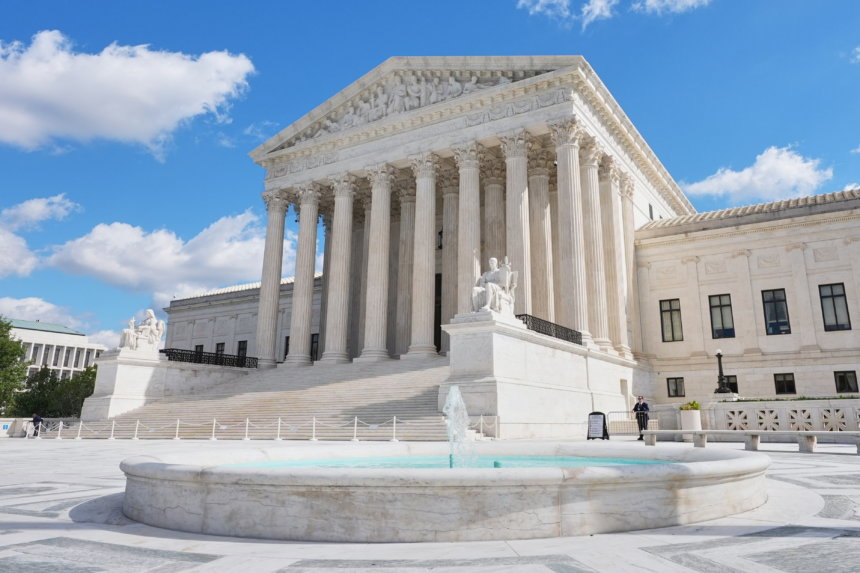
When the Supreme Court heard arguments in the Suncor v. Boulder County climate change case on Oct. 5, it confronted a question that has consequences far beyond Colorado and climate change: Can a state use its laws to make selected companies pay for harms tied to broad societal issues? The answer should be “no.”
Yet that is what the City and County of Boulder are seeking. They are suing two energy companies under Colorado law for their costs of adapting to climate change. And Boulder is not alone. Three dozen other state and local government lawsuits are also seeking money for the alleged effects of climate change. These lawsuits vary widely in whom they target, with some naming a single company and others naming dozens.
As a legal matter, state courts lack the authority to impose this liability. The harms alleged stem from greenhouse gas emissions from countless sources worldwide over more than a century. To decide these cases, state courts would have to assign global rights and responsibilities for climate change, and that is beyond the scope of any state’s law.
In Boulder’s case, Chief Justice Roberts asked during oral argument what would stop municipalities in every state from filing these lawsuits. This question underscores why state-by-state court litigation is not the proper forum for deciding who should bear the costs of broad societal challenges. These issues require legislative judgments.
Here, lawyers associated with Boulder have said part of their objective is to use liability to raise energy prices. One called this liability “an indirect carbon tax” because these costs will be passed on to consumers. Whatever one’s view of a carbon tax, they are public policy issues for Congress, not liability matters for courts.
Making these decisions requires balancing affordability for families and businesses, economic considerations, environmental protection, national security and more. Such an assessment must start from the recognition that greenhouse gas emissions result from the cumulative actions of governments, businesses and individuals worldwide. They are not the fault of any one company or industry.
If the Supreme Court allows this approach to proceed, it could open the door to similar lawsuits over a variety of national and global challenges, with significant implications for fairness, job growth and the economy.
Meanwhile, manufacturers are investing in technologies that reduce emissions, strengthen infrastructure and help communities adapt to a changing climate. These efforts are best advanced through durable public policy and innovation — not retroactive case-by-case liability.
The real question in Boulder’s case is not whether climate change is a serious issue, but who has the authority to set the rules for addressing it. The Supreme Court should draw that line now and leave climate and energy policy to Congress and federal agencies, not state courts.
Phil Goldberg is special counsel to the Manufacturers’ Accountability Project/InsideSources
Copyright 2026 Boston Herald. All rights reserved. The use of any content on this website for the purpose of training artificial intelligence systems, algorithms, machine learning models, text and data mining, or similar use is strictly prohibited without explicit written consent.