


Democratic Congressman Jerry Nadler has led the fight to bring resale royalties to artists in the US. With his retirement, it could all go away.
The American art market runs on a simple premise: artists are paid once, while the value of their work continues to grow — often for the benefit of others.
The system works like this: Artists are paid at the point of first sale, while the long-term value they create is captured largely by collectors and intermediaries. That imbalance is not unique to the United States, but it is handled differently elsewhere. In most major art markets around the world, it is addressed through resale royalties. In the United States, it is not.
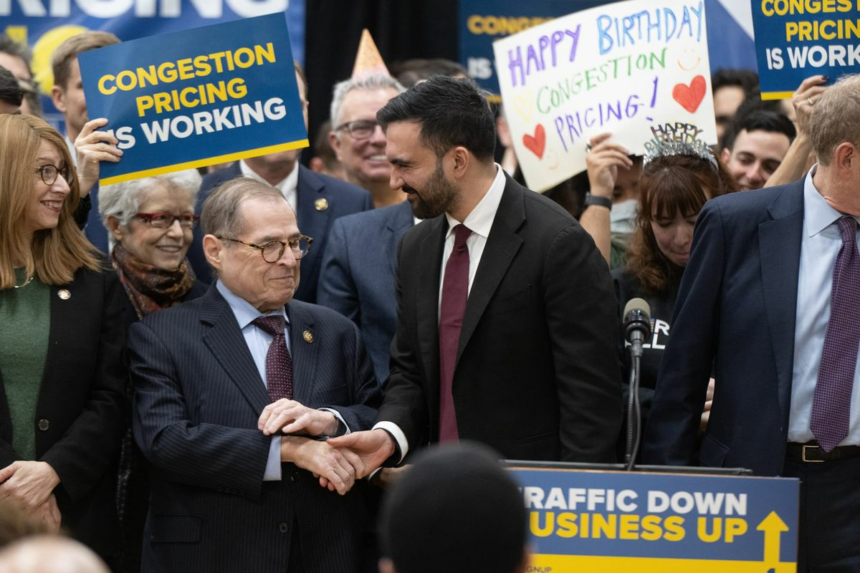
For more than two decades, Representative Jerrold (Jerry) Nadler has been one of the few lawmakers working to change that. Since 1992, he has represented New York’s 12th District and, as Chairman of the House Judiciary Committee, led two presidential impeachments. But for artists, his legacy is also defined by a sustained effort to strengthen their rights in the marketplace.
Now, as he prepares to leave Congress, that effort and the broader push to bring the United States in line with global standards risk losing one of its most consistent champions.
Over the past 25 years, Nadler has sponsored legislation addressing issues such as copyright protections and equitable estate taxes for artists. Most notably, since 2011, he has introduced bills that would allow visual artists to share in the proceeds when their works are resold on the secondary market. Known as resale royalties, these policies exist in more than 100 countries but are absent in the United States, despite the United States’ position as the world’s largest art market.
Resale royalties originated in France in the 1920s as the secondary art market expanded, leaving artists and their heirs without a share of the profits while others benefited. Today, artists across the European Union, the United Kingdom, and elsewhere receive a modest percentage when their work is resold through auction houses or dealers.
In the US, the consequences of this gap have been visible for decades. In 1973, following the auction sale of Robert and Ethel Scull’s collection, artist Robert Rauschenberg confronted the collector after seeing his work sell for far more than he had originally received. His frustration captured a broader reality that persists today: Artists create the value, but rarely participate in its long-term financial returns.
Nadler sought to change that. His 2011 Equity for Visual Artists Act proposed a 7% royalty on auction sales, split between the artist and a fund supporting museum acquisitions. More recent legislation, including the American Royalties Too Act of 2025, would grant artists or their heirs 5% of resale prices, capped at $50,000, and expand coverage to dealer sales.
Critics argue that resale royalties primarily benefit a small number of successful artists and estates and could discourage collectors by adding costs. Others note that only a small percentage of artists profit substantially from their work.
But recent data suggests the impact may be broader. A 2023 report from the UK’s Design and Artists Copyright Society found that more than two-thirds of royalty payments were under £500 (~$662), indicating that artists outside the highest tiers of the market do benefit. The UK has also remained one of the world’s leading art markets, suggesting such policies do not undermine competitiveness. Resale royalties can also play a role in addressing historical injustice — 65% of payments in Australia have gone to Aboriginal and Torres Strait Islanders. As I’ve argued with Cheryl Finley, Christian Reeder, and Amy Whitaker, resale royalties are not merely about profit sharing but a matter of equity.
As the art market becomes increasingly global, the absence of US legislation carries additional consequences. In most countries, resale royalties are reciprocal: Artists can only collect payments abroad if their home country has similar protections. As a result, American artists are often excluded from royalties when their work is resold internationally.
This gap matters not only to individual artists but also to the broader cultural economy. Arts and culture account for 4.2% of US GDP, more than sectors such as agriculture, transportation, or construction, and remain one of the nation’s most significant exports. Yet artists face growing pressures, from rising costs in cultural hubs like New York City to declining public support.
Despite these high stakes, artists’ rights have been largely absent from the current race to succeed Nadler. Candidates have focused elsewhere, leaving a hole in the conversation.
In a moment of political transition, that silence carries consequences. Nadler’s departure creates a void in advocacy on an issue that has struggled for sustained attention in Washington.
Artists’ rights may not dominate the national conversation. But for those working in the arts, they shape who can afford to create, who can sustain a career, and who ultimately benefits from the value that art generates.
As voters consider who should represent New York’s 12th District in today’s Democratic primary and the midterm election in November, they have an opportunity to ensure that this issue does not disappear. Without that pressure, it likely will.
The author would like to thank Will Whitmire, Sara Clough, and Damien Davis.
The art institution is accepting applications from June 22 through August 15 for artists and designers considering graduate study.
The Interaction Design program at the George Washington University Corcoran School of Arts and Design is utilizing partnerships across DC to encourage its students to develop more inclusive design practices.
Graduate candidates work with a roster of renowned visiting artists during an eight-week summer intensive for MECA&D’s MFA in Studio Art.
Develop business skills for cultural management and production on this flexible, part-time online Masters.
Get the best of Hyperallergic sent straight to your inbox.
Who Will Fight for Artists’ Rights in Congress? – Hyperallergic


Leave a Comment