


Sign up to our weekly and monthly, easy-to-digest recap of climate news from around the world.
The analysis revealed 165,922 square kilometers (64,000 square miles) of potentially climate-resilient reef locations spanning 71 countries and 100 territories and jurisdictions.
—
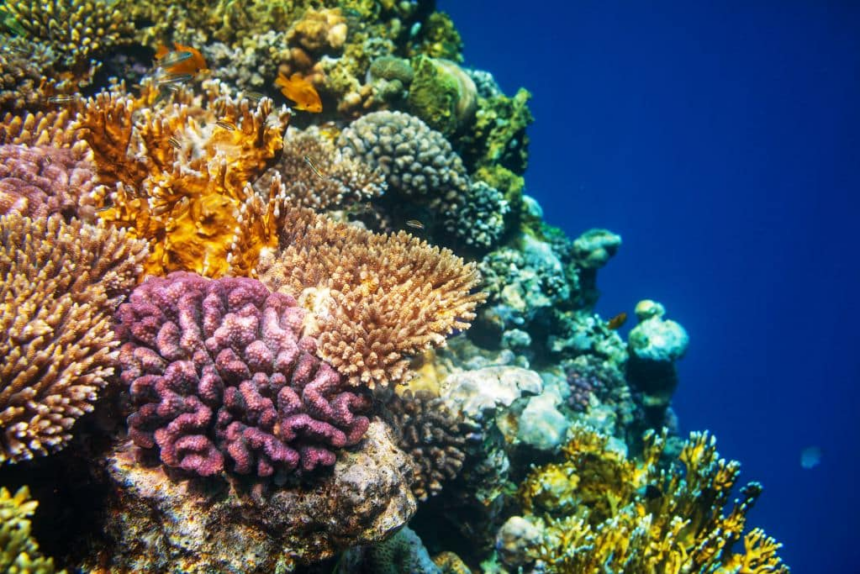
Scientists have mapped the “widespread” distribution of coral reefs believed to be capable of surviving and even recovering from climate change – an amount three times higher than previous estimates.
In recent years, corals globally have suffered greatly from the impacts of climate change. Between 2023 and 2025, coinciding with a historically strong El Niño event that brought record atmosphere and ocean temperatures, bleaching-level heat stress impacted nearly 84% of the world’s coral reef area across at least 83 countries and territories. It was the fourth mass coral bleaching event ever recorded and the second to occur in the last 10 years.
Coral bleaching occurs as a heat stress response from rising ocean temperatures, which drives algae away from coral reefs, causing reefs to lose their vibrant colours. While a bleaching event is not directly linked to corals’ death, more frequent and intense heat stresses make corals more vulnerable to diseases, slowing down their recovery and limiting their ability to spawn.
But a new analysis published Tuesday revealed that coral reefs may actually be more resilient than previously thought. Wildlife Conservation Society and and Macquarie University scientists analyzed over 45,000 coral surveys alongside decades of climate and ocean data. They identified climate-resilient reefs spanning 165,922 square kilometers (64,000 square miles) across 71 countries and 100 territories and jurisdictions, many of which had not been previously assessed. 61% of these resilient habitats are located within five countries that host extensive reef systems: the Bahamas, Cuba, Australia, Indonesia, and the Philippines.
“Coral reefs are often framed as ecosystems beyond saving,” said Emily Darling, a co-author of the study and Director of Coral Reefs at the Wildlife Conservation Society. “Our research shows that there are three times more reefs that may be capable of surviving the climate crisis than previously thought.”
Fewer than 28% of the climate-resilient reefs identified in the study are located within protected or conserved areas, according to the analysis. This means that 119,605 square kilometers fall outside any designated conservation framework, with no safeguards from threats like water pollution, unsustainable fishing practices and tourism activities, as well as coastal development project.
“This unprotected majority,” the authors say, “represents one of the clearest near-term opportunities to advance … the Kunming–Montreal Global Biodiversity Framework.” Adopted in 2022 by 196 countries to safeguard global biodiversity, the framework established the so-called 30×30 goal, which requires at least 30% of terrestrial, inland water, and of coastal and marine areas “effectively conserved” or otherwise restored from degraded states by 2030.
Coral reefs are highly important ecosystems that exist in more than 100 countries and territories and support at least 25% of marine species; they are integral to sustaining Earth’s vast and interconnected web of marine biodiversity and provide ecosystem services valued up to $9.9 trillion annually. They are sometimes referred to as “rainforests of the sea” for their ability to act as carbon sinks by absorbing the excess carbon dioxide in the water.
Unfortunately, reefs are disappearing at an alarming pace. According to the most recent report by the Global Coral Reef Monitoring Network (GCRMN), the world has lost approximately 14% of corals since 2009.
Our non-profit newsroom provides climate coverage free of charge and advertising. Your one-off or monthly donations play a crucial role in supporting our operations, expanding our reach, and maintaining our editorial independence.
About EO | Mission Statement | Impact & Reach | Write for us
The best environmental stories of the week and month, handpicked by our Editor. Make sure you’re on top of what’s new in the climate.


Boost this article
By donating us $100, $50 or subscribe to Boosting $10/month – we can get this article and others in front of tens of thousands of specially targeted readers. This targeted Boosting – helps us to reach wider audiences – aiming to convince the unconvinced, to inform the uninformed, to enlighten the dogmatic.
donate
Scientist Map 'Widespread' Distribution of Climate-Resilient Coral Reefs – Earth.Org


Leave a Comment