


By Zach Cohen, Ph.D.
Editor’s Note: This is the next article in the “Standout ECPs” series contributed by the Entomological Society of America’s Early Career Professionals (ECP) Committee, highlighting outstanding ECPs that are doing great work in the profession. (An ECP is defined as anyone within the first five years of obtaining their terminal degree in their field.) Read past articles in the Standout ECPs series.
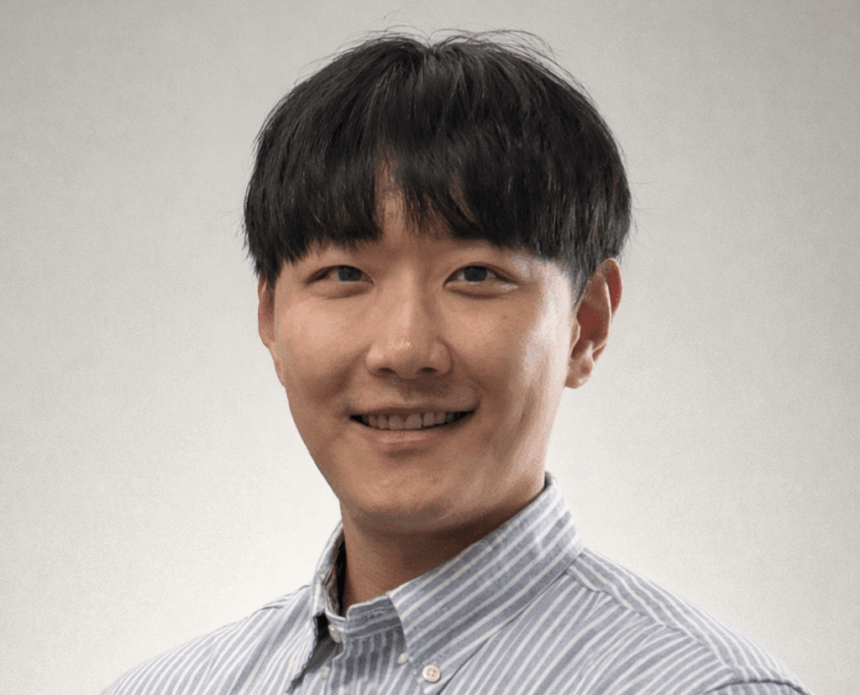
Junepyo Oh, Ph.D., is a postdoctoral researcher in the Department of Entomology at Kansas State University. His research focuses on insect–plant–pathogen interactions, vector-borne plant diseases, and RNA interference-based approaches for sustainable pest management. During his Ph.D. at Texas A&M University, he studied the molecular interactions among the potato psyllid (Bactericera cockerelli), the bacterium ‘Candidatus Liberibacter solanacearum,‘ and tomato plants. Now, he is expanding his work toward insect molecular biology and RNAi-based delivery systems, with the goal of connecting basic biological mechanisms to practical pest management strategies.
Cohen: How did you get into entomology?
Oh: I actually came to entomology through plant pathology. During my master’s training, I was interested in plant pathogens, but I became increasingly fascinated by the insects that move those pathogens from plant to plant. That curiosity eventually brought me to insect vectors, especially the potato psyllid.
I think what pulled me into entomology was realizing that insects are not just “pests” in a simple sense. They are active players in very complex biological systems involving plants, microbes, and the environment. Once I started thinking about insects that way, it was hard to leave.
What do you do in your current job?
I am currently working on RNAi-based pest management. My work involves designing and testing double-stranded RNA approaches, evaluating gene silencing, and studying how insects respond at the molecular level.
A typical week can include insect rearing, bioassays, qPCR, sequencing data analysis, writing, and mentoring students. I enjoy that the work moves between the bench, the computer, and broader questions about pest management.
What is the most rewarding part of your job?
The most rewarding part is seeing small pieces of data start to form a larger biological story. I really enjoy the moment when an experiment, a gene expression pattern, or a phenotype begins to make sense in the context of insect biology.
I also find mentoring very rewarding. Watching students become more confident in asking questions, troubleshooting experiments, and interpreting data is one of my favorite parts of academic work.
What is the most challenging part of your job?
The most challenging part is that biological systems rarely behave as neatly as we hope. Working with insects, pathogens, plants, and RNAi delivery methods means there are many moving parts, and sometimes the most interesting results are also the hardest to interpret.
Another challenge is learning how to balance experiments, writing, mentoring, and career development at the same time. I am still learning how to do that well.
What do you see yourself doing in the future?
I hope to build an independent research and teaching program focused on insect–plant–pathogen interactions, insect molecular biology, and sustainable pest management. I would like my future lab to ask fundamental biological questions while also keeping real agricultural problems in mind.
Who inspires you to do what you do?
I am inspired by mentors, colleagues, and students who approach science with curiosity and persistence. My advisors and collaborators have shaped how I think about research, experimental design, and scientific communication.
I am also inspired by students. Their questions often remind me why the basic concepts are exciting in the first place.
What would you do if you weren’t working in entomology?
I would probably do something related to sports. I have always enjoyed being active, and I sometimes joke that if I were not in science, I might have tried to become an athlete.
More realistically, I would probably still end up in a role that involves teaching, coaching, or communicating ideas. I enjoy helping people learn, whether that is in science, sports, or another setting.
Do you have time for any hobbies?
I try! With two young children at home, a 2.5-year-old and a 7-month-old, “free time” has become a very flexible concept.
I really enjoy exercising and staying active, but these days it is more of a “whenever I can” hobby than a regular routine. Even a short workout helps me reset after long days in the lab or at the computer. I also enjoy spending time with my family and exploring new places with them, which has become its own kind of adventure.
What is your advice for other ECPs?
My advice is to remember that this career path can be a long journey. It is easy to feel discouraged or to compare yourself with others, especially when everyone seems to be moving at a different pace. But I think what matters most is not speed but direction.
Try not to be shaken too much by the circumstances around you. Define what is meaningful to you, keep moving toward your goals, and give yourself patience along the way.
I would also encourage ECPs to build genuine professional relationships. Networking is not just about introducing yourself to more people; it is about finding mentors, collaborators, and peers who can support you, challenge you, and grow with you. A strong support network can make the journey much more sustainable.
What is your favorite arthropod and why?
My favorite arthropod is the potato psyllid (Bactericera cockerelli). It is tiny but it has had a huge impact on my scientific career.
What I like about the potato psyllid is that it sits at the center of a very complex system. It is an agricultural pest, a vector of ‘Candidatus Liberibacter solanacearum,‘ and a great example of how one small insect can connect plant pathology, microbiology, molecular biology, and pest management.
Are there any exciting directions that you think entomology is headed?
I think entomology is becoming increasingly interdisciplinary, and that is very exciting. Molecular biology, genomics, bioinformatics, imaging, RNAi, microbiome research, and artificial intelligence are all opening new ways to study insects.
At the same time, I think the field will continue to be strongest when these tools are connected back to real insects, real ecosystems, and real agricultural problems. That combination of basic biology and applied impact is one of the reasons entomology is such an exciting field.
Thanks Junepyo! Learn more about Junepyo Oh’s work via LinkedIn and Google Scholar.
Zachary Cohen, Ph.D., is a postdoctoral researcher Florida Atlantic University’s Department of Electrical Engineering and Computer Science. Previously, he worked in a postdoctoral role at the U.S. Department of Agriculture’s Agricultural Research Service in College Station, Texas. He currently serves as the Southwestern Branch representative to the ESA Early Career Professionals Committee. Email: zachary.pcohen@gmail.com.
All photos courtesy of Junepyo Oh, Ph.D.
Subscribe to get the latest posts sent to your email.
Amazing EntoRace 2026: Racing Through Entomology, Technology, and Fun
Meet Rae Olsson, Ph.D., an entomologist and landscape ecologist developing new data-based tools for beekeepers and subject of the next installment of our “Standout Early Career Professionals” series. [Read more]
Meet Laura Figueroa, Ph.D., postdoctoral researcher at the University of Massachusetts, Amherst, whose work in bee ecology and conservation earned her a spot in the Early Career Professional Recognition Symposium at the 2022 Joint Annual Meeting of ESA, ESC, and ESBC. Learn more about Figueroa and her work in the next installment of our “Standout Early Career Professionals” series. [Read more]
Meet Hollie Dalenberg, beekeeper and farm entomologist at a nonprofit recovery center in Oklahoma and subject of the next installment of our “Standout Early Career Professionals” series. [Read more]
This site uses Akismet to reduce spam. Learn how your comment data is processed.
Never miss a new post on Entomology Today! Enter your email address to subscribe.
Never miss a new post on Entomology Today! Enter your email address to subscribe.
 RSS – Posts
© Copyright Entomological Society of America, Annapolis, Maryland, USA
Subscribe now to keep reading and get access to the full archive.
Continue reading
How a Plant Pathologist Became an Entomologist – Entomology Today


Leave a Comment