


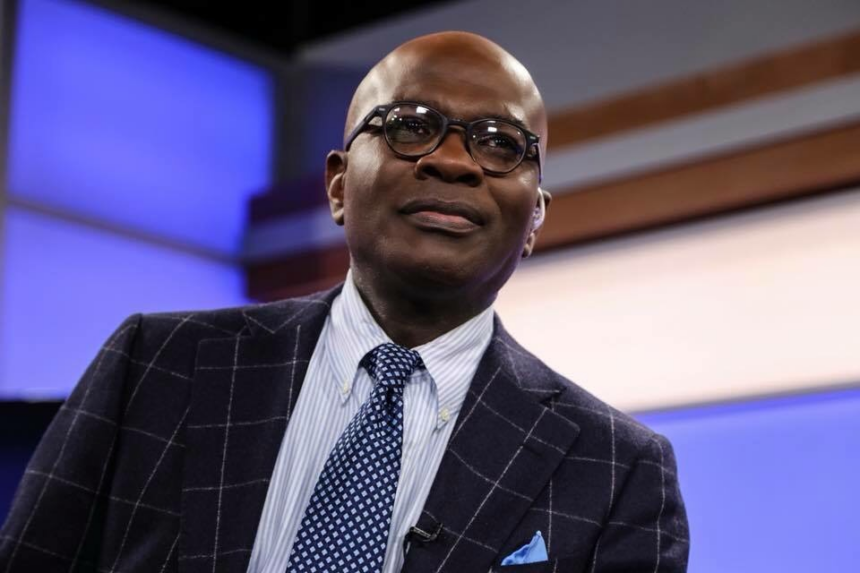
Photo supplied
Something important is happening in Washington that many political observers did not expect to see this early in President Donald Trump’s second term.
For the first time since Republicans regained unified control of Washington, significant numbers of Republican senators and House members are openly pushing back against the White House not on personality but on power.
The issues vary: the proposed anti-weaponization fund, funding for a White House ballroom, questions surrounding congressional authority over military action involving Iran. Yet the common thread is unmistakable: Republicans are beginning to reassert Congress as a coequal branch of government rather than merely an extension of the presidency.
Many Democrats will interpret this as evidence that Trump is losing control of the Republican Party. That would be an oversimplification.
The reality is more nuanced.
For nearly a decade, Trump has transformed the Republican Party from a traditional conservative coalition into a movement centered on his leadership, instincts and political brand. That transformation delivered victories few Republicans thought possible. He remade the federal judiciary, reshaped trade policy, strengthened border enforcement and redefined the party’s relationship with working-class voters.
But even the strongest political movements eventually encounter institutional limits.
The Founders designed the American system to prevent power from becoming concentrated in any single branch or individual. Congress was never intended to be a ceremonial body. The House and Senate were expected to challenge presidents — including presidents of their own party.
That appears to be what we are beginning to witness.
The anti-weaponization fund became a turning point because many Republican lawmakers viewed it not simply as a policy dispute but as a constitutional and political liability. Questions emerged about oversight, accountability, eligibility and whether Congress had surrendered too much authority over taxpayer dollars. The resistance became so significant that the administration ultimately abandoned the proposal.
Similarly, congressional Republicans expressed reservations about proposals involving federal funding for a White House ballroom and other executive priorities that many lawmakers believed could become political distractions heading into the midterm elections.
The Iran issue may prove even more consequential.
Historically, wars have often strengthened presidential power. Yet they have also produced some of the most significant congressional pushback in American history. While Republicans largely supported Trump’s initial actions against Iran, a growing number have expressed concern about the scope and duration of military involvement without explicit congressional authorization. Even where formal war powers resolutions failed, the debate itself revealed that constitutional concerns remain alive inside the Republican Party.
This does not mean Republicans are becoming anti-Trump.
Far from it.
Most Republican lawmakers still support Trump’s broader agenda. They support stronger borders and a more aggressive foreign policy toward adversaries, as well as deregulation and judicial restraint. What they increasingly appear unwilling to support are policies that could be perceived as personal, politically risky or constitutionally questionable.
In many ways, this is the natural evolution of a governing party.
Campaign movements are built on loyalty and momentum.
Governing coalitions eventually require negotiation, compromise and institutional balance.
The most fascinating player in this development may not be Congress at all. It may be the Supreme Court.
For years, critics accused the court’s conservative majority of existing merely to advance Republican interests. Yet the court has repeatedly demonstrated a more complicated reality.
This Supreme Court is conservative, but it is also deeply institutional.
Its jurisprudence consistently emphasizes separation of powers, federalism and constitutional limits. Those principles do not always benefit Democrats. But they do not always benefit Republicans either.
The court’s conservative majority generally believes that Congress should exercise congressional powers, presidents should exercise executive powers, and courts should exercise judicial powers.
That philosophy creates an interesting dynamic for the Trump era.
If Congress begins reclaiming authority over spending, war powers and executive actions, the court is likely to view that development favorably. Many of the justices have spent years signaling skepticism toward expansive executive authority regardless of which party occupies the White House.
In other words, the Supreme Court may ultimately become less of a shield for presidential power and more of a referee ensuring constitutional boundaries are respected.
That should matter to conservatives.
Conservatism, at its core, has never been about maximizing executive power. It has traditionally been about preserving institutions, respecting constitutional limits and recognizing that concentrated power eventually threatens liberty regardless of who holds it.
The coming years may therefore produce an unexpected outcome.
Rather than weakening conservatism, congressional pushback against Trump could strengthen it.
A Republican Party capable of supporting a president when he is right while challenging him when necessary may prove more durable than one built entirely around loyalty.
The real story is not rebellion. It is maturation.
America’s constitutional system was designed to create tension between branches of government. When Congress begins acting like Congress, presidents face limits, and courts enforce constitutional boundaries, the system is functioning exactly as the Founders intended.
The question facing Republicans now is whether they can remain the party of Trump while also becoming, once again, the party of Madison, Hamilton and the Constitution itself.
Armstrong Williams is manager/sole owner of Howard Stirk Holdings I & II Broadcast Television Stations and the 2016 Multicultural Media Broadcast owner of the year. To find out more about him and read features by other Creators Syndicate writers and cartoonists, visit the Creators Syndicate website at www.creators.com.
Copyright © 2026 Ogden Newspapers of Utah, LLC | www.standard.net | 332 Standard Way, Ogden, UT 84404