


Global insights
ICC delivers solutions that address the major shifts taking place in the world economy.
ICC global policy commissions are specialised working bodies composed of business experts who examine major issues of interest to the business world.
Visit the ICC Digital Standard initiative website to learn how we are working to establish a globally harmonized digital trade environment.
Business solutions
At ICC, we leverage our diverse network, skills and expertise to provide a full spectrum of practical trade tools that are essential to making business work for everyone, every day, everywhere.
ICC One Click is your gateway to trade tools, solutions and guides to export and grow globally.
Incoterms® rules are a set of eleven three-letter trade terms, reflecting business-to-business practice in contracts for the sale and purchase of goods.
Guidance on Responsible Business in Challenging Contexts
Dispute resolution
We support the continuity of global trade by helping businesses prevent and resolve their disputes through our case management services.
Everything you need to know to begin an ICC Arbitration
Generate estimated ICC administrative expenses and arbitrator fees.
Trusted rules defining and regulating the management of ICC cases
ICC Dispute Resolution Statistics: 2024
World chambers
Our ICC World Chambers Federation (WCF) is the backbone of the global chamber network leading, connecting and inspiring chambers to benefit real economies and communities, every day, everywhere.
We connect and unite chambers from every corner of the world in support of our mission to enable prosperity and opportunity for all.
Chamber Pulse: Global markets, local landscapes
About ICC
Making business work for everyone, every day, everywhere. We are the world's business organisation.
Our events, publications and online training courses
Trusted professional education and training, anytime, anywhere.
ICC Explained: How ICC Genesis is simplifying trading under FTAs
News and publications
Find our latest updates, articles, and comprehensive reports on our global initiatives and activities.
Quick search
ICC, UN & partners
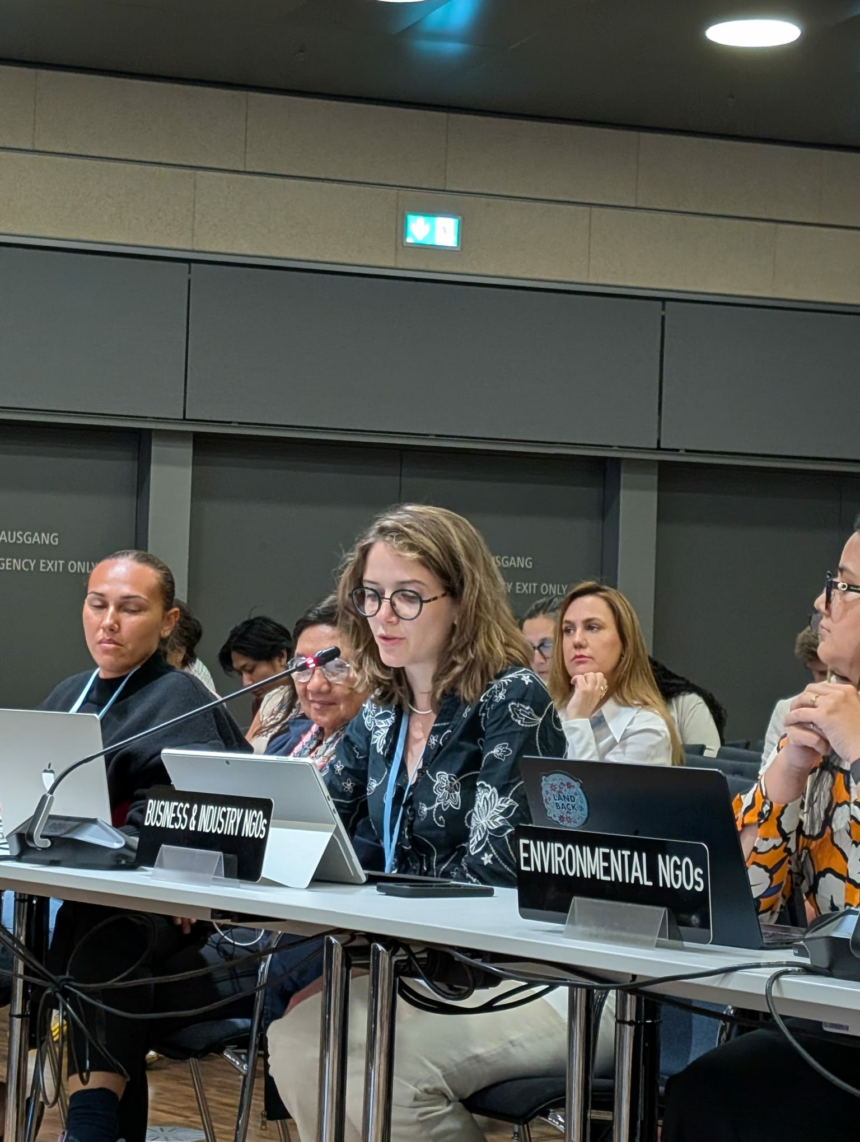
The International Chamber of Commerce (ICC), on behalf of the UNFCCC Business and Industry constituency, delivers the opening statement at the 64th Sessions of the Subsidiary Bodies (SB64) in Bonn, bringing together parties and observers ahead of COP31.
Share this:
Excellencies, distinguished delegates, ladies and gentlemen – I have the honour to deliver this statement on behalf of Business and Industry and the International Chamber of Commerce.
We thank the UNFCCC Executive Secretary, the SB Chairs, the COP30 and COP31 Presidencies and all Parties for their unwavering commitment to multilateral climate cooperation.
As we gather in Bonn, we do so in an increasingly complex global context… Climate action can no longer be approached in isolation, but through a lens of global cooperation, shared ambition, energy security and economic opportunities.
Belém made clear that the Paris Agreement is working. Since Paris, the private sector has unleashed extraordinary innovation since Paris – clean energy, industrial transformation, low-carbon technologies. Yet further progress requires clear policy frameworks, stronger demand signals and investment certainty.
COP31 will be critical in charting a pathway for transformational change, that responds to the following priorities:
First, on mitigation. The first GST outcomes should serve as a compass for all implementation efforts. Accelerating a just, orderly, and equitable energy transition will be a critical part of delivering on these efforts.
As Parties consider the future of the MWP and emerging voluntary initiatives, priority should be given to building a coherent architecture capable to enabling radical emissions reduction, NDC implementation and investments.
Second, on adaptation, we must turn the Belem Indicators into clear signals, stronger data, and robust methodologies that can unlock private action and mobilize finance at the scale needed to strengthen resilience.
Third, on just transition, the proposed mechanism should be translated into a practical, action oriented platform for cooperation among Parties and stakeholders.
Fourth, on agriculture and food systems. Ensuring the future of the work programme together with greater consideration to integrating food systems across relevant climate workstreams and financing efforts will be key.
Finally – and most importantly – successful implementation will ultimately depend on finance.We call on Parties to make full use of the climate finance work programme and move beyond discussions on volumes of public finance to address the real bottlenecks and structural barriers that currently constrain private capital, particularly in emerging markets.
Greater convergence of carbon accounting methodologies, alongside high-integrity carbon markets and continued implementation of Article 6, can also strengthen investor confidence and mobilise finance for both mitigation and adaptation.
In addition, we cannot forget about trade, open trade can be a driver for achieving our goals. It is important to maximise its potential while addressing impacts of cross-border mitigation measures, such as CBAM. Greater interoperability, transparency, and convergence of methodologies can help avoid fragmentation and strengthen trust.
As 2026 brings together the climate, biodiversity and desertification COPs, there is an opportunity to strengthen synergies across these agendas. Greater coherence can help provide clearer signals for business, support integrated planning and investment, and accelerate implementation across sectors and value chains.
Excellencies, distinguished delegates,
The implementation challenge before us is global, and so too must be the response. While voluntary initiatives and coalitions have an important role to play, our efforts must remain anchored in global cooperation, coherence and a shared commitment to collective progress. Only by working together can we deliver the scale of transformation needed.
Business stands ready to be a partner in this effort and work with Parties and stakeholders to help turn commitments into action.
Thank you.
ICC announced that Standard Chartered has adopted the full suite of the ICC Principles for Sustainable Trade Finance (PSTF), marking a significant step toward greater consistency, transparency and scalability in sustainable trade finance.
Despite rising global climate investment, capital is not reaching emerging and developing markets (EMDEs). Growing evidence shows current Basel III global banking rule interpretations unintentionally discourage EMDE lending by underrecognising credit enhancement and blended-finance tools. Drawing on a Queen Mary University analysis of 40 countries, this report assesses climate risk transmission and how proportionate risk treatment can unlock climate finance without undermining prudential integrity.
The International Chamber of Commerce and Carbon Measures today announced the second and final group of experts appointed to the Technical Expert Panel (TEP) on Carbon Accounting. With these appointments, the panel is now fully constituted, bringing together 21 distinguished leaders and experts to define the principles, scope and real-world applications of a carbon emissions accounting system that will produce product-level emissions data that can be used to underpin trade and regulation.
For business. For you.
Find a local contact
We represent members in more than 170 countries across the world. Find the national committee closest to you.
ICC delivers Business and Industry opening statement at Bonn Climate Change Conference – ICC | International Chamber of Commerce



Leave a Comment